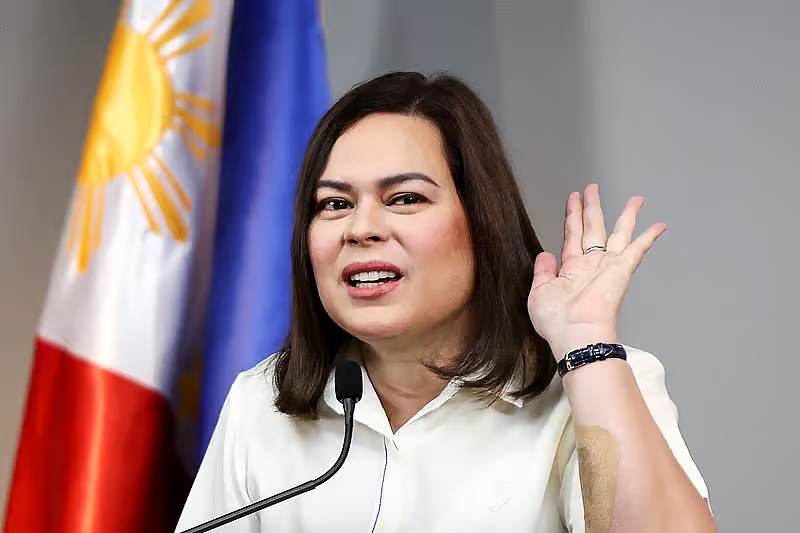
South Korea descended into political turmoil after President Yoon Suk Yeol declared emergency martial law late on Tuesday, saying he was acting to protect the country from “threats” posed by North Korea and accused the opposition of being “antistate forces”
The military, following Yoon’s announcement, announced a series of measures, including prohibitions on all political activities and that all media will be placed under the control of the Martial Law Command.
But just hours later, the parliament, surrounded by protesters and police, voted against the decree.
Here is a timeline of events that led to the martial law announcement:
April 11: Opposition parties romp to victory in elections for the National Assembly, securing more than 60 percent of the 300-seat parliament.
May 9: President Yoon expresses regrets and apologises on behalf of his wife and First Lady Kim Keon-hee, amid accusations that she unlawfully accepted a luxury handbag in 2022.
August 27: Yoon’s government proposes a 677.4 trillion won ($483bn) budget to tackle several challenges including rising health insurance costs and pensions.
October 25: South Korea expresses “grave concern” over Russia’s bid to seal a defence pact with North Korea, which has been accused of supplying troops to Moscow for possible deployment in its war in Ukraine.






 United Arab Emirates Dirham Exchange Rate