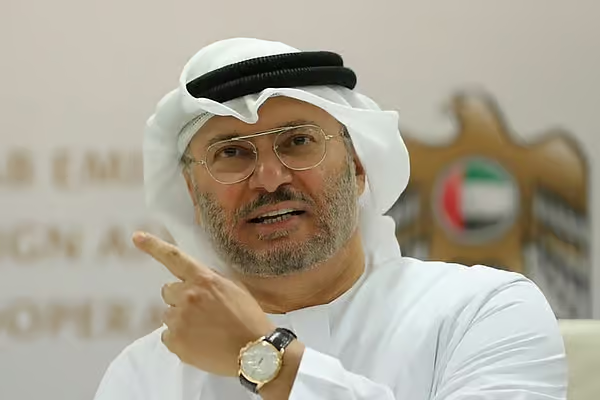

On January 6, Sudanese paramilitary leader Mohamad Hamdan Dagalo, better known as “Hemedti”, visited the memorial in Kigali that commemorates the 1994 Rwandan genocide.
Hemedti toured the museum solemnly, his sympathy-filled face belying the fact that his paramilitary Rapid Support Forces (RSF) are accused of similar atrocities in Sudan’s civil war.
Hemedti’s visit to Rwanda was part of a tour to meet African heads of state from late December to early January. South Africa, Uganda, Djibouti, Rwanda and Ethiopia all greeted Hemedti warmly, and Kenya rolled out a red carpet for him.
His tour dispelled rumours that he might be seriously wounded or killed in a conflict in which his fighters have killed thousands of civilians across Sudan, seized homes, looted cars, plundered aid, robbed banks and raped indiscriminately as a weapon of war.
Despite civilians testifying to these atrocities, Hemedti was received across Africa like a head of state, raising fears that he will keep terrorising civilians with regional backing, local monitors and experts told media.
“Any efforts that aim to justify or excuse Hemedti’s crimes are permitting him to continue his massacres,” said Bedour Zakaria, a human rights monitor who survived mass killings in West Darfur and is now in Kampala, Uganda.
In West Darfur, a region on the border with Chad, RSF fighters and allied Arab militias have killed up to 15,000 non-Arabs from the Masalit tribe, according to a soon-to-be-released United Nations report obtained by media.
The report said 13 mass graves have been identified in West Darfur since the war between the RSF and the Sudanese army erupted in April. About 550,000 Masalit refugees have also been uprooted from their land to camps in Chad.
[BELOW: What does the asterisk refer to?]




 United Arab Emirates Dirham Exchange Rate