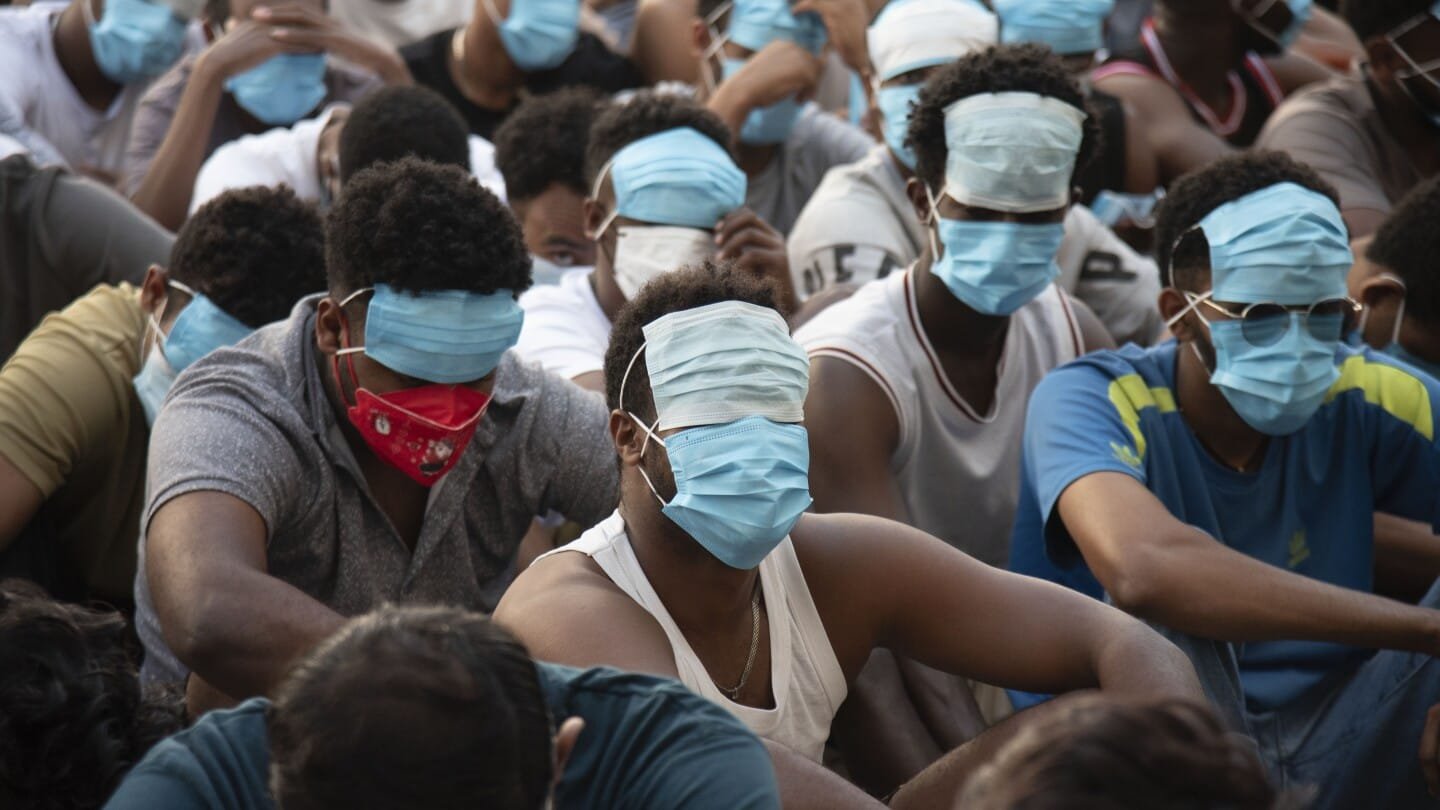
MAE SOT, Thailand (news agencies) — Thousands of sick, exhausted and terrified young men and women, from countries all over the world squat in rows, packed shoulder to shoulder, surgical masks covering their mouths and eyes.
Their nightmare was supposed to be over.
Last month, a dramatic and highly publicized operation by Thai, Chinese and Myanmar authorities led to the release of more than 7,000 people from locked compounds in Myanmar where they were forced to trick Americans and others out of their life savings. But survivors have found themselves trapped once again, this time in overcrowded facilities with no medical care, limited food and no idea when they’ll be sent home.
One young man from India said about 800 people were being held in the same facility as him, sharing 10 dirty toilets. He said many of the people there were feverish and coughing. Like all former enslaved scammers who talked to media, he spoke on condition of anonymity out of concern for his safety.
“If we die here with health issues, who is responsible for that?” he asked.
The armed groups who are holding the survivors, as well as Thai officials across the border, say they are awaiting action from the detainees’ home governments.
It’s one of the largest potential rescues of forced laborers in modern history, but advocates say the first major effort to crack down on the cyber scam industry has turned into a growing humanitarian crisis.
The people released are just a small fraction of what could be 300,000 people working in similar scam operations across the region, according to an estimate from the United States Institute of Peace. Human rights groups and analysts add that the networks that run these illegal scams will continue to operate unless much broader action is taken against them.




 United Arab Emirates Dirham Exchange Rate