
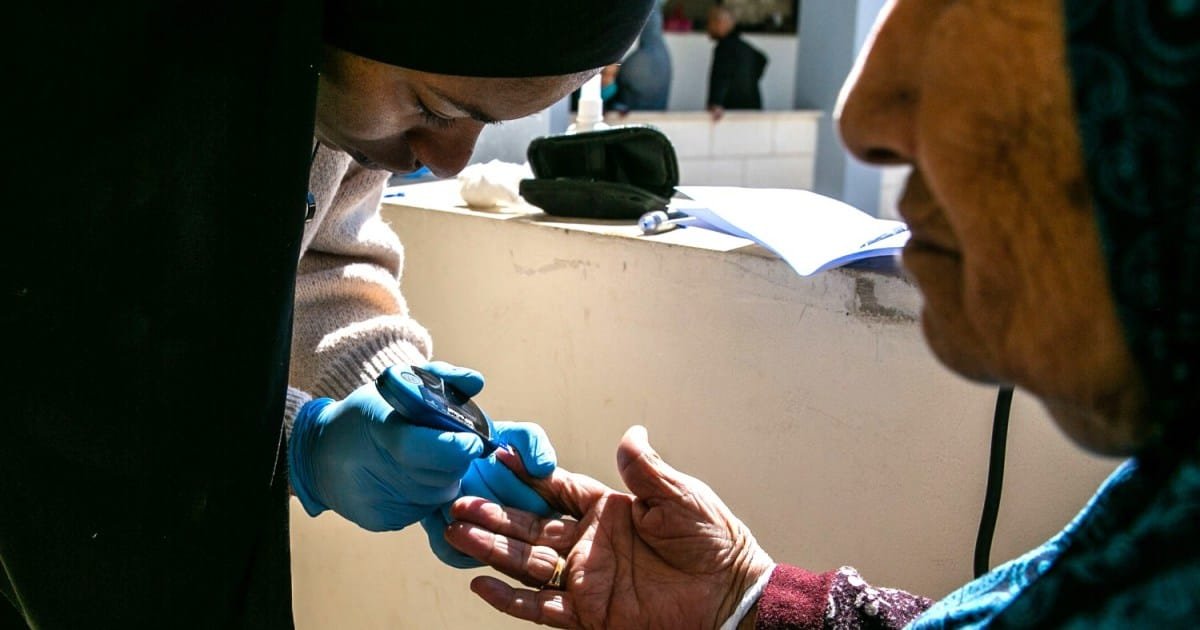
Jenin and Tulkarem, occupied West Bank – Omaima Faraj bows her head in silence for a moment – she’s tired, but the work does not stop.
She arrives at a school-turned-shelter near Tulkarem where her first patient, an elderly displaced woman who greets her tenderly, is waiting for her to measure her glucose and blood pressure. Then she moves to the next classroom, the next patient, walking down an open passage drenched in late-February sunshine.
Faraj, 25, has been volunteering to help residents devastated by the Israeli raids for weeks. She is one of the young Palestinians working to address the emergency Israel is creating across the occupied West Bank as it raids refugee camps and displaces thousands.
When Israel’s military occupation and displacement of the camp began in what the Israelis have called operation “Iron Wall”, on January 21, Faraj rushed into Tulkarem’s refugee camp instead of running away from the violence.
She stayed there with her fellow volunteers for more than 12 critical days when the attacks were at their fiercest and people were still trying to organise to flee the camp.
They focused on delivering aid to people in need – the injured, the elderly, and people with limited mobility. Nobody could get to a hospital because the Israeli soldiers wouldn’t let them.
Israeli soldiers harassed the volunteers, Faraj recounts, describing how they would threaten her and her colleagues, telling them to leave and never return or they’d be shot.
One incident particularly haunts her, of an elderly man who was trapped in his house for four days.
The team kept trying to reach him, but Israeli soldiers blocked their path. Finally, the International Committee of the Red Cross intervened, coordinating with the Israelis to allow safe passage for the volunteers.



 United Arab Emirates Dirham Exchange Rate