Dhaka, Bangladesh – For the first time in his life, Abdur Razzak, a 45-year-old banker in Bangladesh’s Faridpur district, believes the political party he supports has a real chance of coming to power as the leader of a governing alliance.
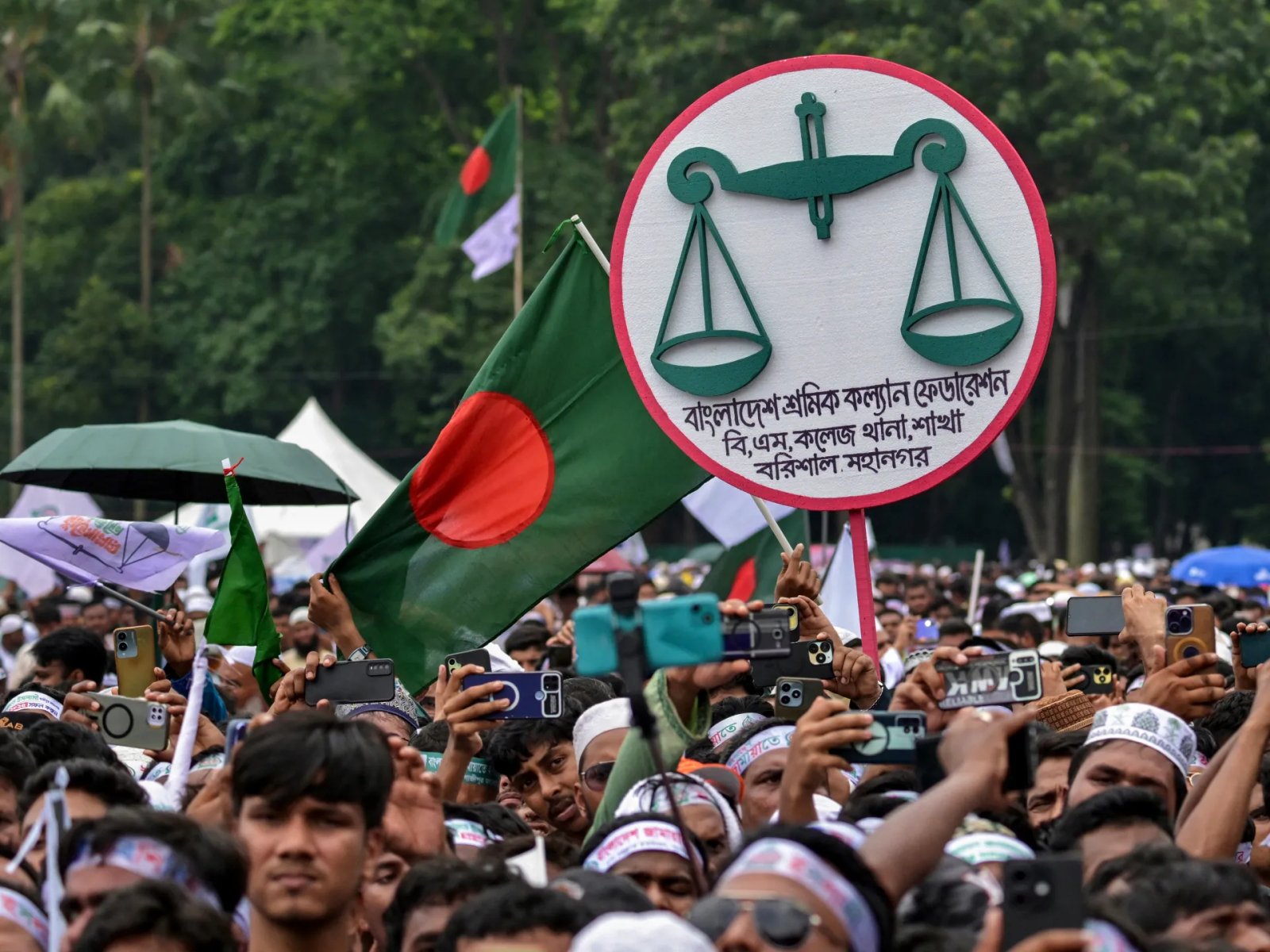
Campaigning for the Jamaat-e-Islami party’s “scales” symbol in his town, Razzak said people he was meeting with were “united in voting” for Jamaat, as the Islamist party is commonly referred to in the world’s eighth-most populous country, home to the fourth-largest Muslim population on the planet.
Bangladesh is scheduled to hold a general election on February 12, the first vote since a student-led uprising toppled longtime former Prime Minister Sheikh Hasina’s government in August 2024.
The interim government headed by Nobel Peace Prize laureate Muhammad Yunus, which succeeded Hasina after the uprising, banned her Awami League party. This has made the upcoming election a bipolar contest between the frontrunner, the Bangladesh Nationalist Party (BNP), and an electoral alliance forged by the Jamaat with the National Citizen Party (NCP), a group formed by student leaders of the 2024 uprising along with other Islamist parties.
Razzak’s confidence is fuelled by recent opinion polls that suggest the Jamaat is closing in on the BNP, its senior coalition partner for decades.
A December survey by the United States-based International Republican Institute put the BNP’s support at 33 percent, with Jamaat close behind at 29 percent. Another poll last week, conducted by leading Bangladeshi agencies – including NarratiV, Projection BD, the International Institute of Law and Diplomacy (IILD) and the Jagoron Foundation – found the BNP leading at 34.7 percent, and Jamaat at 33.6 percent.
If the Jamaat-led alliance is able to emerge victorious, it will be a dramatic turnaround for a party that was subjected to a brutal crackdown during Hasina’s 15-year government. Under Hasina, Jamaat was banned, its top leaders hanged or jailed, and thousands of its members forcibly disappeared or killed in custody.
The crackdown followed convictions by the International Crimes Tribunal – a controversial court that Hasina founded in 2010 – to try suspects for their alleged role in crimes committed during Bangladesh’s war of independence from Pakistan in 1971.




 United Arab Emirates Dirham Exchange Rate