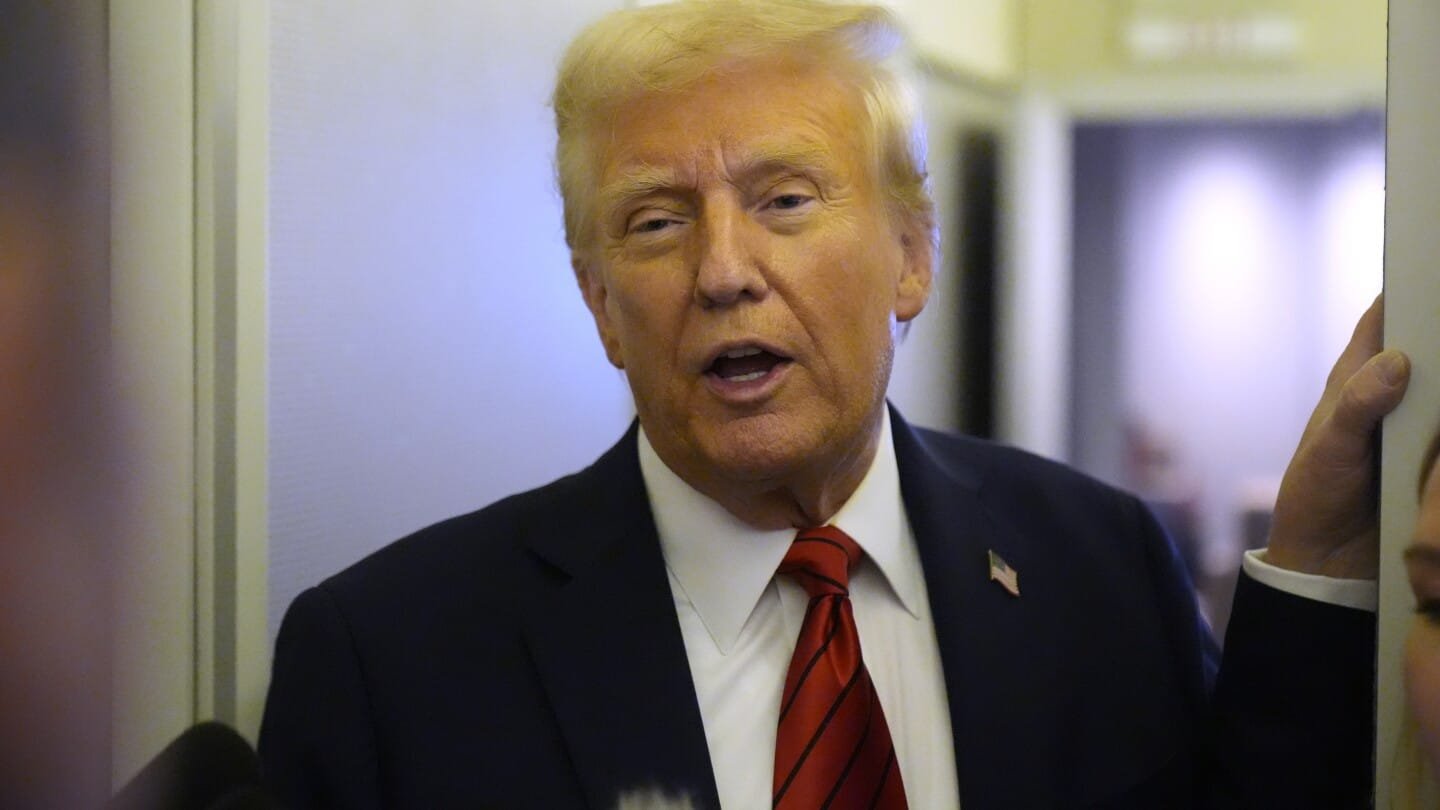
A White House directive to pause federal grants and loans raised uncertainty and fears among many who depend on federal aid before a judge intervened Tuesday to temporarily block it from taking effect.
President Donald Trump’s administration said the freeze would not affect federal assistance to individuals, such as Social Security, Medicare, food stamps, student loans and scholarships. But it said a pause is necessary to ensure funding for other programs complies with Trump’s executive orders, which aim to reverse progressive policies on transgender rights, environmental justice and diversity, equity and inclusion.
A federal judge blocked the directive just minutes before it was to kick in Tuesday. The order placed it on hold until next Monday while legal wrangling continues.
States on average receive about 30% of their revenues from the federal government, according to Federal Funds Information for States, a nonprofit that analyzes the affect of federal actions on states. Although the federal government has rescinded unspent funds in the past, it hasn’t normally halted grants on the front-end, said Marcia Howard, executive director of Federal Funds Information for States.
The grant pause is perhaps most similar to a federal government shutdown, when a congressional impasse on spending legislation delays federal payments for some state and local services. In most of those circumstances, a couple weeks delay “isn’t hugely disruptive,” Howard said.
But some state officials are nonetheless anxious.
“If the federal government coughs, Maryland catches pneumonia,” state Senate President Bill Ferguson said Tuesday, while discussing how the grant freeze could affect the state.
Universities around the country are scrambling to determine how a funding freeze could affect their research programs, students and faculty.
University of North Carolina administrators sent a campus email urging patience until decisions can be confirmed directly from federal agencies.
“The messaging is, ‘Try not to panic, and sit tight,’” said psychology professor Keely Muscatell. “But I also think it’s a lot easier said than done.”
A University of Florida memo obtained by the media indicates that the university is advising faculty to continue grant-related activities unless they have been specially told that the research has been suspended.
But at Gallaudet University in Washington, D.C., researchers said they were told to stop work on grant-funded projects. If the funding freeze goes forward, scientists may miss deadlines to present and share their work, said researcher Lorna Quandt, who has a grant application pending to fund interpreters to accompany deaf students to an upcoming conference.
The Association of Public and Land-Grant Universities said a freeze would “sideline world-leading American scientists who are working toward cures for cancer, developing breakthroughs in AI and quantum computing, driving progress in advanced manufacturing, and supporting American farmers.”
For many highway projects that are partially funded by federal grants, states pay the contractors directly then seek reimbursement from the federal government. There initially was widespread concern among state transportation leaders that states “would be left holding the bag,” but further clarification from the White House calmed some nerves, said Jim Tymon, executive director of the American Association of State Highway and Transportation Officials.
Although some grants, particularly those awarded at the discretion of the federal government, could still be at risk, Tymon said he is now confident the Trump administration isn’t targeting the formula-based grants that states use to set their own transportation priorities and pay for roads.
“We’re not as panicked as maybe we had been,” he said.
Some operators of federally funded Head Start centers, which work with 800,000 kids and low-income families nationwide, initially were concerned that the freeze could mean closing their doors as soon Wednesday. Operators logged on to a website where they typically draw down their federal grants and discovered they no longer had access to the money, which they need to pay their employees and vendors.
“Is it a short-term thing? Is this a glitch? Is it a long-term thing? All of those things, we just really don’t know at this point,” said Tommy Sheridan, deputy director of the National Head Start Association. “That’s really adding to the fear and the concern.”
A coalition of nonprofit groups filed a lawsuit Tuesday against the funding freeze. The nonprofit Democracy Forward, a public interest litigation group, wrote that the White House’s memo fails to explain its legal authority “to gut every grant program in the federal government.”
The National Science Foundation postponed this week’s grant review panels and is pausing the distribution of new or existing awards.




 United Arab Emirates Dirham Exchange Rate