
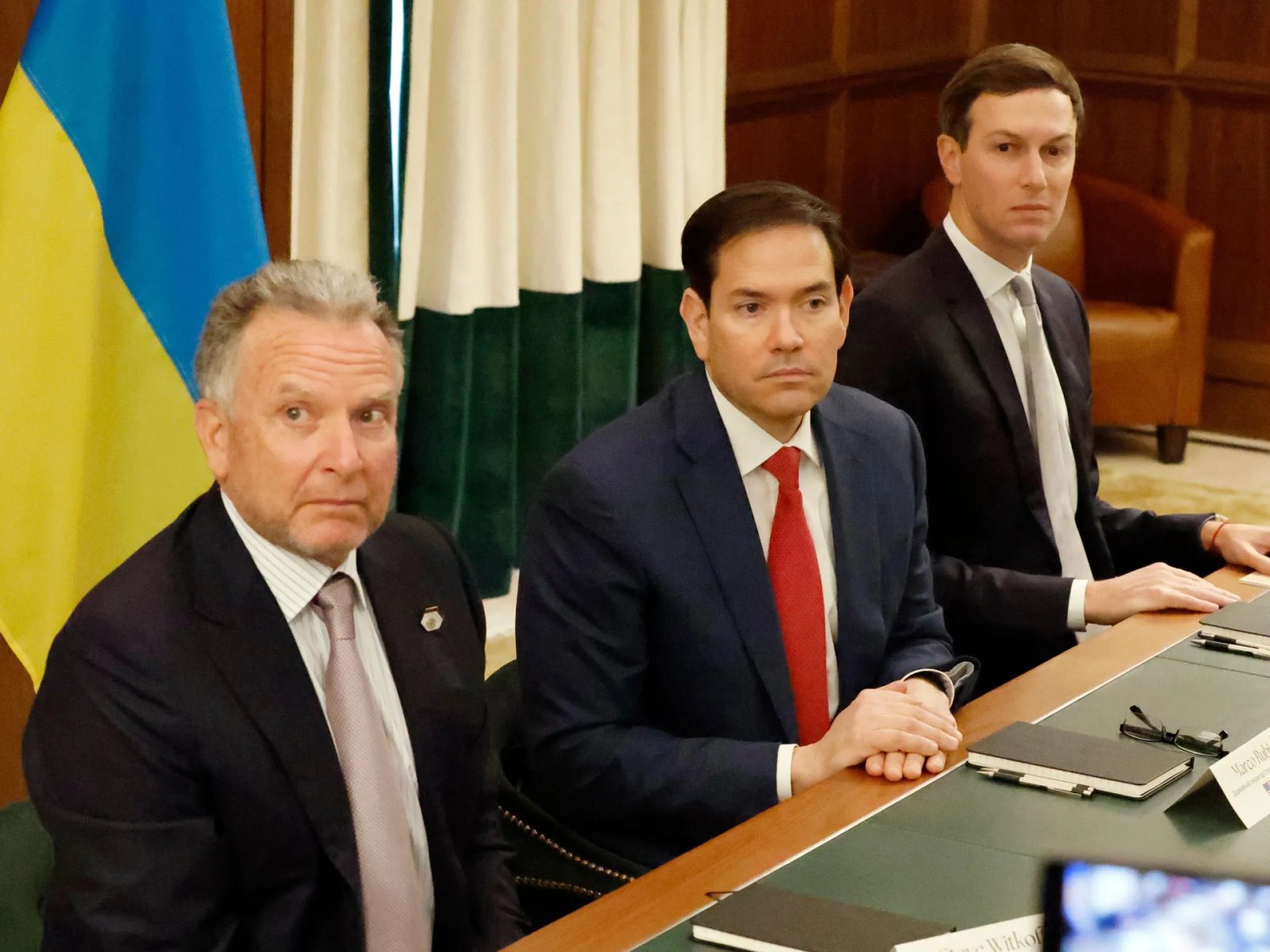
Donald Trump unveils a complex three-tier governing structure for Gaza that places Trump and pro-Israel officials at the top, while Palestinians are relegated to municipal duties.
US President Donald Trump has officially outlined the architecture of the “Board of Peace”, which is expected to “fulfill” Trump’s 20-point plan for Gaza, days after US envoy Steve Witkoff launched “phase two” of the United States-brokered plan to end Israel’s genocidal war on Gaza.
A statement published by the White House on Saturday details a three-tiered power structure – with a US-led “Board of Peace” comprised of billionaires and figures close to Israel at the top.
Bulgarian diplomat Nickolay Mladenov, who has been named the “High Representative for the Board of Peace”, will oversee the transition from Hamas rule to a Palestinian administration of technocrats led by Ali Shaath, a former Palestinian Authority (PA) deputy minister.
The White House also announced the formation of a “Gaza Executive Board”, which will work with the Office of the High Representative and the Palestinian technocratic administration named the National Committee for the Administration of Gaza (NCAG).
While Washington frames this as a roadmap for “reconstruction and prosperity”, the exclusion of Palestinians from the top decision-making body suggests they will have little say in deciding the future governance structure.
Here is how the new three-tier governing structure works, and why experts warn it resembles a “commercial trusteeship.”
According to the White House statement, the “Founding Executive Council” sits at the apex of the pyramid. This body holds the purse strings and sets the strategic vision. It is chaired by President Trump, who retains veto power.
The lineup of Executive Board members is:
Mladenov, who championed the Abraham Accords as UN Middle East envoy in 2015-2020, will serve as the “on-the-ground link” between the Board of Peace and the NCAG.
The White House appointed two “strategic advisers” with controversial records to the Board of Peace:
Aryeh Lightstone: A key figure in the Abraham Accords and the controversial aid organisation the “Gaza Humanitarian Foundation” (GHF), which faced severe accusations regarding aid mismanagement and coordination failures that led to the killing of hundreds of Palestinians seeking food.
Josh Gruenbaum: Associated with previous plans to turn Gaza into a “Middle East Riviera,” prioritising real estate potential over refugee rights.
Iyad al-Qarra, a Gaza-based political analyst, told media that this top-heavy structure reflects a “corporate takeover” of the Palestinian cause.
‘The Board of Peace’
“Trump treats Gaza not as a homeland, but as a bankrupt company in need of a new board of directors,” al-Qarra said. “He has placed the strategic decision-making in the hands of investors and foreign politicians, turning sovereignty into a commercial venture.”
Below the founding council sits the “Gaza Executive Board,” tasked with regional coordination.
Despite the US-led nature of the plan, the inclusion of representatives from Turkiye and Qatar has faced opposition from Israel. Prime Minister Benjamin Netanyahu’s office stated on Sunday that the formation of this executive committee “was not coordinated with Israel”.
According to Israeli media, National Security Minister Itamar Ben-Gvir called for a return to “full war” and “voluntary migration” rather than handing Gaza to a board involving Turkiye. Meanwhile, former National Security Adviser Yaakov Amidror told Israeli radio that allowing “Turkiye – led by a government sympathetic to the Muslim Brotherhood – into Gaza is a strategic error that would strengthen Hamas”.
However, al-Qarra dismisses this “anger” as largely theatrical. “Netanyahu’s objection is tactical,” al-Qarra noted. “Ultimately, this board outsources the heavy lifting of managing Gaza’s misery to international donors, while Israel retains security control without paying the price.”
At the bottom of the hierarchy lies the only Palestinian component: NCAG
In an interview with Egyptian Media, Committee Chairman Ali Shaath confirmed the official lineup. The 12-member team is comprised entirely of professionals tasked with managing specific service sectors:
The appointment of Major General Sami Nasman to the interior sector places a veteran figure in charge of internal policing. However, questions remain about his authority given the parallel presence of US-led forces.
Critics argue that relegating Palestinians to this tier strips them of political agency. Wissam Afifa, a writer and analyst in Gaza, told media that this structure confirms the fears of a “new mandate.”
“The Palestinians have been reduced to municipal employees,” Afifa said. “They are tasked with cleaning up the sewage and rebuilding schools, but they have zero say in the political future of their land. It is a sovereignty-minus model where the ‘National Committee’ takes orders from the ‘High Representative,’ who takes orders from the White House.”
However, Afifa added that people who have witnessed a genocide are desperate for things to change. “Speaking not as an analyst but as a citizen living through the catastrophe, people see this committee as a potential lifeline,” Afifa said. “There are high hopes that it might finally restore some semblance of life to a zone Israel has made uninhabitable.”
Afifa emphasised that while the technocratic administration members are “highly professional”, the real challenge lies elsewhere. “This is not a test for the committee – it is a test for Trump,” he explained.
He questioned whether the new administration will bring in “a ‘Marshall Plan’ level of support” and whether it will “fail to restrain Israeli arrogance”.




 United Arab Emirates Dirham Exchange Rate