
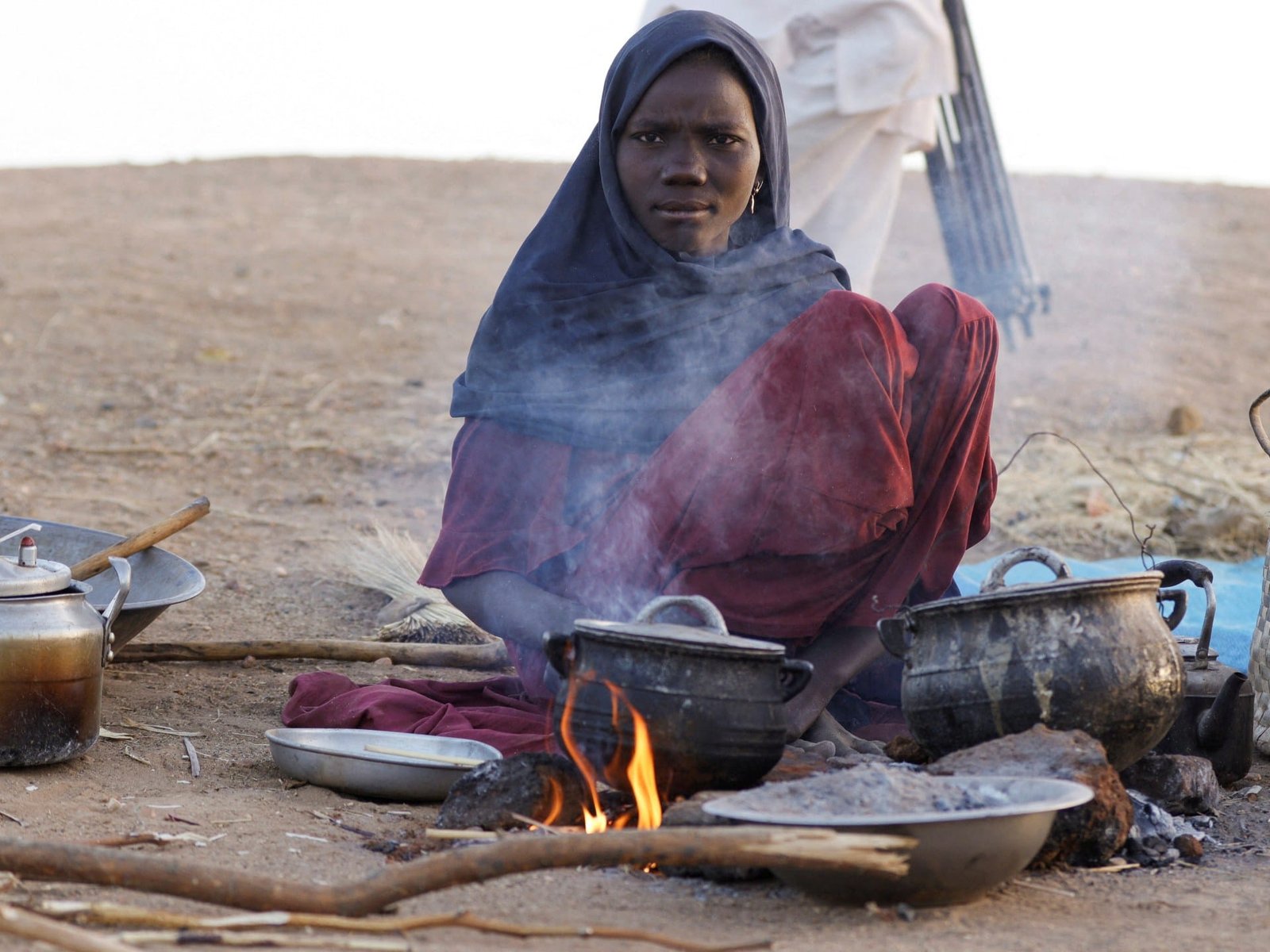
A siege by the paramilitary Rapid Support Forces has caused a famine in North Darfur’s capital el-Fasher.
Sudan’s 27-month civil war is being compounded by a hunger crisis affecting the vulnerable, especially the people trapped in North Darfur’s capital, el-Fasher.
Despite numerous pleas for help from the people within, aid agencies say they have been denied access to el-Fasher.
As a result, some 740,000 people are deteriorating from hunger, according to the African Centre for Justice and Peace Studies.
In December 2024, global hunger monitor the Integrated Food Security Phase Classification, declared a famine in Zamzam and Abu Shouk camps – two camps housing hundreds of thousands of displaced people in North Darfur – and warned that it could spread to el-Fasher by May.
So, how did things get so bad in el-Fasher? Here’s what you need to know:
In April 2024, the paramilitary Rapid Support Forces (RSF) imposed a siege on el-Fasher, angered when local armed groups declared allegiance to the Sudanese Armed Forces (SAF).
The UN says food costs about four times more in el-Fasher than the rest of the country, while local journalist Mohamed Zakaria told media the markets are often bare.
In addition, he said, communal kitchens, which played a pivotal role in feeding civilians across the country, have shut down due to food shortages brought on by the siege.
People originally from el-Fasher and generations of displaced people who sought refuge in North Darfur over the last 20 years are trapped in the capital.
Some first came to the city to escape the government-backed nomadic “Arab” Janjaweed militias during the first Darfur war in 2003. Many of these armed groups are now fighting as part of the RSF.
Others fled to North Darfur to escape the RSF as it swept through the other four states of the sprawling region: South, East, West and Central Darfur.
Most recently, in April, families fled to el-Fasher after the RSF invaded the nearby Zamzam camp, which sheltered more than half a million people.
In March, the United Nations Children’s Fund (UNICEF) said that about half of the people trapped in and around el-Fasher were children.
If it succeeds, Sudan could potentially be partitioned, with RSF rule over the western and southern regions while the SAF controls the centre, north and east.
The SAF has mostly relied on sedentary “non Arab” armed groups, which it fought during the first Darfur war, to repel repeated RSF attacks since the siege began.
These armed groups are collectively known as the “Joint Forces”, and despite holding el-Fasher so far, they are losing ground.
The SAF has flown some aerial bombardment missions over the el-Fasher region, but no campaign has been launched to liberate the city.
At this point, many have turned to animal fodder.
They are eating fodder known locally as ambaz, which is made from the residue of pressed oilseeds like peanuts, sesame and sunflower seeds. People are now grinding these pellets up to make a slurry that can keep them alive.
Zakaria added that people are trying to grow some food in their huts to survive, but it’s not enough to sustain them.
Children are the most vulnerable to starvation.
Over the last 15 months, many people have managed to escape.



 United Arab Emirates Dirham Exchange Rate