
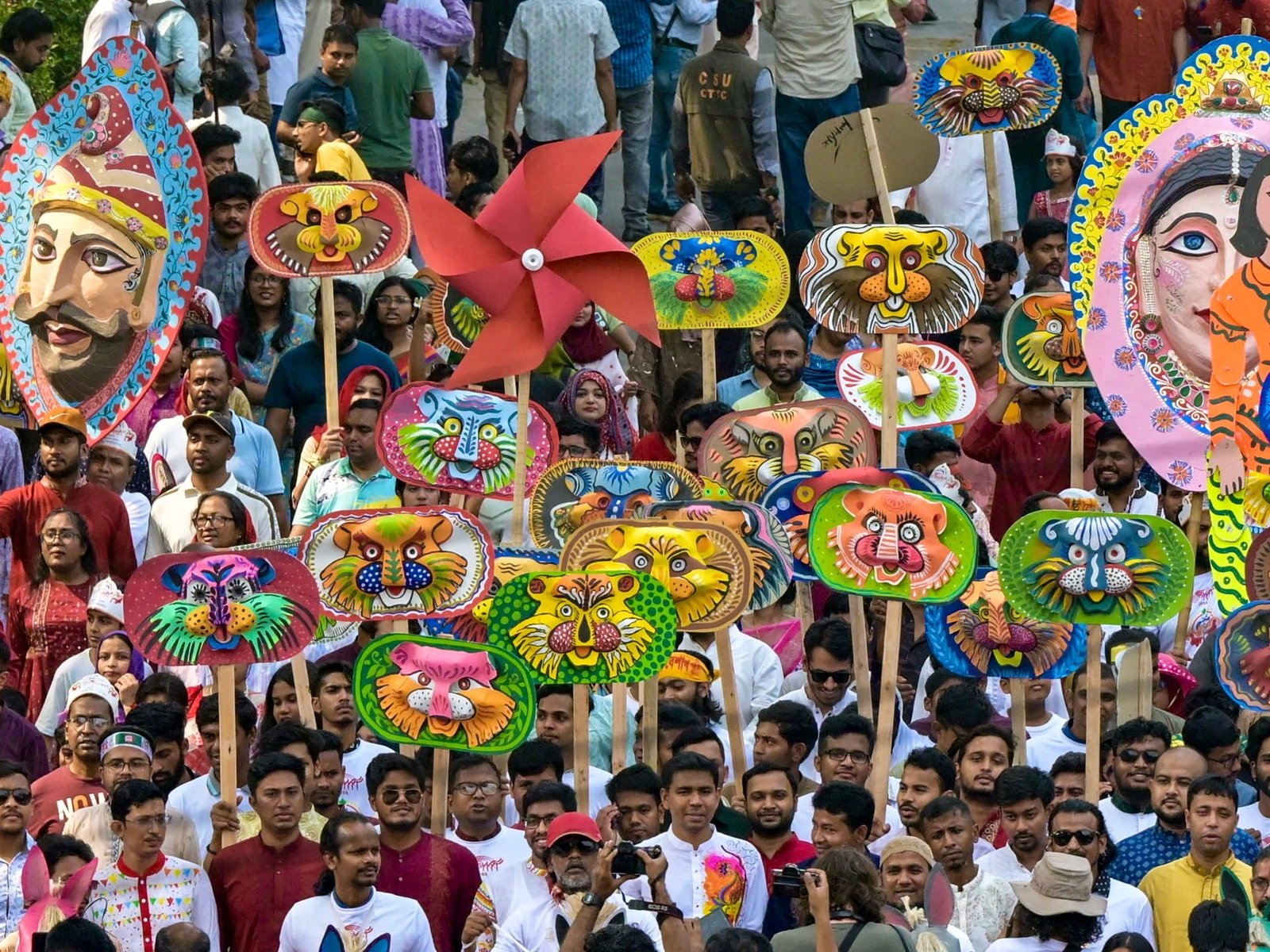
Dhaka, Bangladesh – On Monday, Bangladesh marked its first Bengali New Year, also known as Pahela Baishakh, since a student-led uprising ousted former Prime Minister Sheikh Hasina last year.
But the renaming of an iconic parade, which has been held on the occasion for decades, has led to a debate online and offline, highlighting a political and cultural division within the South Asian nation.
Days before the procession, Dhaka University’s fine arts faculty, which organises the annual event, announced that the parade, known so far as Mangal Shobhajatra (Auspicious Parade), would be renamed Borshoboron Ananda Shobhajatra (Joyous New Year Parade).
The organisers have defended the renaming of the vibrant parade recognised by UNESCO in 2016 as an intangible cultural heritage, saying it has simply reverted to what it was once called, in 1989, when the event was launched.
“This is a reversion to the parade’s original name,” Prof Azharul Islam Sheikh, coordinator of the organising committee and dean of the fine arts faculty, told media.
For the organisers, the name change represents a break from the legacy of Hasina’s Awami League which ruled Bangladesh for 15 years and faced accusations of serious human rights violations, including extrajudicial killings and forced disappearances.
But critics are pushing back, arguing that the shift is about more than a new start. They say it risks erasing a symbol of Bangladesh’s pluralistic tradition.
The parade begins at dawn on the first day of the Bengali New Year.
It features enormous, colourful makeshift statues crafted from bamboo and paper, including representations of animals, birds, and folktales. Women usually wear white saris with red borders, and men dress in panjabis, the long, collarless shirts worn over pyjamas by Bengalis in India and Bangladesh.





 United Arab Emirates Dirham Exchange Rate