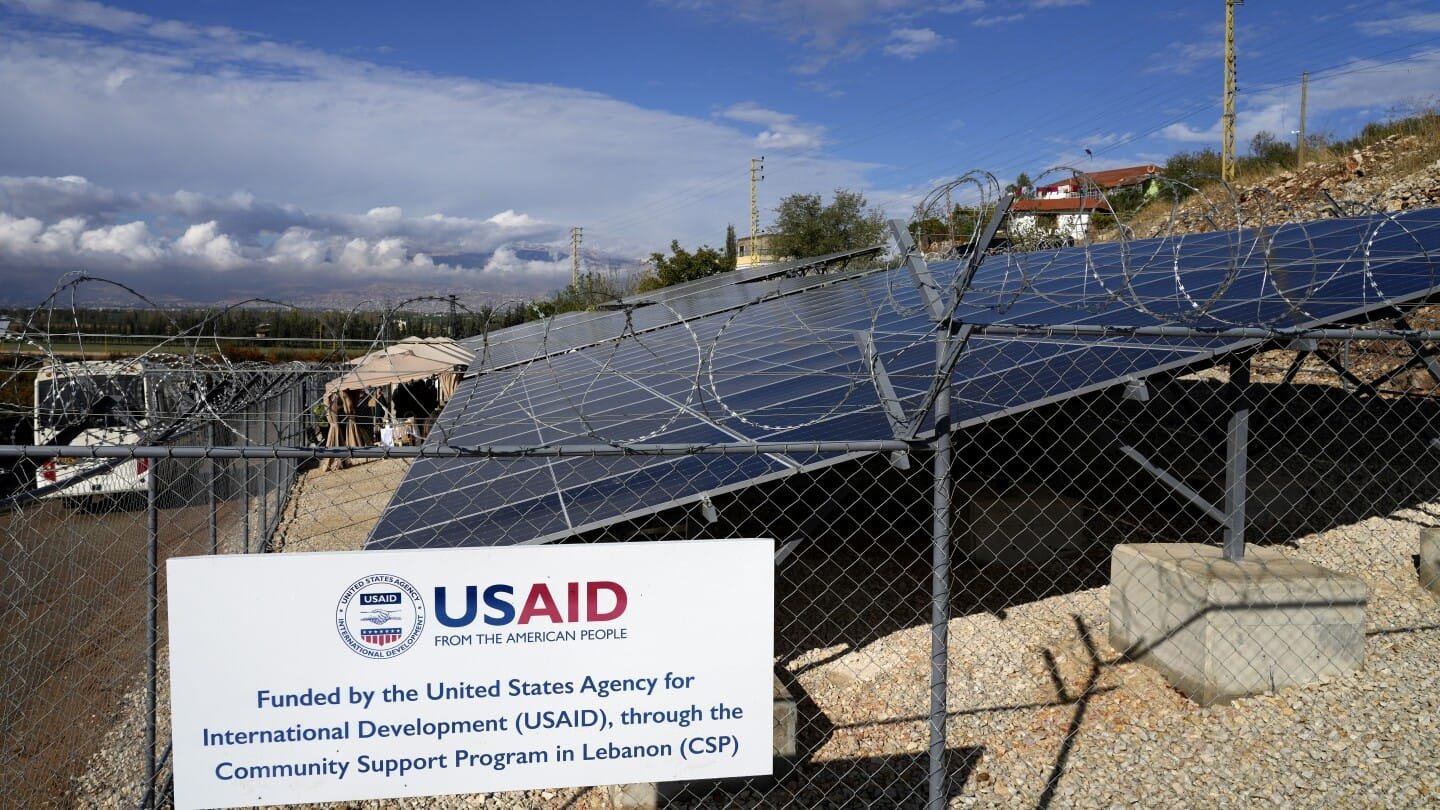
WASHINGTON (news agencies) — U.S-funded aid programs around the world have begun firing staff and shutting down or preparing to stop their operations, as the Trump administration’s unprecedented freeze on almost all foreign assistance brings their work to a sudden halt.
Allies including Ukraine also are struggling to save part of their security funding from the 90-day freeze, ordered by President Donald Trump last week. Trump also just paused federal grants and loans inside the United States.
The Trump administration says it ordered the foreign aid pause to give it time to decide which of the thousands of humanitarian, development and security programs will keep getting money from the U.S.
Meantime, U.S. officials ordered the programs to stop spending immediately. Only emergency food programs and military aid to allies Israel and Egypt were exempt.
The freeze means schools in Liberia are prepared this week to fire cooks who provide children with lunch. U.S. efforts to aid American businesses abroad and to counter China’s rising influence could close. Veterans in Ukraine who call a crisis hotline may soon get a recorded message, with no promise of a call back.
Here’s a look at the foreign funding freeze and how it is hitting U.S. aid programs worldwide:
The United States is the world’s largest source of foreign assistance by far, although other countries give a bigger share of their budgets. It provides 4 out of every 10 dollars donated for humanitarian aid.
Aid workers, local officials and analysts stress that the scale of the freeze was difficult to grasp.
“The aid community is grappling with just how existential this aid suspension is,” said Abby Maxman, president of Oxfam America, one of the few aid officials willing to speak publicly about the impact of the freeze following Trump administration warnings not to.
The Trump administration placed more than 50 senior officials with the U.S. Agency for International Development on leave Monday as many were helping organizations deal with the freeze. USAID’s acting head said he was investigating whether the officials were resisting Trump’s orders.
U.S. policy for decades has been that aid given abroad pays for itself through greater national security, by stabilizing regions and economies and improving relations with partners.
But many Trump administration officials and Republican lawmakers believe much foreign assistance is money that should be spent or saved at home.
For every program, “we’ll expect the State Department to defend, repent, or in some cases, make the case for continuation of their programs,” said Rep. Brian Mast, Republican chairman of the House Foreign Affairs Committee.
Ukrainian President Volodymyr Zelenskyy says the U.S. freeze doesn’t affect vital American support to his military as it fights invading Russian forces. That’s mostly true.
The only military aid the State Department is responsible for and thus is covered by the pause is foreign military financing and international military education and training. There are other baskets for U.N. peacekeeping operations and demining programs.
Most of Ukraine’s military aid, however, has come from the Pentagon. That includes a program drawing from existing arms stocks and another called the Ukraine Security Assistance Initiative, which is used to pay for weapons contracts that would not be delivered for a year or more.
Neither of the Defense Department programs is directly affected by the freeze, although U.S. officials say there is nothing in the pipeline either.
But civilian programs vital to Ukraine’s war effort do come from the State Department. There’s no word of exemptions for them. That includes salary support that the U.S. provides to keep Ukraine’s government running despite the war’s damage to the economy.
That support is important, said Bradley Bowman of the Foundation for Defense of Democracies. “But I think if our European allies are reading the political moment in the United States well, they better be moving, I say quickly, to try to pick up most or all of that burden.”
The U.S. has sent stop-work orders to wartime civilian programs it supports in Ukraine.





 United Arab Emirates Dirham Exchange Rate