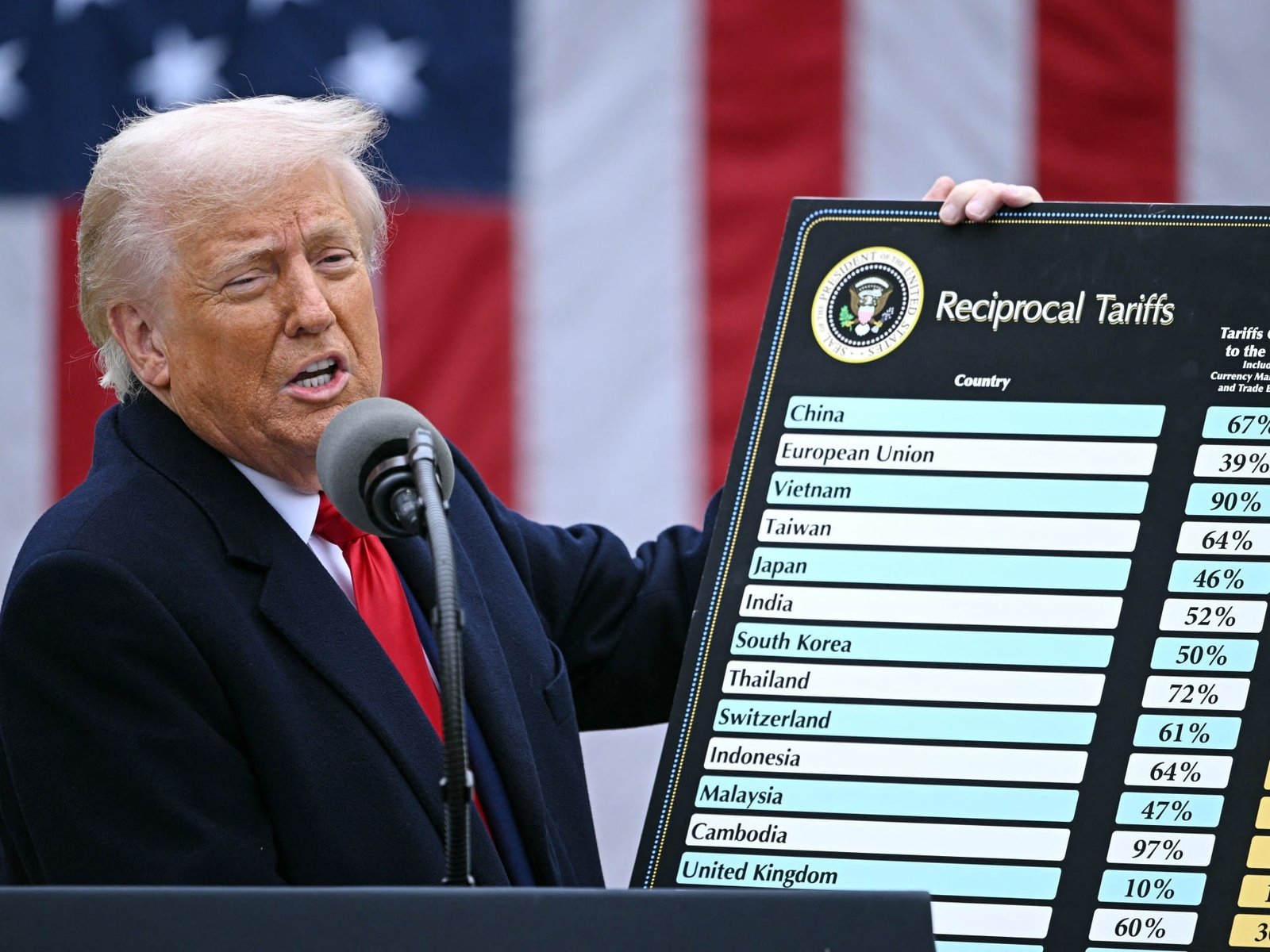
In justifying his latest tariffs announcement, President Donald Trump complains of unfair trade deficits, saying the US has been “looted, pillaged, raped, plundered” by other countries for decades.
He has blamed China for exploiting the United States through unfair trade agreements, condemned Canada’s high tariffs on American dairy as unacceptable, and criticized Cambodia for imposing excessive tariffs and benefiting at the US’s expense for years.
What he has left out in his repeated criticisms is the trade surplus the US benefits from when it comes to his country’s service industry.
Services make up about 70 percent of the US economy. That includes a wide range of businesses, including education, healthcare, travel and hotels, financial services, as well as media and entertainment, insurance, maintenance and repair, and charging for the use of intellectual property, among others.
Exports of these services contribute approximately 25 percent of the US economy, economists say.
“The US has a strong comparative advantage in several major service industries: education, health, finance, law, accounting, entertainment. That explains the trade surplus,” said Gary Huffbauer, nonresident senior fellow at the Peterson Institute for International Economics.
In 2023, the US exported services worth $1.02 trillion, up 8 percent from a year earlier, and imported services for $748.2bn, up 5 percent. That left it with a trade surplus of $278bn, a trend stretching back at least two decades.
“Trump may be ignorant of the services trade surplus, but more likely he thinks he can get more popular approval by talking about deficits in manufactured goods,” Huffbauer added, pointing to the auto worker who Trump brought during his tariff announcement on Wednesday as an example of support for tariffs among the US working class.
Rachel Ziemba, an economist and adjunct senior fellow at the Center for a New American Security, agreed that it was “a puzzlement” that Trump never referred to this metric.







 United Arab Emirates Dirham Exchange Rate