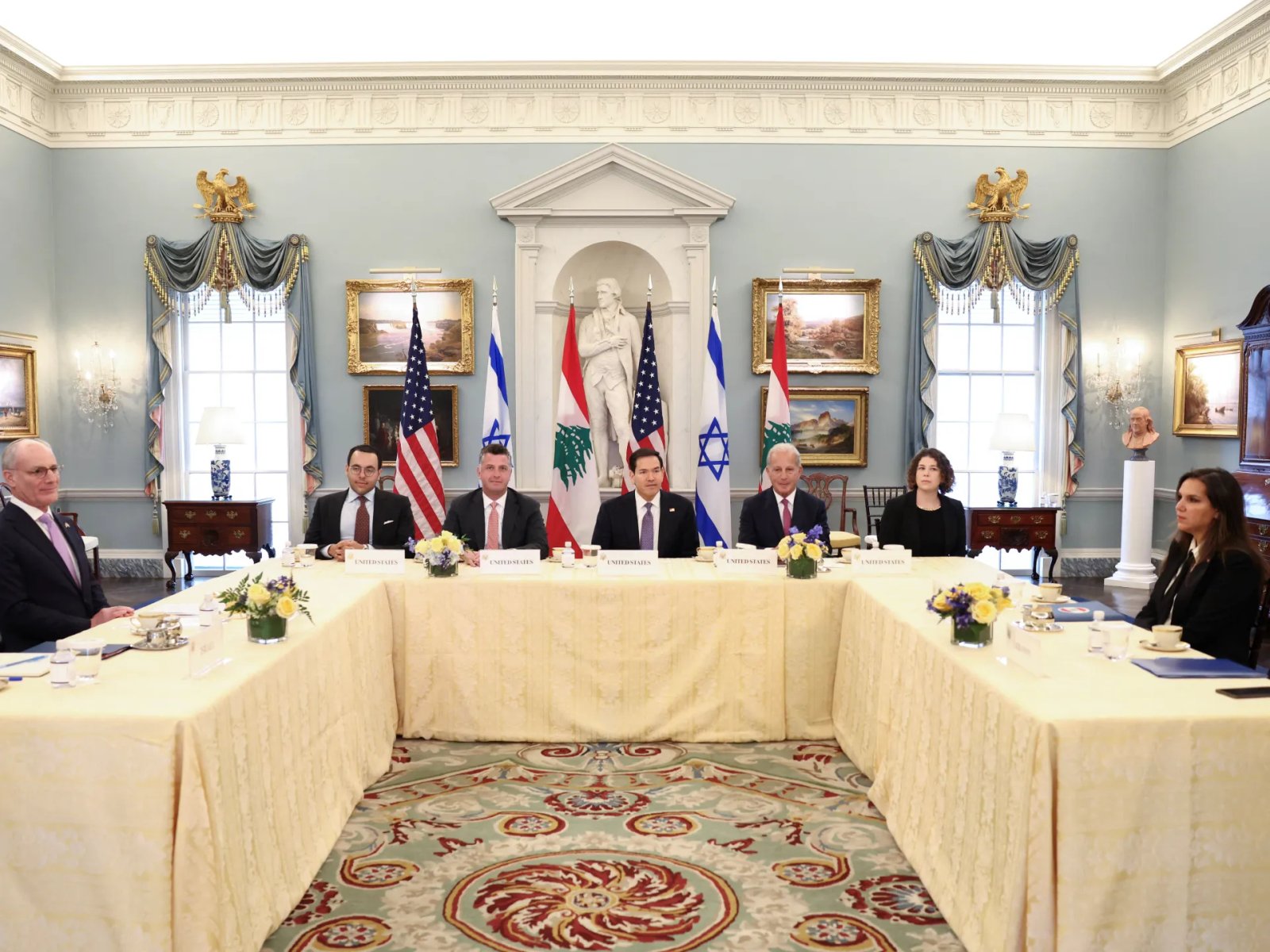
Lebanese leaders have gone to Washington for the first direct negotiations with Israel in over 30 years, attempting to restore sovereignty under near-impossible terms.
According to the ceasefire deal agreed on April 16, Lebanon must “effectively demonstrate its ability to assert its sovereignty” as a condition for extending the fragile pause in hostilities. Israel, for its part, preserves the right to take “all necessary measures in self-defence, at any time” and to keep its forces deployed on Lebanese soil.
This is the framework through which Lebanese sovereignty is to be performed. Beirut is expected to move against Hezbollah’s armament while Israel retains effectively open-ended military freedom inside Lebanese territory, with no credible pathway to deterrence on the table.
From Washington’s perspective, the logic is easy enough to understand. Hezbollah is weaker, Tehran is under pressure, Damascus is amenable and the government in Beirut has never been more willing to accede to United States demands. From the White House, it can look like a convergence: a moment where giving Israel military latitude to occupy land, displace southern communities, and float annexation will produce a Lebanese state that the US can shape.
But a government easier to influence is not one that can actually govern. There is a way to disarm Hezbollah and consolidate Lebanese sovereignty, but it is not the current path imposed by the US and Israel.
No serious argument for Lebanese statehood can evade what Hezbollah has done; more than any other Lebanese actor, it has undermined the state’s monopoly on force. It has built and maintained a military structure outside formal institutions, reserved for itself the right to shape decisions of war and peace, vetoed government decisions and done away with many of its domestic opponents by force or the threat of it. The result has been a hybrid order where sovereignty existed in law but not in full practice.
Yet the belief that external force can correct this condition has been tested before and failed. In 1982, Israel invaded Lebanon to expel the Palestine Liberation Organization (PLO). It succeeded in driving the PLO leadership out of Beirut but did not produce a stable Lebanese government or a settlement aligned with Israeli preferences.
The Lebanese Civil War entered a new and arguably more brutal phase, epitomised by an Israeli occupation that lasted until 2000. That occupation became one of the central conditions in which Hezbollah emerged, consolidated and claimed the legitimacy it trades on today.
Brute force repeatedly altered the immediate balance while helping create the social and political terrain in which new armed legitimacy could emerge.





 United Arab Emirates Dirham Exchange Rate