
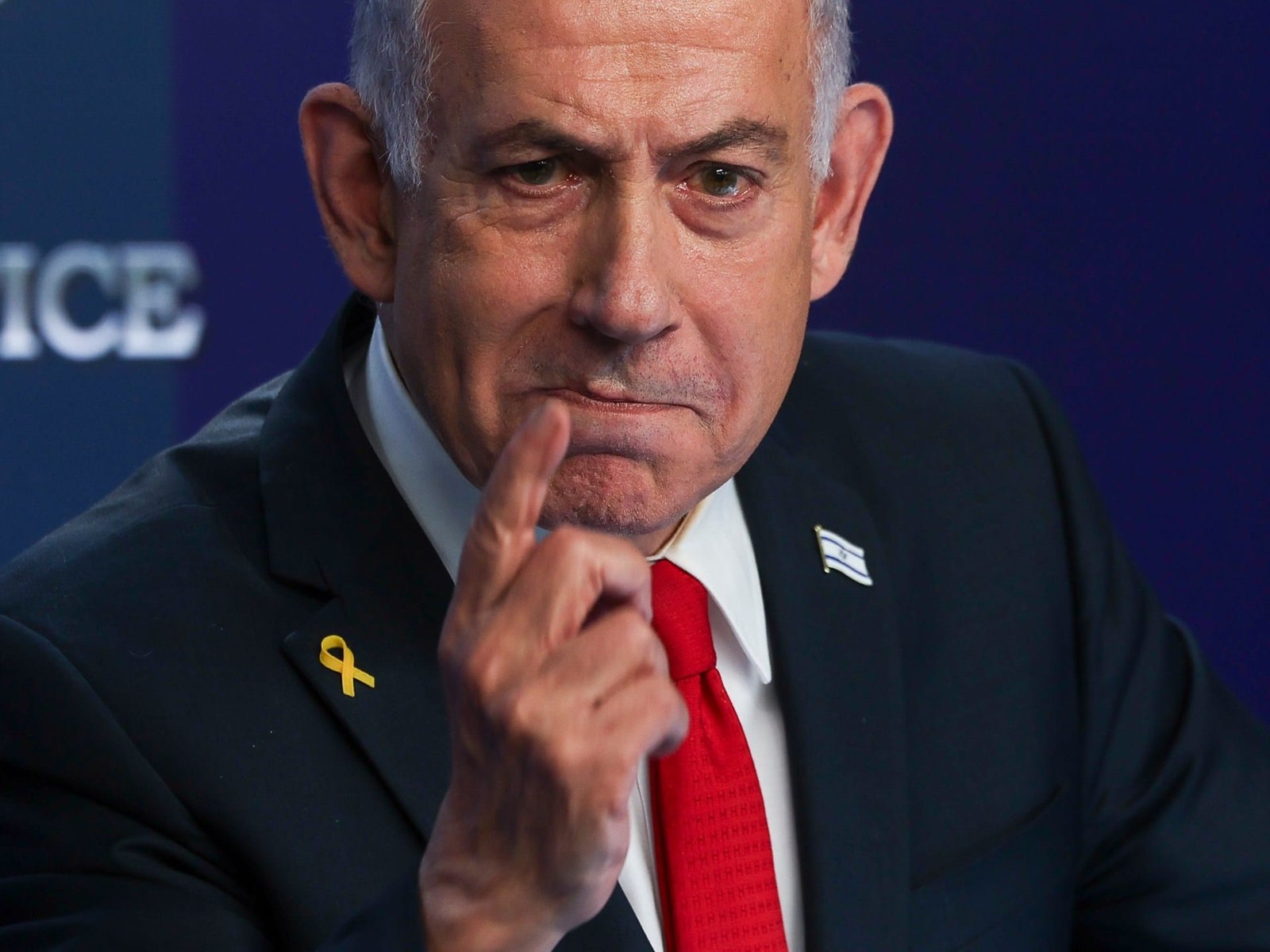
Israel’s longest serving prime minister faces the difficult task of overcoming opposition both domestically and abroad.
Wherever Israeli Prime Minister Benjamin Netanyahu looks, trouble seems to be looming.
Criticism of his government’s war on Gaza is mounting, with charges of genocide and war crimes coming from both foreign leaders and former Israeli prime ministers.
Internationally, Israel is looking increasingly isolated, as images of the starvation it is inflicting on Gaza flood global media.
Domestically, Netanyahu faces deep criticism of a war many believe he is only prolonging to stay in power.
Legally, the prosecution in his corruption trial has begun its cross-examination of him, while politically, he is facing a possible collapse of his governing coalition.
Netanyahu has never seemed so embattled in his career, but is this really the end for Israel’s longest-serving prime minister?
Here’s what we know.
Netanyahu has long been accused of manipulating the war in Gaza for his political ends, an accusation that gained new momentum since March, when Israel broke the ceasefire with the Palestinian group Hamas, further endangering the captives held in Gaza.
In late May, a poll for Channel 12 television showed a majority of Israelis thought Netanyahu cared more about retaining his grip on power than returning the captives.
Most of the protests held in Israel have focused on the captives taken during the Hamas-led assault of October 7, 2023, and how extending the war for political motivations endangers them.
But recently, a small but significant number of Israelis have also protested against the intense suffering their government is inflicting upon the people of Gaza. In addition to an open letter from the country’s academics denouncing Israel’s devastation of Gaza, a growing number of photographs of Palestinian children are being held by demonstrators as part of wider Saturday night protests against the war in Tel Aviv.
Even members of the military are growing unhappy with the war in Gaza.
As reports of reservists refusing to fight increased, open letters by current and former officers in various divisions appeared, calling for an end to the war.
Two of Israel’s former prime ministers have recently publicly criticised Netanyahu.
Ehud Olmert, prime minister from 2006 to 2009, wrote in Haaretz that Israel was guilty of having committed war crimes in Gaza and that: “This is now a private political war.”
“A sane country does not wage war against civilians, does not kill babies as a pastime, and does not engage in mass population displacement,” former general and leader of the Democrats party, Yair Golan, told local radio station Reshet Bet.
He was referring to the stated plans of far-right ministers like Finance Minister Bezalel Smotrich and National Security Minister Itamar Ben-Gvir to expel Palestinians from Gaza in order for Israelis to settle it.
Olmert added on Tuesday that Trump should tell Netanyahu that “enough is enough”.
For years, Israel has been divided over the conscription of its ultra-Orthodox youth, who were exempt from military service if they were full-time students in religious schools or yeshivas.
In June 2024, Israel’s Supreme Court ruled that the exception could no longer apply, fulfilling a longstanding demand by secular Israelis who protested against the double standard.
But the leaders of the two ultra-Orthodox parties in the ruling coalition, Shas and United Torah Judaism (UTJ), are threatening to collapse the government unless it passes legislation that would override the Supreme Court decision.
It is unclear whether elections would result in a parliament more sympathetic to the ultra-Orthodox, but recent developments, like plans to increase the number of conscription notices to ultra-Orthodox students, have pushed the issue to the fore.
Arab and European leaders have become increasingly vocal in their criticisms of Netanyahu and the war.
However, for now at least, he still has the vital support of the US and President Donald Trump.
In early May, Saudi Arabia and the Arab League slammed Netanyahu after he suggested that expelled Palestinians would be able to settle in Saudi territory.






 United Arab Emirates Dirham Exchange Rate


