
Israel believes Iran is a threat to its security despite Iran’s insistence that it doesn’t want nuclear weapons.
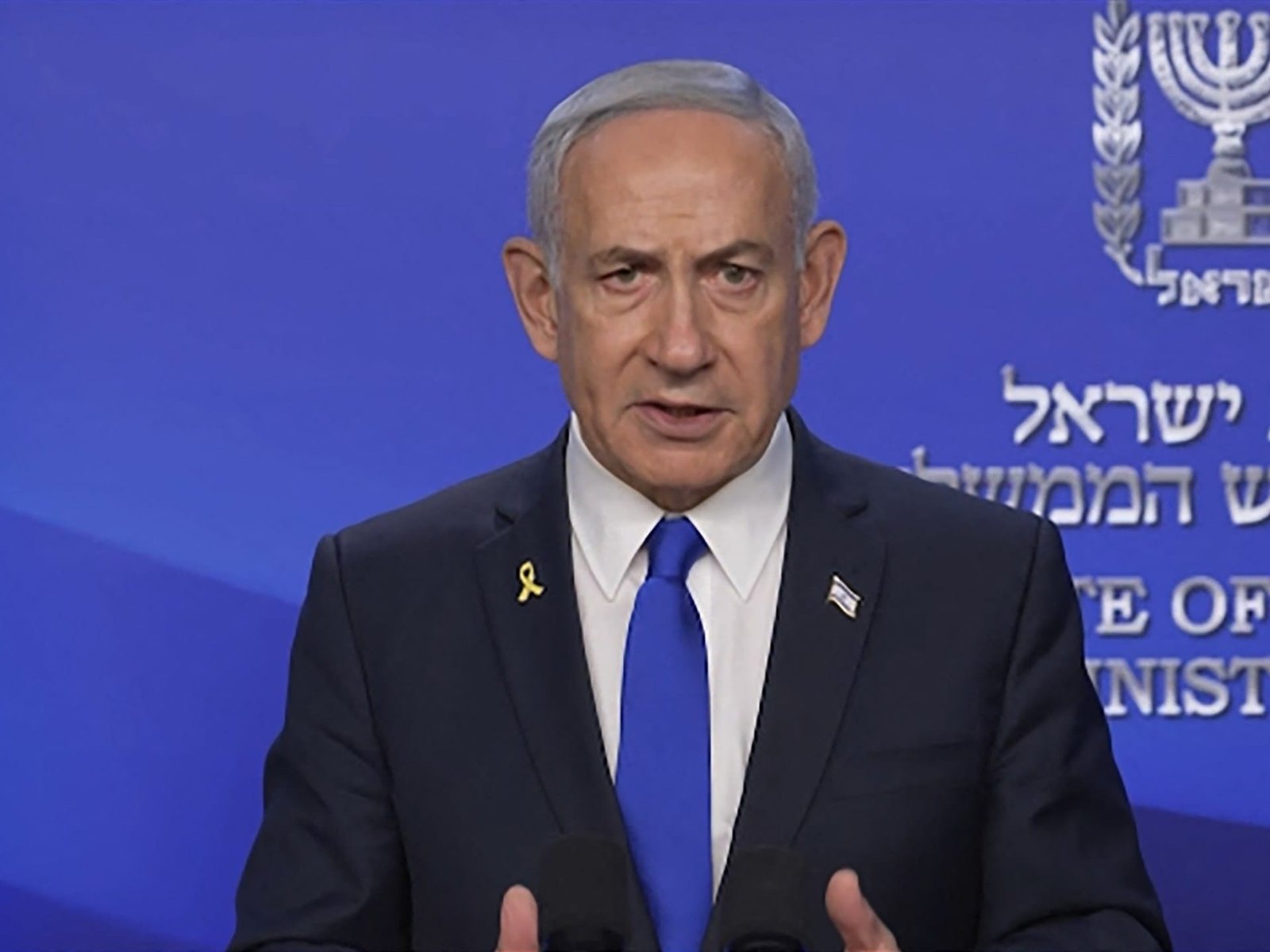
Israel has begun its long-signalled attacks on Iran with Prime Minister Benjamin Netanyahu saying they would continue “as long as necessary”.
The attacks, which began early on Friday, appear to have been carefully planned, hitting military and government targets and killing several senior military leaders – including the head of the Islamic Revolutionary Guard Corps (IRGC), Hossein Salami, and the chief of staff of the armed forces, Mohammad Bagheri. Prominent Iranian nuclear scientists are also among the dead.
The strikes took place despite negotiations between Iran and Israel’s principal ally, the United States, over the future of Tehran’s nuclear programme, leading many to suspect that the threat of Israeli action was a coordinated ploy to bring additional pressure onto Iran.
US support remains vital to Israel. As well as serving as the country’s principal armourer, Washington also acts as a permanent shield against criticism of Israel in the United Nations, frequently using its veto in the UN Security Council to halt any official censure of its ally despite allegations of Israel’s repeated breaches of international law.
And an attack against Iran – a powerful regional force with allied groups across the Middle East – is ultimately a risky move for Israel, which is expecting an Iranian response, and the US, which has soldiers deployed across the region.
So, given the stakes, why would Israel attack Iran and why now? Here’s what we know:
Israel’s military superiority in the Middle East comes not just through its conventional arsenal or the backing of the US, but from the advantage it has that no other country in the region does: nuclear weapons.
Justifying the Israeli attack, Netanyahu said Iran could have produced “a nuclear weapon in a very short time – it could be a year, or it could be a few months”. An unnamed Israeli military official was also quoted as saying Iran had “enough fission material for 15 nuclear bombs within days”.
The International Atomic Energy Agency (IAEA) reported on Thursday that Iran had failed to uphold the obligations it had signed on to as part of the Nuclear Non-Proliferation Treaty, an accusation Iran quickly rejected.
The IAEA also noted what it believed was a long history of noncooperation between Iran and its inspectors. However, it didn’t say that Iran had developed nuclear weapons.
Did Iran pose an imminent nuclear threat to Israel?
As part of a 2015 deal with the US, other Western countries, China and Russia, Iran agreed to limit its nuclear programme and allow the IAEA to regularly inspect its facilities in return for relief from the crippling sanctions that it was under.
However, in 2018, US President Donald Trump – then in his first presidential term – unilaterally withdrew from the deal and reimposed sanctions.
Netanyahu has previously described Iran as “the head of the octopus” with “tentacles all around from the Houthis to Hezbollah to Hamas”. The idea is that Iran is at the head of a network of anti-Israeli groups across the region known as the “axis of resistance”.
Since starting the war in Gaza in October 2023, Israel has been able to severely weaken both Hamas and Hezbollah, limiting their abilities to attack Israel. The top leaders of both organisations have been almost entirely taken out, including important figures, such as Hezbollah leader Hassan Nasrallah and Hamas leaders Yahya Sinwar and Ismail Haniyeh.
The attacks on Hezbollah in particular were not met with the kind of blowback that many in Israel feared, allowing hawks in Israel to argue that their country has an unprecedented opportunity to continue to target its enemies, including Iran, and reshape the entire Middle East. Some may think the opportunity is even there for regime change in Iran – although that would likely require a far longer war than Israel has the capability to conduct.
That is despite there being no direct confrontation since last year between Israel, Iran or any of its allies before Friday’s strikes by Israel. Neither had there been any threat of action, other than that of counterstrikes if Israel did attack.
Many in Israel accuse Netanyahu of making military decisions – including in the war on Gaza, where Israel has killed more than 55,000 Palestinians – on the basis of his own political considerations.
In the eyes of his critics, Netanyahu has become dependent upon conflict, both with Iran and in Gaza, to maintain his coalition. The alternative is to risk the collapse of his government and a public reckoning with his own failings ahead of the October 7, 2023, Hamas-led attacks on Israel, which killed 1,139 people, as well as a potential prison sentence as a result of the multiple corruption charges he faces.
“For Netanyahu, the difference between foreign and domestic politics cannot be distinguished,” Israeli political analyst Ori Goldberg said. “There was no imminent threat to Israel. This was not inevitable. The [IAEA] report did not contain anything suggesting Iran posed an existential threat to Israel.”
Most politicians in Israel have rallied around the military since the strikes on Iran. On Thursday, Netanyahu’s coalition had only survived a vote to dissolve the parliament and trigger elections after reaching an 11th-hour compromise over the contentious exemption of ultra-Orthodox youth from the draft.







 United Arab Emirates Dirham Exchange Rate