More than 20 leaders from non-Western nations gathered in Tianjin, China over the weekend for the Shanghai Cooperation Organisation (SCO) summit, which concluded on Monday, and at which President Xi Jinping set out his vision for a global economic order with the Global South at its centre.
Against the backdrop of new global tariffs imposed by United States President Donald Trump, Xi told delegates: “We must continue to take a clear stand against hegemonism and power politics, and practise true multilateralism.”
The summit brought together some of the strongest emerging economies, including India and Russia, which, along with China, account for more than one-fifth of the world’s gross domestic product (GDP).
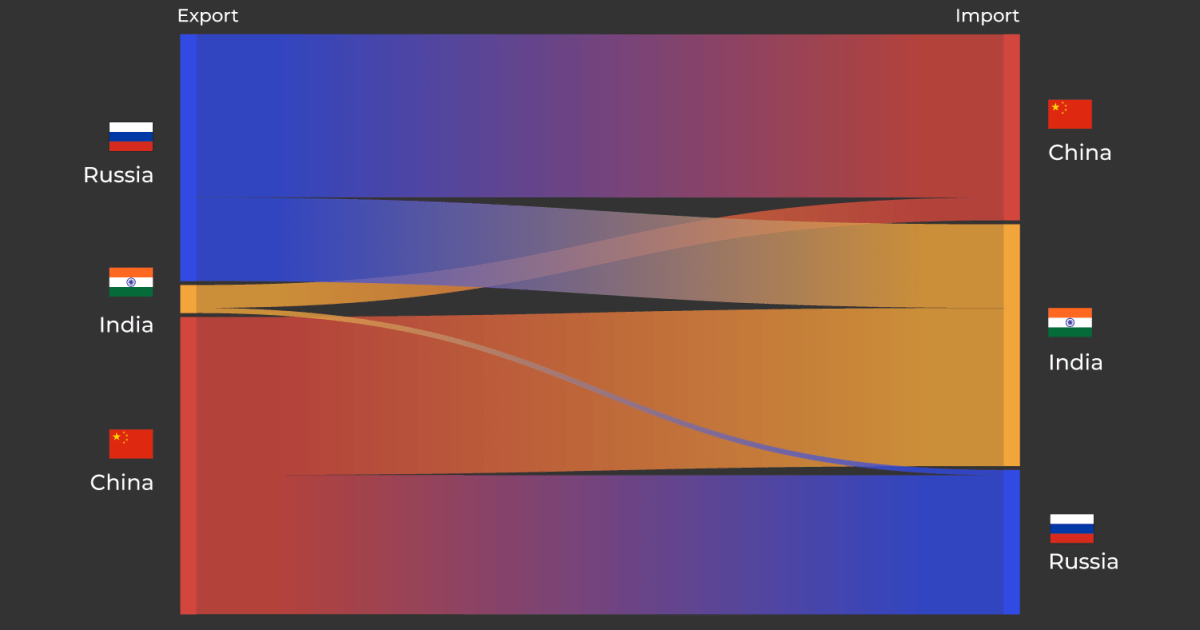
Trilateral trade between China, India and Russia accounted for $452bn in 2023, up from $351bn in 2022, according to the Observatory of Economic Complexity (OEC).
Seen as an alternative power structure to most US-led international institutions, the 10-member SCO includes much of Central Asia, Russia, China, India, Iran, Pakistan and Belarus, and represents about 43 percent of the world’s population and 23 percent of global GDP.
Beijing’s push for multilateralism is coming at a time of rising grievances with Washington, whose trade tariff policies have provided SCO members with common ground to work on.
China has a diverse range of trading partners.
Its largest buyer is the US, which imported $442bn or 12.9 percent of China’s total exports in 2023 – mainly consisting of electronics, machinery, consumer goods and telecommunications equipment.


 United Arab Emirates Dirham Exchange Rate