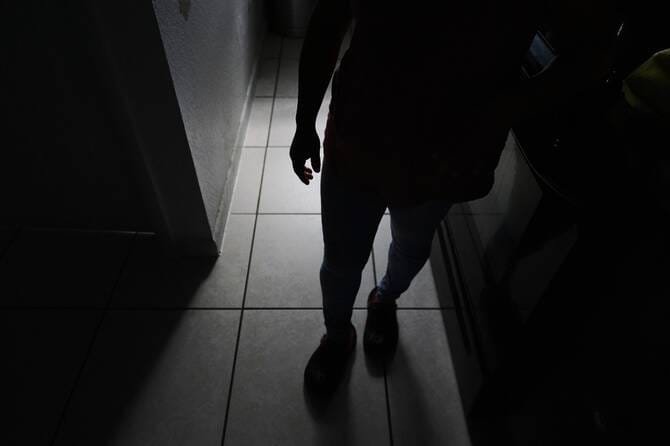
As border separations fade, prolonged detentions and deportations within the country are dividing families who have already embarked on perilous journeys to safety.
MIAMI — A shift in U.S. immigration enforcement is creating a new wave of family separations, not at the border, but within American communities. While the forcible separations of the first Trump administration drew international condemnation, current policies are leading to the arrest and prolonged detention of migrant parents inside the country, tearing apart families long after their arrival.
The Associated Press recently documented the stories of three families navigating this painful reality, marked by fear, instability, and an uncertain future.
Jakelin Pasedo arrived in Miami with her two young sons in December 2024 and was granted refugee status. Her husband, Antonio Laverde, who had journeyed from Venezuela earlier, was arrested in June at his shared housing. After three months in detention, facing indefinite separation, he requested deportation back to Venezuela. Pasedo, who fears persecution if she returns, now cares for their children alone while cleaning offices, hoping for a future reunion in the U.S.
Amavilia, 31, crossed from Guatemala in September 2023. She cares for her two young children, waking at 3 a.m. to cook lunches she sells while also peddling homemade treats door-to-door. Her husband Edgar, who had lived and worked in South Florida for over two decades, was detained on a 2016 warrant and deported to Guatemala on June 8. His departure left the family initially unable to pay rent and reliant on donations. “I fell into despair. I didn’t know what to do,” she said, now living in fear of police and urging her daughter to stay calm.
Yaoska, five months pregnant, lives in Miami with her two young sons, one a U.S. citizen, while wearing a 24-hour GPS monitoring bracelet. She fled Nicaragua in 2022. Her husband, a political activist who faced threats and beatings, was detained during an appointment with Immigration and Customs Enforcement (ICE). After failing a credible fear interview, he was deported following three months of detention. “It’s so hard to see my children like this. They arrested him right in front of them,” Yaoska said, her voice trembling as she struggles to find stable work despite having work authorization until 2028.
These cases highlight a deepening human toll as families who have already endured arduous migrations find themselves fractured by domestic enforcement, living in a limbo of legal uncertainty and emotional distress.







 United Arab Emirates Dirham Exchange Rate