Analysts say a temporary ceasefire may bring relief, but the complex issues behind the violence must be addressed.
The outbreak of clashes between the Syrian army and the Kurdish-led Syrian Democratic Forces (SDF) has highlighted the political and security challenges the country continues to face more than a year after the fall of former President Bashar al-Assad.
The fighting in Aleppo, which has killed at least 22 people this week, brought to the forefront fundamental tensions between Damascus and the SDF – both of which are backed by the United States.
The SDF and the Syrian government had signed an agreement to integrate the Syrian-dominated forces into a state institution in March of last year. But little progress has been made on that front, and the sporadic violence between the two sides turned into intense fighting this week.
A truce to halt the clashes was announced on Friday, but it appears to be already unravelling. Analysts warn that without a comprehensive resolution to the tensions, more fighting is all but inevitable.
While it appears that there is no domestic or international appetite for an all-out war in Syria, experts say that with the merger of the SDF – which controls large parts of northeast Syria – into the state stalled, the threat of renewed violence persists.
“I don’t think there’s a lot of international interest in major fighting at the moment, especially from the US side — so that could help tamp things down,” said Aron Lund, a fellow at Century International.
“It’s far from over, however. All the main issues remain unresolved, and neither side is willing to compromise on fundamentals, so we’re going to see more clashes eventually.”
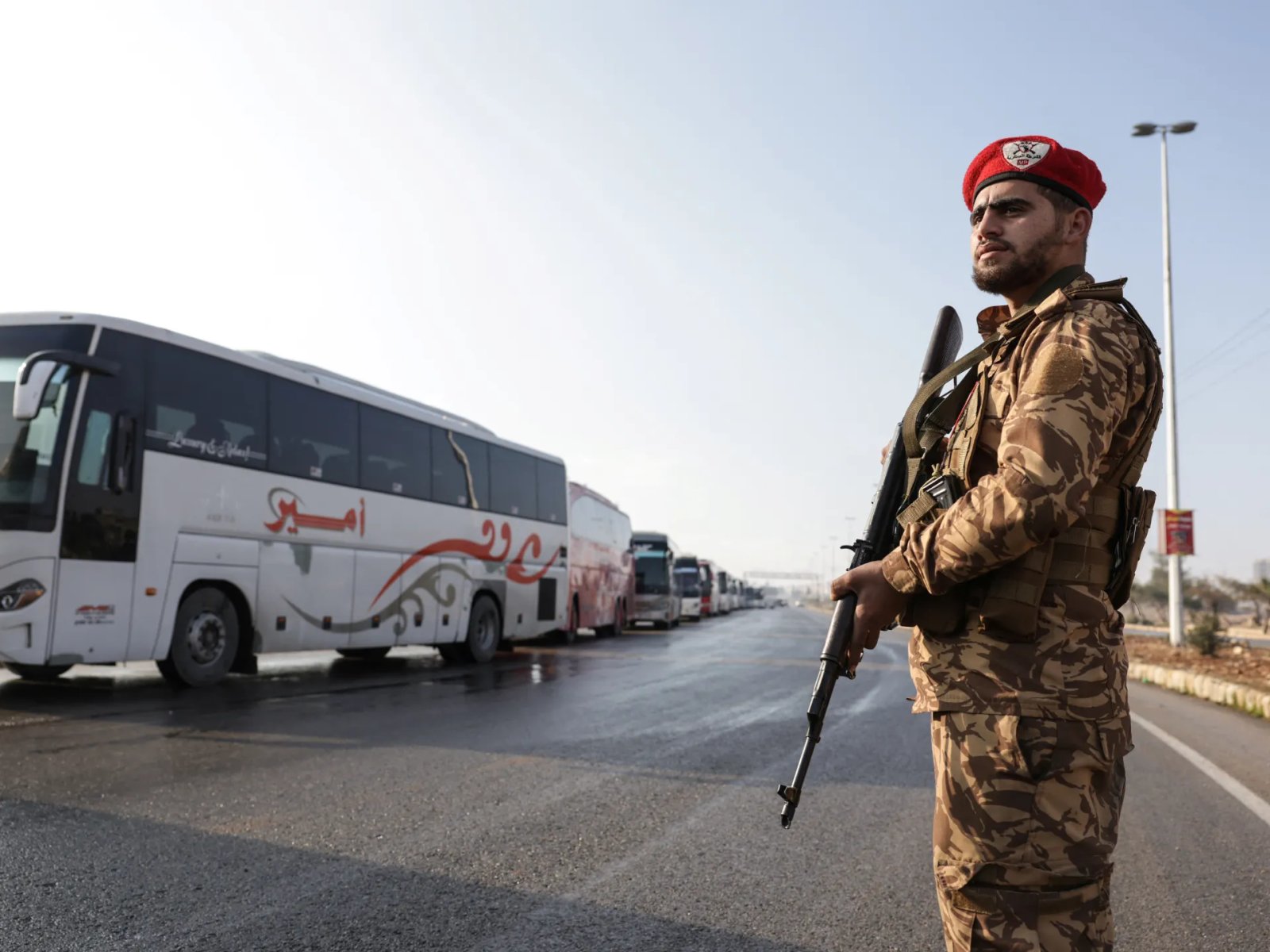
Early on Friday, the Syrian Ministry of Defence announced a six-hour temporary ceasefire in the three neighbourhoods, which was later extended to give the SDF fighters more time to leave.
Syria’s Defence Ministry said SDF fighters based in Aleppo’s neighbourhoods will be redeployed to areas east of the Euphrates River.
However, Kurdish councils that run Sheikh Maqsoud and Ashrafieh said in a statement that calls to leave were “a call to surrender” and that Kurdish forces would instead “defend their neighbourhoods”.
The fighting casts its shadow over the March 2025 deal between Syrian President Ahmed al-Sharaa’s government and the SDF to bring the Kurdish-led forces under state institutions.
The agreement provides for a nationwide ceasefire, SDF cooperation with the state in confronting pro-al-Assad armed groups, and formal recognition of the Kurds as an integral part of Syria, with guaranteed citizenship and constitutional rights.
The clashes
It also places all border crossings with Iraq and Turkiye, along with airports and oilfields in northeastern Syria, under the authority of the central government.
So far, no meaningful progress has been made towards integration. Both sides remain at odds over a number of issues, including the process and structure of integration, for example, whether the SDF would join as a unified bloc or dissolve into individual recruits.
It was officially established in 2015, with the People’s Protection Units (YPG), a Kurdish militia linked to the Kurdistan Workers’ Party (PKK), forming the bulk of its fighting force.
Despite the PKK being listed as a “terrorist” group by the US and most Western countries, Washington quickly allied itself with the SDF in the fight against ISIL (ISIS).
The group continues to be backed by a US-led international coalition and retains advanced equipment and training that were provided by the US and its partners.
It is estimated to have 50,000 to 90,000 well-trained, battle-hardened fighters.
But Turkiye, which struggled with a decades-long PKK rebellion and attacks, views the SDF as a threat to its security.
In the recent clashes, official Syrian government media outlets have referred to the SDF as “PKK terrorists”.
With Turkiye, a NATO ally of the US, distrustful of the SDF, the country’s defence ministry has said it is ready to “support” Syria in its fight against the group.
Ankara, an ally of al-Sharaa’s government, has criticised Washington for years over its support for the SDF and launched several military operations in northern Syria to push the group off its border.
The intensifying rivalry between Turkiye and Israel has also raised concerns that the Israeli government may put its weight behind the SDF to provide a counterweight to Ankara’s influence in Syria.




 United Arab Emirates Dirham Exchange Rate