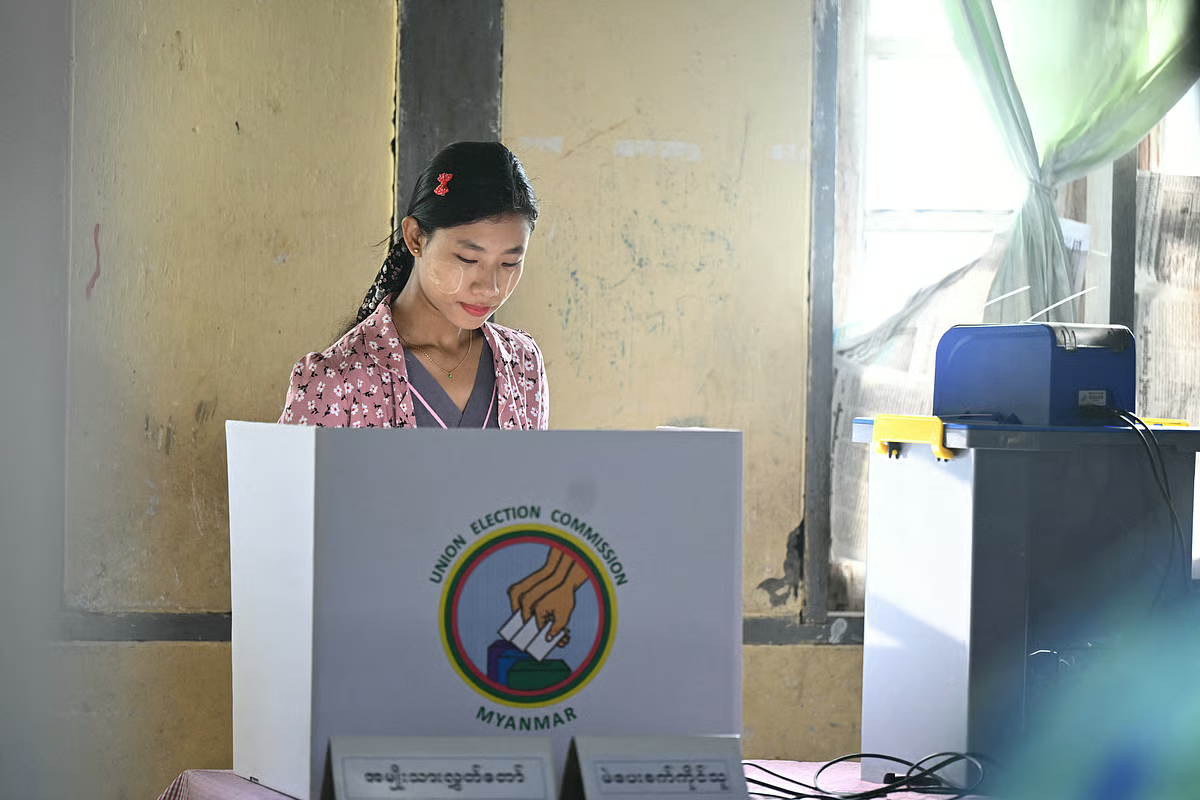
Polls open in Aung San Suu Kyi’s former constituency as military-backed party aims to consolidate power; activists and UN decry “engineered” vote.
Myanmar’s military government conducted the second phase of its staged general election on Sunday, a poll widely criticized by democracy advocates and international observers as a bid to cement the junta’s control under a veneer of legitimacy.
Voting took place in dozens of constituencies, including Kawhmu—the former parliamentary seat of deposed democratic leader Aung San Suu Kyi. Her National League for Democracy (NLD), which won a landslide in the 2020 election, was dissolved after the military seized power in a 2021 coup.
The three-phase election, scheduled to conclude on January 25, has been denounced as neither free nor fair. Critics point to the junta’s harsh crackdown on dissent, the imprisonment of over 22,000 political prisoners, and election laws that criminalize criticism of the poll with up to a decade in prison.
“The junta engineered the polls to ensure victory for its proxy, entrench military domination in Myanmar, and manufacture a facade of legitimacy while violence and repression continue unabated,” said UN rights expert Tom Andrews in a statement last week.
Turnout appeared subdued, contrasting sharply with the approximately 70% participation in the 2020 election. The first phase in late December saw roughly 50% turnout, with the military-aligned Union Solidarity and Development Party (USDP) winning nearly 90% of contested lower house seats.
Despite the military’s claim that the election will “return power to the people,” the 2008 constitution—drafted under a previous military regime—guarantees that 25% of parliamentary seats will remain reserved for the armed forces regardless of the outcome.
Large parts of the country, especially areas controlled by ethnic rebel groups and resistance forces, have been excluded from voting. The civil war, which escalated after the coup, continues to rage, with monitoring groups estimating up to 90,000 conflict-related deaths.
While some voters in government-controlled areas expressed hope the process might bring eventual peace, others voiced deep skepticism. “This election has absolutely nothing to do with escaping this suffering,” a 50-year-old Yangon resident told AFP anonymously, citing security fears.
The military has justified its 2021 takeover by alleging mass fraud in the 2020 vote—claims independent election monitors have rejected as baseless.






 United Arab Emirates Dirham Exchange Rate