S&P Global report highlights region’s improved fiscal buffers and rising credit ratings despite oil volatility and geopolitical tensions.
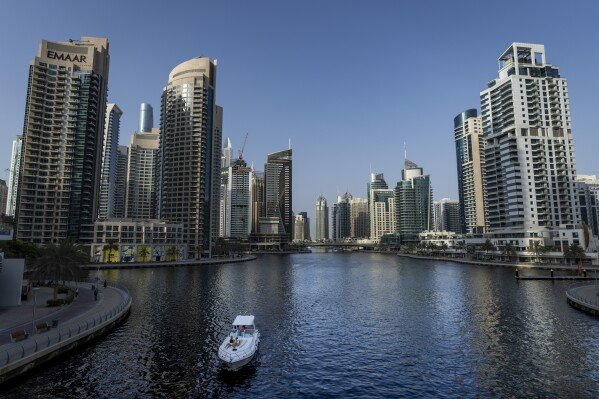
The UAE is set to be one of the Middle East’s strongest performers in 2026, with economic growth forecast at 4.7%, largely powered by a booming non-oil sector, according to a new S&P Global report.
Nearly three-quarters of the UAE’s growth is expected to come from non-oil activities, supported by Dubai’s private sector, Abu Dhabi’s infrastructure spending, and tourism projects across the emirates. The country’s fiscal position is projected to remain in surplus, with a general government balance of 2.3% of GDP and a sustained double-digit current account surplus.
This robust outlook aligns with the UAE’s AA/Stable sovereign credit rating, reaffirmed by S&P in late 2025.
Regional Growth Amid Challenges
Across the Middle East, economic growth is forecast to reach 3.5% in 2026, slightly higher than the previous year. This resilience comes despite lower oil prices and ongoing geopolitical risks, driven by increased hydrocarbon output, strong non-oil performance in Gulf nations, and new LNG capacity in Qatar.
S&P notes that the region’s average sovereign credit rating has improved over the past two years, thanks to new revenue sources like VAT and corporate taxes, better budget transparency, and reforms that reduce dependence on oil.
“Many states now have materially lower fiscal breakeven oil prices than a decade ago,” the report stated.
Diverging Fiscal Positions
However, resilience varies across the region. Bahrain and Oman remain more sensitive to sustained low oil prices, though Oman’s reforms have strengthened its fiscal standing. Kuwait, despite a projected 9% fiscal deficit in 2026, is underpinned by one of the world’s largest sovereign wealth funds—estimated at over 500% of GDP—providing a substantial buffer against shocks.
Geopolitical Risks and Financial Stability
While geopolitical tensions remain high, S&P expects Gulf financial systems to remain stable in 2026, assuming no full-scale regional conflict. Countries with high external financing needs—such as Bahrain, Saudi Arabia, and Qatar—could face pressure on currency pegs or liquidity if capital outflows spike, though regional support mechanisms are likely to mitigate systemic risks.
Investment and Diversification Challenges
Foreign direct investment in the Middle East remains subdued due to the region’s geopolitical profile, posing challenges for diversification efforts. Saudi Arabia, for instance, continues to rely heavily on public spending and external borrowing to fund its Vision 2030 projects.
Although Saudi Arabia’s fiscal deficit is expected to narrow to 4% of GDP next year, its interest costs have more than doubled since 2019, and banks’ foreign liabilities have tripled since 2022.
Overall, the region enters 2026 with stronger shock-absorption capacity, backed by larger sovereign assets, more flexible fiscal policies, and ongoing reforms. The UAE stands out for its broad-based growth and financial stability, reinforcing its position as a regional leader.






 United Arab Emirates Dirham Exchange Rate