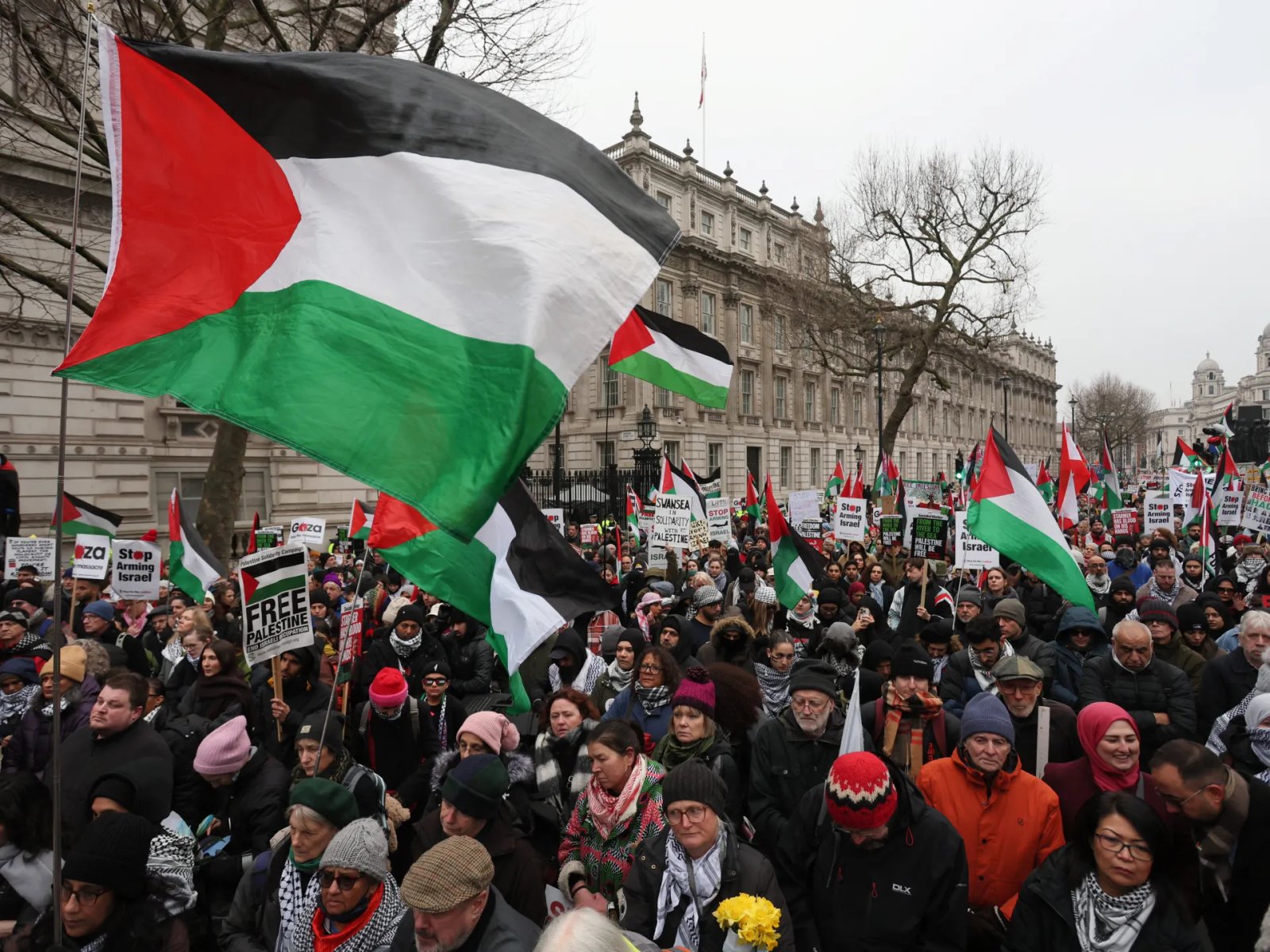
On April 1, a British court is set to rule in an important trial that could define the limits of mass protest in Britain. Ben Jamal, director of the Palestine Solidarity Campaign, and Chris Nineham, vice chair of Stop the War Coalition, were both charged with breaching the Public Order Act 1986 for organising a pro-Palestine demonstration in London on January 18, 2025, on which the police had imposed conditions.
Last week, Judge Daniel Sternberg refused to dismiss the case, despite evidence provided by defence barrister Mark Summers that protesters did not break the conditions, nor had any intention to do so. The trial is seen as yet another indication of the rapidly shrinking space for the free expression of dissent in Britain.
The proceedings in the trial against Jamal and Nineham have revealed the extraordinarily close relationship between the Metropolitan Police and Zionist groups. This includes the police accepting recommendations from these groups about the Palestine movement’s demonstration routes.
In negotiations between protest leaders and the police ahead of the January 18 demonstration, the police had agreed in principle to a demonstration forming up outside the BBC headquarters in central London, which is close to the Central Synagogue. Protesters had assembled there before and were keen to do so again in order to highlight the BBC’s pro-Israel bias.
During the trial, it was revealed that police commander Adam Slonecki received a letter from the Jewish Leadership Council (JLC), which threatened a judicial review if he failed to impose conditions on the protest. Slonecki had also had a series of meetings with various pro-Israeli groups after receiving the letter.
On December 20, he met with protest organisers and explained – without offering evidence or mentioning the meetings that had taken place – that the demonstrations were producing a “cumulative impact” in the form of serious disruption to the Jewish way of life, and that protesters were to be banned from marching in the vicinity of the BBC.
Ultimately, the police allowed only a static protest on January 18, at Whitehall. In a carefully worded speech on the day, Jamal announced from the stage that a small delegation of protesters would walk towards the BBC to lay flowers in memory of those killed in Gaza. If prevented, they would lay the flowers at the feet of the police and disperse. The police allege that Jamal’s speech constituted incitement to breach the conditions.
In fact, as protesters waited for the police to decide where the flowers could be laid, Nineham was violently arrested.
The defence argued that the police were unduly influenced by pro-Israeli pressure in the run-up to the demonstration and failed to facilitate the right to protest. That the police commander did not make any effort to meet with sections of the Jewish community that are pro-Palestine validates the suggestion of police bias.




 United Arab Emirates Dirham Exchange Rate