
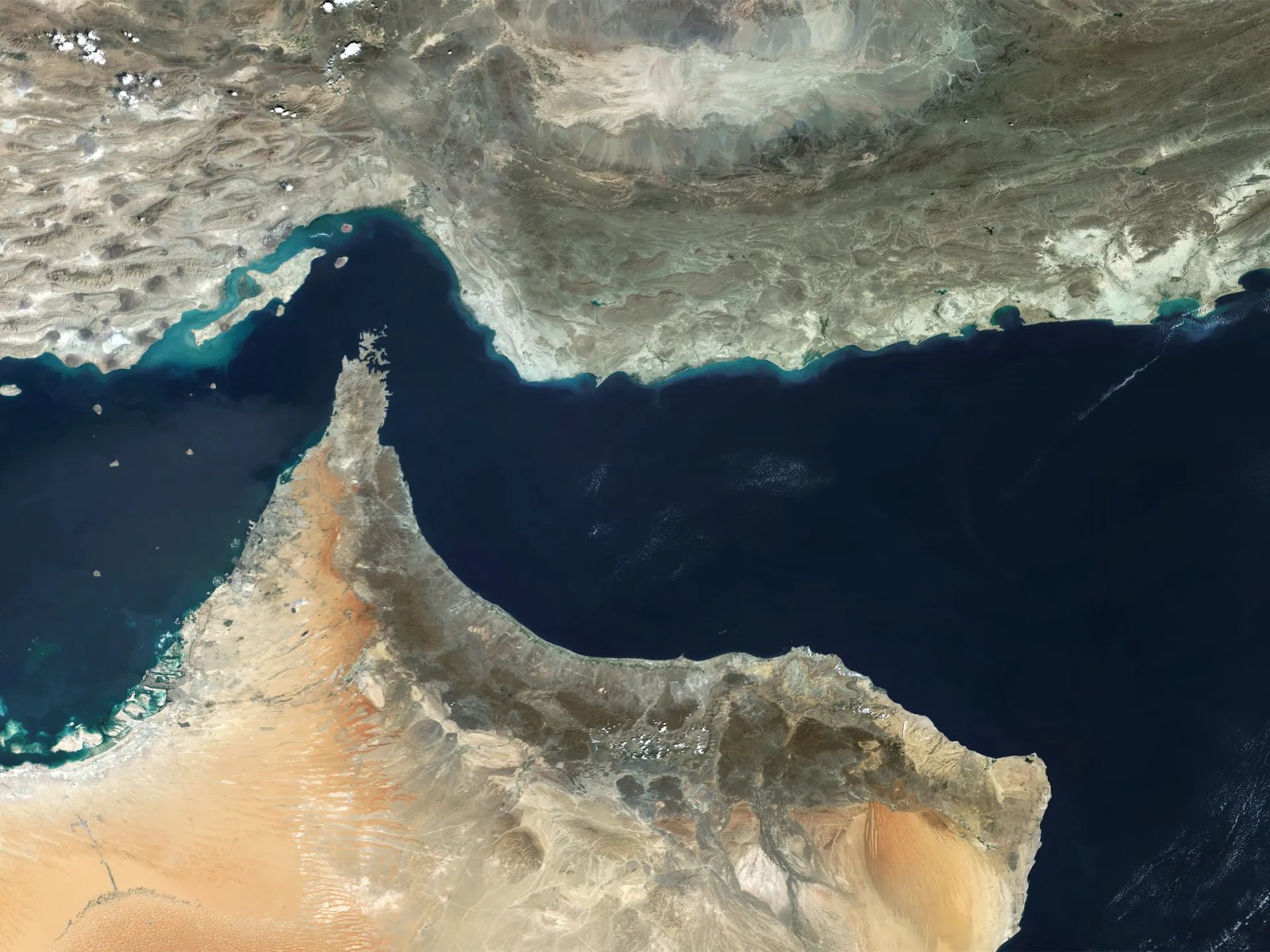
The ongoing United States-Israeli war on Iran has thrust the Strait of Hormuz into the centre of a multidimensional geopolitical crisis. Since hostilities commenced in late February 2026, Iran’s Islamic Revolutionary Guard Corps has repeatedly threatened or targeted vessels, suspending transit through the strait. This has resulted in what the International Energy Agency has characterised as the most acute supply disruption in the history of the global energy market.
In this complex situation, three scenarios for what happens next emerge: Regional miliary action; joint international operation; and phased negotiations. Pakistan’s mediation – one of the few functioning diplomatic channels between Washington and Tehran – could play an important role in two of them.
This scenario envisions a coalition of regional states, principally the Gulf Cooperation Council members and Jordan, undertaking independent military operations to reopen the Strait of Hormuz without direct US operational involvement. This could be driven by protracted economic haemorrhage, the exhaustion of diplomatic options, or domestic political pressure to demonstrate state agency.
This scenario stumbles on the problem of “capability asymmetry”. While the Gulf states have invested substantially in the modernisation of their armies over the past two decades, they lack the integrated naval power projection, mine countermeasure capacity, and anti-air-defence capabilities to neutralise the layered asymmetric threat that Iran poses in the strait.
The stability of the military coalition is also under question: Each state has an incentive to free-ride on the military contributions of other members, particularly given the risks of Iranian retaliatory strikes on energy infrastructure.
More critically, unilateral regional action risks precipitating an escalation spiral: Iran’s doctrine of “forward defence” implies that any military pressure on the Strait of Hormuz would likely trigger commensurate pressure on Gulf oil infrastructure and population centres.
Pakistan has consistently cautioned against military escalation and sought to preserve diplomatic space to forestall such a scenario. Should it materialise without prior diplomatic engagement, Pakistan’s mediatory channel would likely collapse, removing one of the few remaining crisis management mechanisms.
A second scenario envisions regional states formally aligning with the US in a coordinated coercive military campaign to restore freedom of navigation, with full US operational leadership. The Gulf states would allow the US army to use their bases and provide political cover and supplementary military assets. Other states may also join.
This scenario falls within the established framework of coercive diplomacy, in which limited force is used to compel behavioural change without triggering an all-out war. In his work on coercive diplomacy, the late American political scientist Alexander George identified three conditions for success: Credible capability, the adversary’s perception of disproportionate costs, and an available face-saving off-ramp.






 United Arab Emirates Dirham Exchange Rate