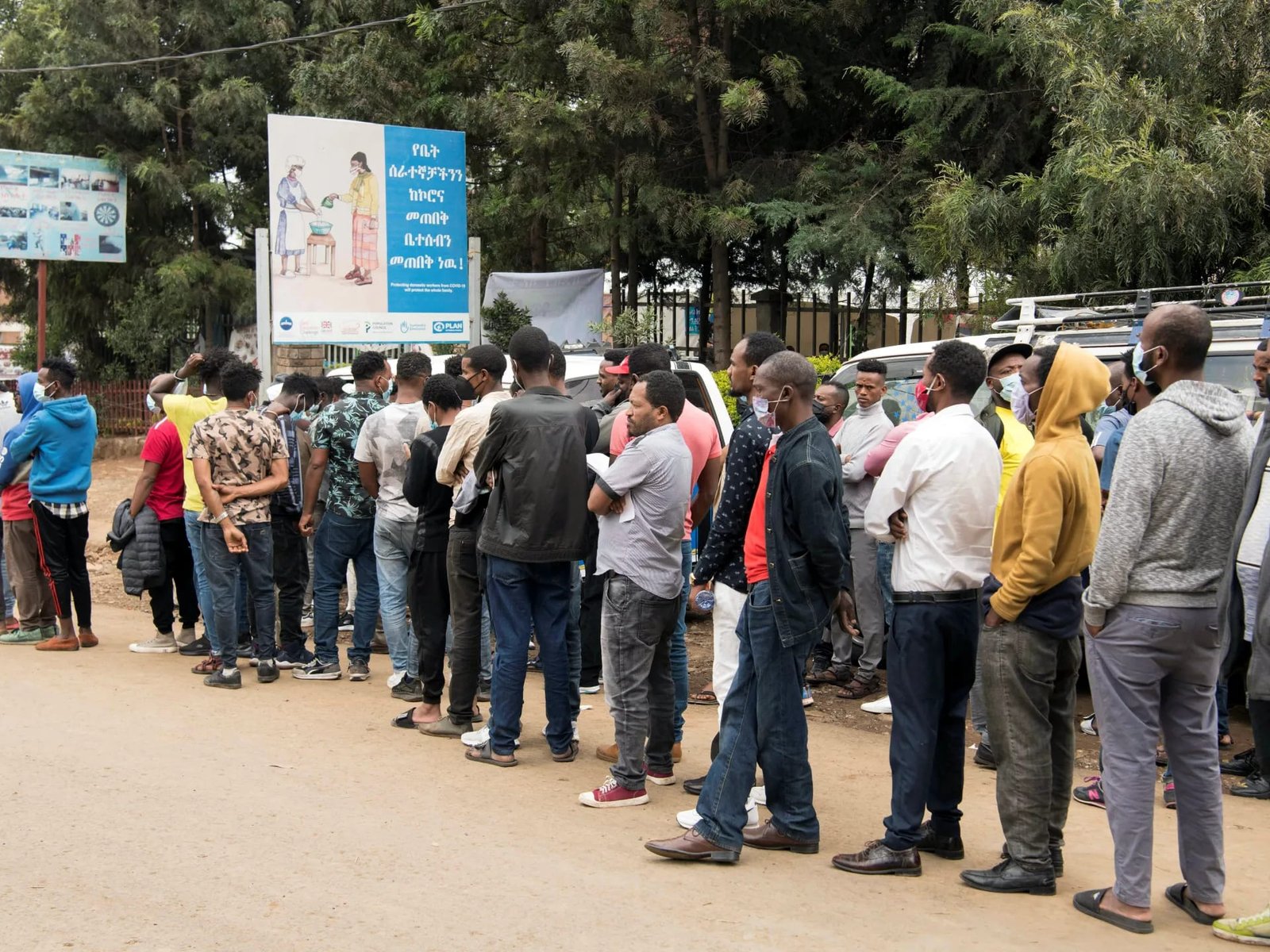
Ethiopia will hold its seventh national election on June 1. The National Election Board of Ethiopia (NEBE) gave a green light for the vote to proceed despite continuing internal conflicts and human rights abuses.
While it is important to keep the momentum of democratic transition going, the current situation in the country does not provide conducive conditions for free, fair, and credible elections.
When Prime Minister Abiy Ahmed came into power in 2018, there was significant optimism that the country would transition to constitutional democracy. While some were cautious, most Ethiopians were enthusiastic about the political change that came after a series of bloody political protests that crippled the then-authoritarian government of the Ethiopian People’s Revolutionary Democratic Front (EPRDF).
Indeed, after a few months of coming to power, Prime Minister Abiy delivered on many fronts. Political prisoners, journalists and activists who were imprisoned unjustly were released. Repressive laws, including the infamous “anti-terrorism” law, the media law, the electoral law and other legislation, were amended. Abiy also normalised relations with Eritrea, a development that ultimately earned him the Nobel Peace Prize and broad international acclaim.
But these reforms were soon overshadowed by internal conflict. In 2020, war erupted between the federal government and the Tigray People’s Liberation Front (TPLF), which resulted in the deaths of hundreds of thousands of people. Human Rights Watch, Amnesty International, and many rights groups concluded that government forces were implicated in massive and serious human rights violations.
Similarly, the International Commission of Human Rights Experts on Ethiopia established by the United Nations confirmed that war crimes and crimes against humanity, including mass murder, sexual violence and torture, were committed. Despite these findings, no concrete steps were taken to ensure accountability for the violations.
The Pretoria Peace Agreement, signed in November 2022, helped secure a cessation of hostilities and brought to an end the devastating conflict. However, fears of renewed violence are growing after the TPLF recently ousted the interim Tigray administration that had been appointed by the federal government.
Similarly, the conflict that began in the Amhara region in 2023 between federal forces and Fano militias has resulted in widespread and serious human rights violations, including war crimes and crimes against humanity, which continue unabated. For instance, in January 2024, government soldiers carried out a massacre in the town of Merawi in Gojam province; at least 89 civilians were taken from their homes, rounded up, and executed, as reported by Human Rights Watch.
Moreover, drone strikes in several incidents across Gojam, Wollo, and Shewa areas of the Amhara region have resulted in significant civilian casualties, further exacerbating the humanitarian crisis and deepening concerns about the conduct of hostilities.





 United Arab Emirates Dirham Exchange Rate