
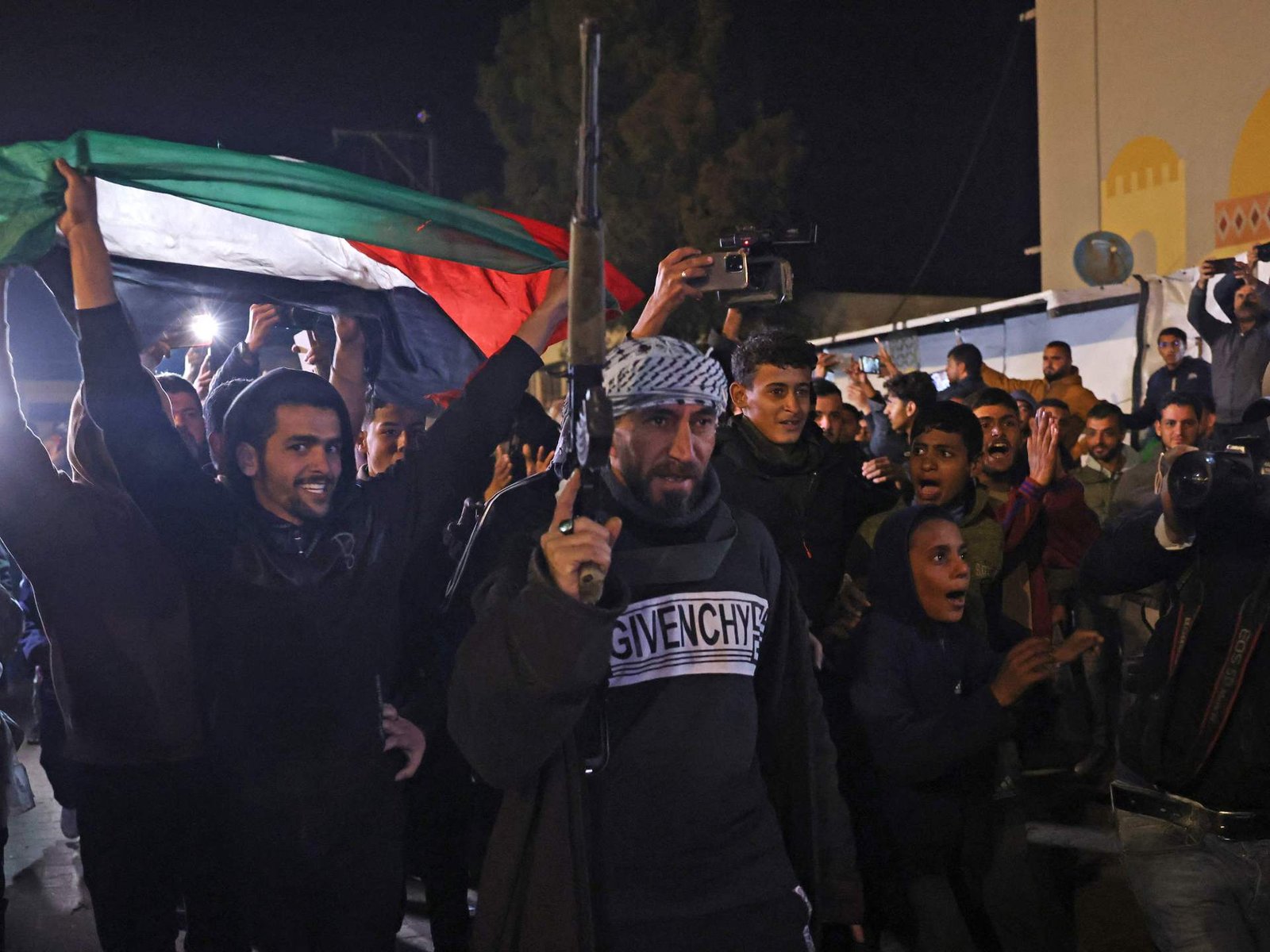
The announcement of a ceasefire agreement in Gaza undoubtedly marks a critical moment in the ongoing conflict. For those of us who have witnessed, experienced, and then watched, mourned, and advocated from afar, this pause in hostilities provides an opportunity to reflect on the past 15 months, and the heavy price paid for this fleeting calm.
As a Palestinian, receiving this news feels like standing in the eye of a storm, in a moment of ghostly calm surrounded by chaos and destruction. For me, at least it marks the end to the bloodshed, but the fact is, the ones we lost will never return, and these scars will never heal. How would a ceasefire ever change that fact?
Ceasefires are often hailed as victories for diplomacy, but to me, they are more like pauses in a constant nightmare. This latest agreement is a reminder that, for the people of Gaza, survival often hinges on the fragility of politics. Children, mothers, and fathers carry the unbearable weight of uncertainty. I find myself asking: Is this truly a step towards peace, or just another chapter in a story of delayed justice and extended suffering?
The ceasefire’s terms, reached under immense international pressure, include a halt to air strikes and rocket fire, along with provisions to allow humanitarian aid into Gaza. These measures are desperately needed. But their necessity is also an accusation of the international community’s failure to act sooner to prevent the crises that make such measures critical. Aid is vital, but it cannot heal the wounds of oppression, wide open and bleeding. Temporary peace cannot replace the right to live freely and to dream beyond survival.
The International Court of Justice (ICJ), the International Criminal Court (ICC), and their arrest warrants, which were meant to address crimes committed against our people, are overshadowed by political inaction. Will the world pursue these mechanisms when the war ends, or will justice be buried under a mountain of bureaucracy and indifference? The failure to enforce accountability before, during, and after the conflict reveals how deeply flawed these institutions are.
Aid is vital, but it cannot heal the wounds of oppression. Temporary peace cannot replace the right to live freely and to dream beyond survival. This prompts another crucial question: Will Palestinians ever get their rights to have full control over their political and diplomatic path to justice, or will they always be eliminated from the political stage and portrayed to fit in the victim’s role? While international recognition of our plight is critical, we must chart a path towards independence from unreliable global powers.
For Palestinians, especially those in Gaza, the siege is its own kind of war. It is violence without bombs, but no less devastating. The blockade, now in its 17th year, has eroded the fabric of life. It has robbed families of opportunities, denied them access to basic rights, and imposed a daily struggle that defies the bounds of human endurance. How do we rebuild a life in such conditions, knowing that this ceasefire might crumble as quickly as it came? How do we dream of a future when the present feels like an everlasting state of mourning?
During the war, decisions such as halting the funding of the United Nations Relief and Works Agency for Palestine Refugees (UNRWA) exacerbated the humanitarian crisis. The inability of the international community, including entities as disparate as the UN, the G8, or BRICS, to intervene in time to restore such vital lifelines for Palestinians further highlights its failure to protect civilian life and uphold humanitarian law. What happens when the safety nets, already too fragile, are arbitrarily stripped away without global resistance powerful enough to alleviate the crisis?
The international community, particularly Western powers, must confront their role in preserving this cycle. Statements of support for ceasefires ring hollow when they are not accompanied by meaningful action, accountability, protection for civilians, and a real commitment to addressing the root causes of this conflict. The imbalance of power, the brutal reality of occupation, the suffocating blockade – these are not peripheral issues. They are the core of the problem.


 United Arab Emirates Dirham Exchange Rate