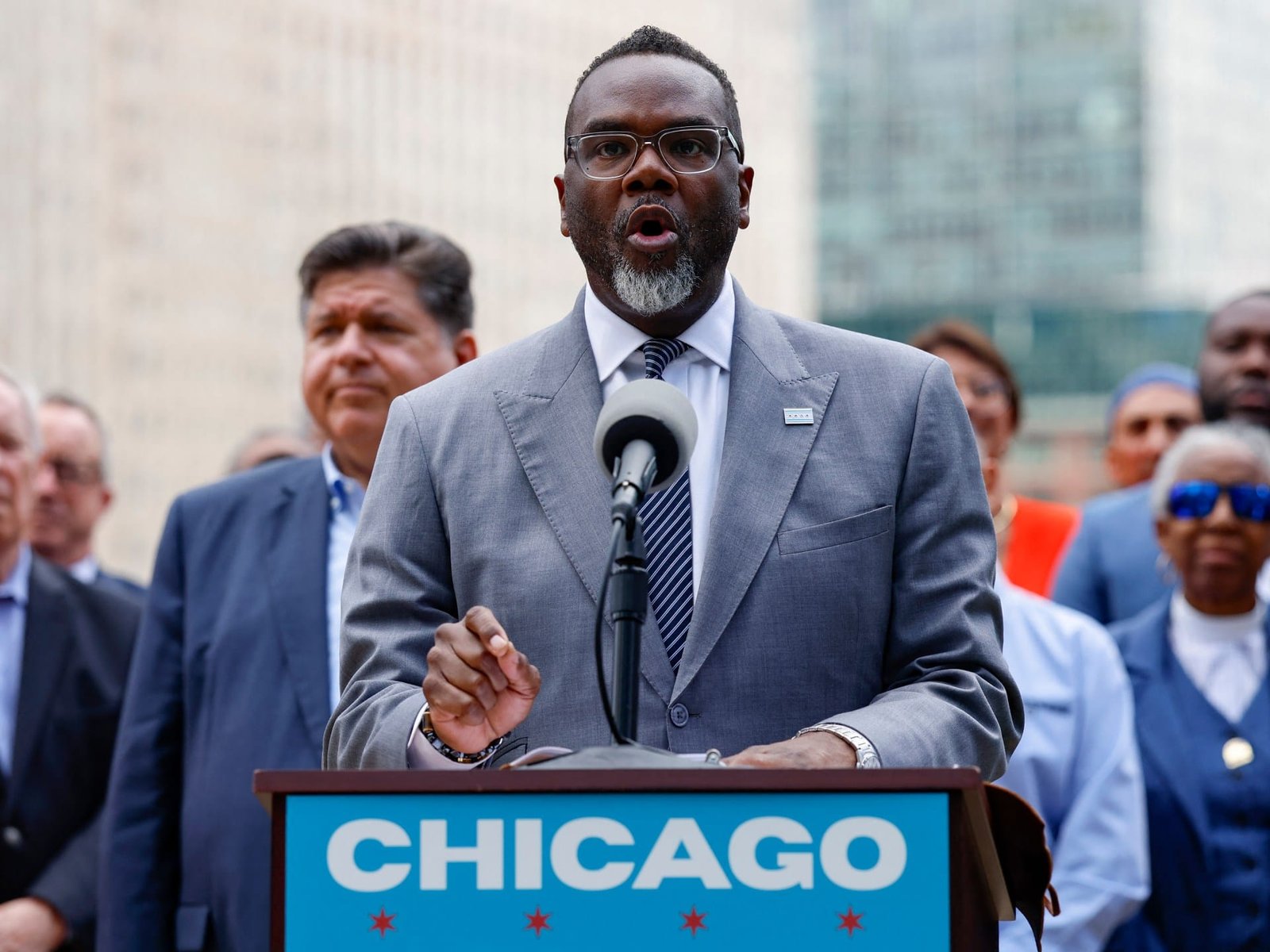
Officials in the US city of Chicago were bracing for a possible deployment of the United States National Guard on Friday, as part of President Donald Trump’s wider crackdown on crime and immigration – notably, many point out, in Democratic strongholds.
Last week, CNN, citing unnamed officials, reported that the controversial military deployment could take place by Friday and that the National Guard might be ready to patrol the city on Saturday.
At the same time, a major federal immigration operation involving officials from Immigration and Customs Enforcement (ICE) is also expected to begin in the city.
Last Sunday, Illinois Governor JB Pritzker, a Democrat, claimed the Trump administration had not informed him of the deployment plans, and that such a move would amount to an “invasion” of the state.
On Saturday last week, Chicago’s Mayor Brandon Johnson signed an executive order directing Chicago police not to collaborate with National Guard troops or federal agents. The order also urged federal agents to wear body cameras and reveal their faces rather than wear masks, as they have done during previous, “military-style” immigration raids under Trump.
Trump deployed the National Guard in Los Angeles in June, and in Washington, DC, in August, purportedly to fight surging crime rates, but residents and state officials have complained that such moves are undemocratic and say that over-policing will erase trust between local police and communities.
The National Guard is a state-based reserve force totalling 430,040 soldiers and airmen who are serving part-time, rather than full-time. It includes the Army National Guard and the Air National Guard units. National Guard members often hold a civilian job in addition to their military duties.
Each US state and entity has its own National Guard unit, and all together make up the US National Guard. The Guard can be activated for federal missions, such as under Trump’s recent directives, meaning it is dually-controlled by states and the federal government.
The National Guard’s origins go back to colonial-era militias that formed during British rule, with the first colony-wide militia forming in Massachusetts in 1636. Those militias later evolved into an organised, national structure following US independence.




 United Arab Emirates Dirham Exchange Rate