• About
  • Advertise
  • Privacy & Policy
  • Contact Us
Wednesday, May 13, 2026
Dubai News TV
  • UAE
    • Abu Dhabi
    • Dubai
    • Ajman
  • REGION
    • Middle East
    • GCC
    • MENA
      • Syria
    • Asia
      • Afghanistan
      • Bangladesh
      • India
      • Iran
      • Israel
      • Pakistan
      • Sri Lanka
    • Africa
    • Europe
  • REAL ESTATE
  • Opinion
    • EDITOR’S CHOICE
    • The Big Read
    • Viewpoint
    • EXCLUSIVE
  • World
  • Business
    • Local Business
    • Markets
  • TECH
  • HEALTH
  • Horoscope
  • PR
  • Sports
No Result
View All Result
  • UAE
    • Abu Dhabi
    • Dubai
    • Ajman
  • REGION
    • Middle East
    • GCC
    • MENA
      • Syria
    • Asia
      • Afghanistan
      • Bangladesh
      • India
      • Iran
      • Israel
      • Pakistan
      • Sri Lanka
    • Africa
    • Europe
  • REAL ESTATE
  • Opinion
    • EDITOR’S CHOICE
    • The Big Read
    • Viewpoint
    • EXCLUSIVE
  • World
  • Business
    • Local Business
    • Markets
  • TECH
  • HEALTH
  • Horoscope
  • PR
  • Sports
No Result
View All Result
Dubai News
No Result
View All Result
  • Top News
  • UAE
  • Dubai
  • World
  • Business
  • GOLD/FOREX
  • REGION
  • REAL ESTATE
  • FEATURED
  • EDITOR’S CHOICE
  • ENVIRONMENT
  • Road To Financial Freedom
  • Health
  • Sports

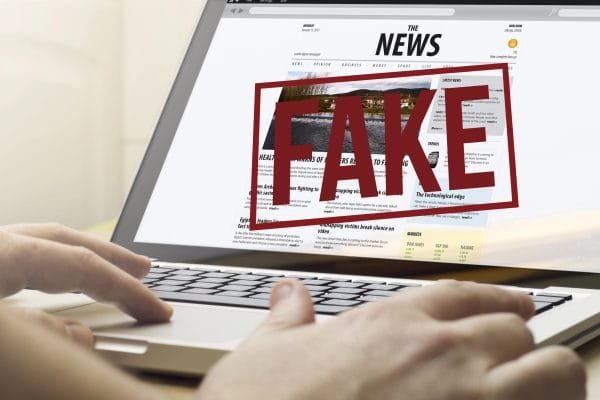
Fake news and Indian media’s hysteria

by Dubai News
12 months ago
in India, Top News
Fake news and Indian media’s hysteria
Share on FacebookShare on TwitterShare on Whatsapp

What we are witnessing in India is not a failure of journalism; it is its abdication. There is emotion-driven narrative building in place of evidence-based reporting in Indian media.

Ghulam Haider

The recent incident in Pahlgam has exposed a deeply troubling pattern in Indian domestic discourse based on false propaganda. Even before forensic dust had settled on the site or credible leads could be established, the Indian government and its Godi media jumped into a frenzied blame game targeted towards Pakistan. In a fraction of a second, they pointed fingers in unison towards Islamabad with a certainty that bordered on choreography rather than conclusion.

This knee-jerk reaction was not merely a reflection of a hardened geopolitical rivalry. More dangerously, it was a calculated spectacle manufactured by clowns for television screens, social media timelines, and political mileage. From news anchors, to reporters, to analysts to politician, everybody jumped the bandwagon of destroying every inch of Pakistan. Once again, as in the aftermath of Pulwama in 2019 and Uri in 2016, a large section of India’s national and regional media shed any semblance of journalistic integrity. From a stringer to those advocating for truth for decades in the field of the noble profession donned the garb of wartime propagandists rather than truth-seekers. Once again, they choose war hysteria, which eclipsed reason on the Indian media and political mindset conspicuously.

India’s leading television news channels—those that boast primetime viewership in millions—transformed themselves into platforms of hyper-nationalist theatre. The visuals were eerily familiar: graphics of roaring jets and exploding bombs, hashtags like #RevengeForPehalgam, panel discussions filled with shouting matches devoid of any ethics, and studio hosts all but frothing at the mouth demanding swift “retribution” against Pakistan.

This time, the theatrics came with an added absurdity: blatant disinformation, most of it verifiably false and laughable. A viral video shared by several news anchors purported to show “Pakistani terrorists training in Kashmir,” which was later revealed to be an old clip from a military drill in a Central Asian country. Another channel ran an “exclusive” report claiming Pakistani drones had dropped weapons across the Line of Control—only to have Indian security forces themselves deny such an event.

Astonishingly, none of this has led to retractions, apologies, or editorial introspection for disseminating misleading or false narratives about Pakistan’s role in the conflict. These accounts have been involved in spreading disinformation including doctored images and fabricated documents to shape public perception.

Instead, many of these media houses have doubled down, couching their misreporting in vague phrases like “sources say” or “alleged Pakistani involvement”—allowing them to tiptoe around responsibility while stoking a volatile public mood.

Social media, meanwhile, became the wild west of misinformation. Influential handles amplified unverified claims, shared AI-generated visuals as real-time proof of Pakistan’s aggression, and trended hashtags demanding military action. The consequence was a national echo chamber where facts were optional, outrage was compulsory, and dissenting voices were quickly drowned under the weight of online mobs.

At the center of this tempest stood a curious paradox. While India’s media and government spoke with near-religious conviction about Pakistani involvement, the Pakistani state took a markedly different approach—calling for an independent, international investigation into the Pahalgam attack. In a rare show of restraint, Islamabad rejected the allegations and proposed that neutral parties determine the perpetrators.

Pakistan’s call for an international probe may be politically strategic, but it is also rational. In contrast to New Delhi’s rush to judgment, it demonstrates a willingness to place facts above frenzy, investigation over invective. Whether the proposal will gain any traction globally remains uncertain, but it lays bare the contrast in posturing between the two states—one advocating for inquiry, the other insisting on immediate indictment.

Skepticism is not synonymous with blind attribution. To hold a neighbor responsible for a deadly attack without credible evidence, and to base that attribution on sensationalist media reports, is an exercise in dangerous and misplaced diplomacy.

What we are witnessing in India is not a failure of journalism; it is its abdication. In place of evidence-based reporting, there is emotion-driven narrative building. In place of investigative rigor, there is patriotic performance. In the wake of the Pahalgam incident, India’s media industry—especially its television networks—has crossed the line from being flawed to being farcical.

Democratic role of the press — as a watchdog, as a check on power, as a disseminator of truth — has been compromised by a toxic blend of nationalism, commercial incentives, and political complicity in India

Implications are not confined to India’s borders. Such media narratives have real-world consequences. They shape public opinion, influence policymaking, and in high-stakes environments like South Asia, they can edge nuclear-armed neighbors toward the precipice of armed conflict. The consequences of misinformation in this region are not limited to bruised reputations or lost ratings—they can be catastrophic.

And herein lies the real tragedy: India, the world’s largest democracy and a country with journalistic traditions, finds itself in an information crisis at a time when truth is most needed. The democratic role of the press—as a watchdog, as a check on power, as a disseminator of truth—has been compromised by a toxic blend of nationalism, commercial incentives, and political complicity.

If Indian media continues down this path, the damage may become irreversible. The line between journalism and jingoism, already blurred, may vanish entirely. And in such a scenario, not only is truth the first casualty—peace may be next.

As the dust begins to settle in Pahlgam, one hopes that cooler heads will prevail, not just in the corridors of power but in the newsrooms of Delhi and Mumbai. Responsible journalism, after all, is not a luxury in times of crisis—it is a necessity.


Share21Tweet13Send

Related Posts

The crisis is Sudan is much worse than what is acknowledged
Middle East

The crisis is Sudan is much worse than what is acknowledged

May 12, 2026
The crisis is Sudan is much worse than what is acknowledged
International

The crisis is Sudan is much worse than what is acknowledged

May 12, 2026
The Global Sumud Flotilla is sailing on, here is why
Middle East

The Global Sumud Flotilla is sailing on, here is why

May 11, 2026
The Global Sumud Flotilla is sailing on, here is why
International

The Global Sumud Flotilla is sailing on, here is why

May 11, 2026
Things are not going so well for Russia
International

Things are not going so well for Russia

May 11, 2026
The war on Iran will likely end in American retreat
Middle East

The war on Iran will likely end in American retreat

May 9, 2026
Load More
  • Kingdom’s Elite Belt crowns 20 champions as Riyadh hosts thrilling boxing finale

    Kingdom’s Elite Belt crowns 20 champions as Riyadh hosts thrilling boxing finale

    54 shares
    Share 22 Tweet 14
  • CAF is failing Africa’s World Cup fans

    53 shares
    Share 21 Tweet 13
  • The anti-Semitism smear that ruined Corbyn’s Labour now targets the Greens

    53 shares
    Share 21 Tweet 13
  • UAE announces decision to withdraw from Opec, Opec+ from May 1

    54 shares
    Share 22 Tweet 14
  • Lessons from the war: A call for strategic reckoning in West Asia

    53 shares
    Share 21 Tweet 13
  • Lessons from the war: A call for strategic reckoning in West Asia

    53 shares
    Share 21 Tweet 13
  • Winning peace in Lebanon is harder than winning war

    53 shares
    Share 21 Tweet 13
  • The disaster unfolding on Russia’s Black Sea coast is of its own making

    53 shares
    Share 21 Tweet 13
  • States should tax windfall oil profits to fund their way out of crisis

    53 shares
    Share 21 Tweet 13
  • Your daily horoscope: May 7, 2026

    53 shares
    Share 21 Tweet 13
United Arab Emirates Dirham Exchange Rate


About Dubai News TV

Dubai News is an English language news and current affairs digital TV channel established to provide round-the-clock news, information, and knowledge about local, regional, and international events. It covers a wide range of topics, including politics, business, technology, culture, and sports, ensuring viewers stay informed and engaged with the latest developments. The channel aims to deliver accurate, unbiased reporting and insightful analysis, catering to a diverse audience with a global perspective.

Categories

  • Abu Dhabi (43)
  • Afghanistan (32)
  • Africa (29)
  • Ajman (5)
  • Artificial Intelligence (5)
  • Asia (82)
  • Bangladesh (87)
  • Business and Economy (773)
  • Cricket (11)
  • Donald Trump (6)
  • Dubai (162)
  • EDITOR'S CHOICE (10)
  • Education (29)
  • Entertainment (1,943)
  • ENVIRONMENT (13)
  • Europe (91)
  • EXCLUSIVE (4)
  • FEATURED (41)
  • Featured Stories (40)
  • Global Business (2,259)
  • Gold & Forex (1)
  • Healthcare (9)
  • heath (10)
  • Horoscope (692)
  • Hospitality (1)
  • India (177)
  • International (8,661)
  • Iran (27)
  • Israel (18)
  • Israel-Palestine conflict (76)
  • Life Style (1)
  • Lifestyle (1,372)
    • Health (8)
  • Local Business (1,636)
  • Markets (14)
  • MENA (818)
  • Military & Defense (8)
  • News (11,519)
    • Business (2,169)
    • Politics (13)
    • World (8,731)
      • Foods (1)
      • Games (2)
      • Travel (6)
  • Opinion (26)
  • Outreach Initiatives (1)
  • Pakistan (287)
  • Personal Finance (7)
  • Philippine (11)
  • Philippines (7)
  • PR (157)
  • REAL ESTATE (170)
  • REGION (4,265)
    • GCC (210)
    • Middle East (3,333)
  • Road To Financial Freedom (7)
  • Russia (28)
  • Russia-Ukraine war (73)
  • Saudi Arabia (16)
  • Sharjah (12)
  • South Asia (91)
  • Sports (1,232)
  • Sri Lanka (45)
  • Startup (7)
  • Syria (7)
  • Tech (500)
  • Technology (491)
  • The Big Read (6)
  • Top News (24,862)
  • turkey (9)
  • TV Shows (7)
  • UAE (6,867)
  • Uncategorized (10)
  • Video Posts (11)
  • Viewpoint (8)

Latest News

The crisis is Sudan is much worse than what is acknowledged
Middle East

The crisis is Sudan is much worse than what is acknowledged

by News Desk
May 12, 2026
0

Even in Khartoum, where there is no longer fighting, the humanitarian situation is dire.I recently visited Khartoum for the first...

Read moreDetails
The crisis is Sudan is much worse than what is acknowledged

The crisis is Sudan is much worse than what is acknowledged

May 12, 2026
Your daily horoscope: May 11, 2026

Your daily horoscope: May 11, 2026

May 11, 2026
  • About
  • Advertise
  • Privacy & Policy
  • Contact Us

© 2024 Dubai News TV - Powerd by Global Biz International.

No Result
View All Result
  • Top News
  • UAE
  • Dubai
  • World
  • Business
  • GOLD/FOREX
  • REGION
    • South Asia
      • Pakistan
      • India
    • GCC
    • Middle East
  • REAL ESTATE
  • FEATURED
    • Featured Stories
  • EDITOR’S CHOICE
    • The Big Read
    • Viewpoint
  • ENVIRONMENT
  • Road To Financial Freedom
  • Health
  • Sports

© 2024 Dubai News TV - Powerd by Global Biz International.

This website uses cookies. By continuing to use this website you are giving consent to cookies being used. Visit our Privacy and Cookie Policy.