
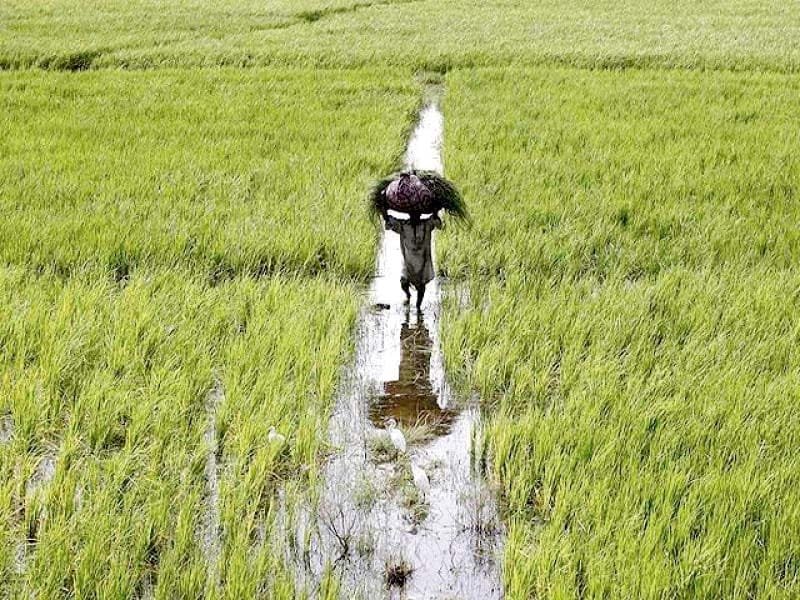
The decisions Pakistan makes today — about how it farms, feeds, and governs — will define not just its food future, but its very stability. In a region of more than two billion people, that future cannot be an afterthought. It must be a priority.
The Global Food Policy Report 2025 paints a sobering picture: accelerated glacial melt, intensifying heatwaves, erratic rainfall, and depleting groundwater — these are not distant threats but present realities. Pakistan’s agrarian backbone is being bent under this weight.
By Ghulam Haider
Like much of South Asia, Pakistan finds itself at a defining moment. Its food systems—vital not only to national well-being but to regional stability—stand at the confluence of three transformative forces: climate change, digitalization, and nutrition transition. The 2025 Global Food Policy Report by the International Food Policy Research Institute (IFPRI) underscores the urgency of responding to these forces with a blend of innovation, equity, and resilience. For Pakistan, the stakes couldn’t be higher.
South Asia is the world’s most climate-vulnerable region. And Pakistan, with its volatile geography stretching from melting glaciers in the north to parched deserts in the south, epitomizes this vulnerability. The IFPRI report paints a sobering picture: accelerated glacial melt, intensifying heatwaves, erratic rainfall, and depleting groundwater—these are not distant threats but present realities. Pakistan’s agrarian backbone is being bent under this weight.
This is a nation where over 38% of the workforce is directly employed in agriculture, yet the sector remains worryingly fragile. While irrigation and fertilizers played a pivotal role in the Green Revolution’s productivity surge, the sustainability cost has been grave. Pakistan now stands among the top extractors of groundwater globally, contributing significantly to South Asia’s staggering 25% share in global groundwater extraction. Irrigation subsidies, once a tool for food security, have become a catalyst for environmental degradation.
The climate-nutrition nexus
Food security in Pakistan is not just about quantity — it’s also about quality. The nutrition challenge is multilayered. Malnutrition, both undernutrition and the rising tide of obesity, coexists in a troubling paradox. Stunting affects nearly 40% of Pakistani children under five, a symptom of systemic inequality, poor maternal health, and lack of dietary diversity.
The IFPRI report calls attention to the growing importance of research on diets and nutrition, especially in the context of changing consumption patterns and climate-stressed food systems. In Pakistan, this transition is evident in urban areas where cheap, processed foods are crowding out traditional, often more nutritious diets. Rural communities, meanwhile, continue to grapple with seasonal food insecurity exacerbated by climate shocks — floods that wipe out crops or droughts that leave fields barren.
Climate adaptation, therefore, must be framed not only in terms of crop resilience but also in improving nutritional outcomes. Pakistan’s food policy must evolve from calorie-counting to diet quality, incorporating a shift toward nutrient-rich, climate-resilient crops such as millets, lentils, and vegetables.
Digital dreams and dilemmas
One of the most promising frontiers in Pakistan’s food policy landscape lies in digital agriculture. With over 190 million mobile subscribers and increasing internet penetration, digital tools have the potential to revolutionize how farmers access information, markets, and credit.
Encouragingly, Pakistan has begun to embrace this transition. The National Artificial Intelligence Policy, launched in 2023, aims to integrate AI into key economic sectors including agriculture. Platforms like the Punjab government’s “e-Crop” app and Kisan Card programme have already made inroads by connecting farmers to extension services and subsidies.
Yet, the IFPRI report rightly tempers optimism with caution. The digital divide in Pakistan remains stark. Women, who make up nearly half of the rural agricultural workforce, often lack access to mobile phones or internet services. Smallholders, the majority of Pakistan’s farmers, are hindered by limited digital literacy and erratic electricity. Add to this the looming questions around data privacy, platform monopolies, and weak governance, and the risks of digital exclusion become apparent.
Digitalization cannot be a top-down imposition. If it is to succeed, it must be participatory, inclusive, and localized. This means investing in rural digital infrastructure, building digital literacy, especially among women and youth, and crafting policies that prioritize open data and equitable access.
Social equity the missing link
Perhaps the most crucial thread running through the IFPRI report is the need to place social equity at the heart of food policy. In Pakistan, this requires confronting long-standing structural inequalities — whether in land ownership, labour rights, or gender dynamics.
Women remain underrepresented and underpaid in agriculture, despite their critical role in food production and nutrition. Youth face limited opportunities in rural areas, pushing them towards precarious urban livelihoods or dangerous migration routes. And rapid urbanization is creating food deserts in cities while stretching the limits of rural food systems.
This is where policy innovation must meet people’s realities. The IFPRI report advocates for adaptive social protection models—schemes that not only provide income support but also build resilience to climate shocks. Pakistan’s Ehsaas programme was a step in this direction, offering cash transfers during the COVID-19 pandemic. The next challenge is to integrate such interventions with climate-resilient livelihood support and nutrition-focused education.
IFPRI’s 25-year outlook challenges South Asian nations to ground their strategies in rigorous evidence. Pakistan needs to invest heavily in policy-oriented research—tracking what works, where, and why. Pilot programs around climate-smart agriculture, digital platforms, or nutrition interventions are valuable only when they’re rigorously evaluated and scaled based on evidence, not politics.
Agricultural universities and think tanks must forge stronger ties with policymakers, while regional cooperation on food systems—especially between Pakistan, India, and Bangladesh—must transcend geopolitics to focus on shared vulnerabilities. Food does not recognize borders; neither do floods, heatwaves, or supply chain disruptions.
A path forward for Pakistan
What would a resilient food system in Pakistan look like in 2050? It would be climate-smart, shifting toward crops and farming practices that adapt to heat, drought, and flood. It would be digitally inclusive, empowering smallholders and rural women with real-time access to information, markets, and financing.
It would be nutritionally secure, addressing both hunger and malnutrition with a diversified food basket. It would be equity-driven, placing the needs of the most marginalized—women, youth, landless farmers—at the center of policymaking.
To get there, Pakistan must move beyond short-term populist subsidies and toward long-term structural reforms. It must address the contradictions within its food policy—where groundwater is depleted to grow water-intensive crops for export, or where subsidies favor the wealthy instead of the vulnerable.
Above all, it must view its food systems not just as a sector, but as the foundation of national resilience. Food insecurity in Pakistan is not only a development issue; it is a strategic risk, with the potential to trigger unrest, migration, and political instability.
The Global Food Policy Report 2025 offers not a roadmap but a mirror. It reflects both the progress South Asia has made and the perils that lie ahead. For Pakistan, the message is clear: the time for reactive policymaking is over. What’s needed now is foresight, innovation, and above all, political will.
The decisions Pakistan makes today—about how it farms, feeds, and governs—will define not just its food future, but its very stability. In a region of more than two billion people, that future cannot be an afterthought. It must be a priority.





 United Arab Emirates Dirham Exchange Rate