

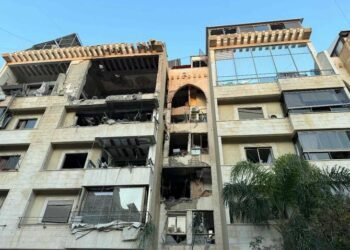
Beirut, Lebanon – On October 14, Israel killed 22 people in the northern Lebanese village of Aitou in an air attack.
Israel claimed it struck a “Hezbollah target” but the attack on a predominantly Christian town has made many wonder if Israel is expanding its war to chase down Hezbollah members and mainly Shia Hezbollah supporters wherever they may have fled to.
“I can only guess Israel’s motives, but obviously they are trying to make the Shia community toxic by trying to isolate them completely,” said Michael Young, a Lebanon expert for Carnegie Middle East Center.
Lebanon runs a confessional system, with political posts reserved for members of specific religious sects.
The fragile system has been historically exploited by regional states for their own geopolitical goals, by dividing the country’s political factions and religious communities.
In addition, each religious community typically lives in relatively segregated areas and neighbourhoods in Lebanon – largely an outcome of previous violent conflicts that degenerated into sectarian violence and led to the mass displacement of communities.
The attack on Aitou harks back to Lebanon’s 15-year civil war (1975-1990) when the country got dragged into the broader Israeli-Palestinian conflict and descended into multi-faceted fighting.
Now, Israel’s war – ostensibly against Hezbollah – is threatening to destabilise the entire country again as a pattern emerges, beyond the Aitou attack, where Israel attacks neighbourhoods and communities that have absorbed thousands of displaced people.
Analysts believe this trend reflects a sinister motive of collectively punishing Hezbollah’s Shia support base, psychologically tormenting the Lebanese populace and triggering sectarian violence.



 United Arab Emirates Dirham Exchange Rate