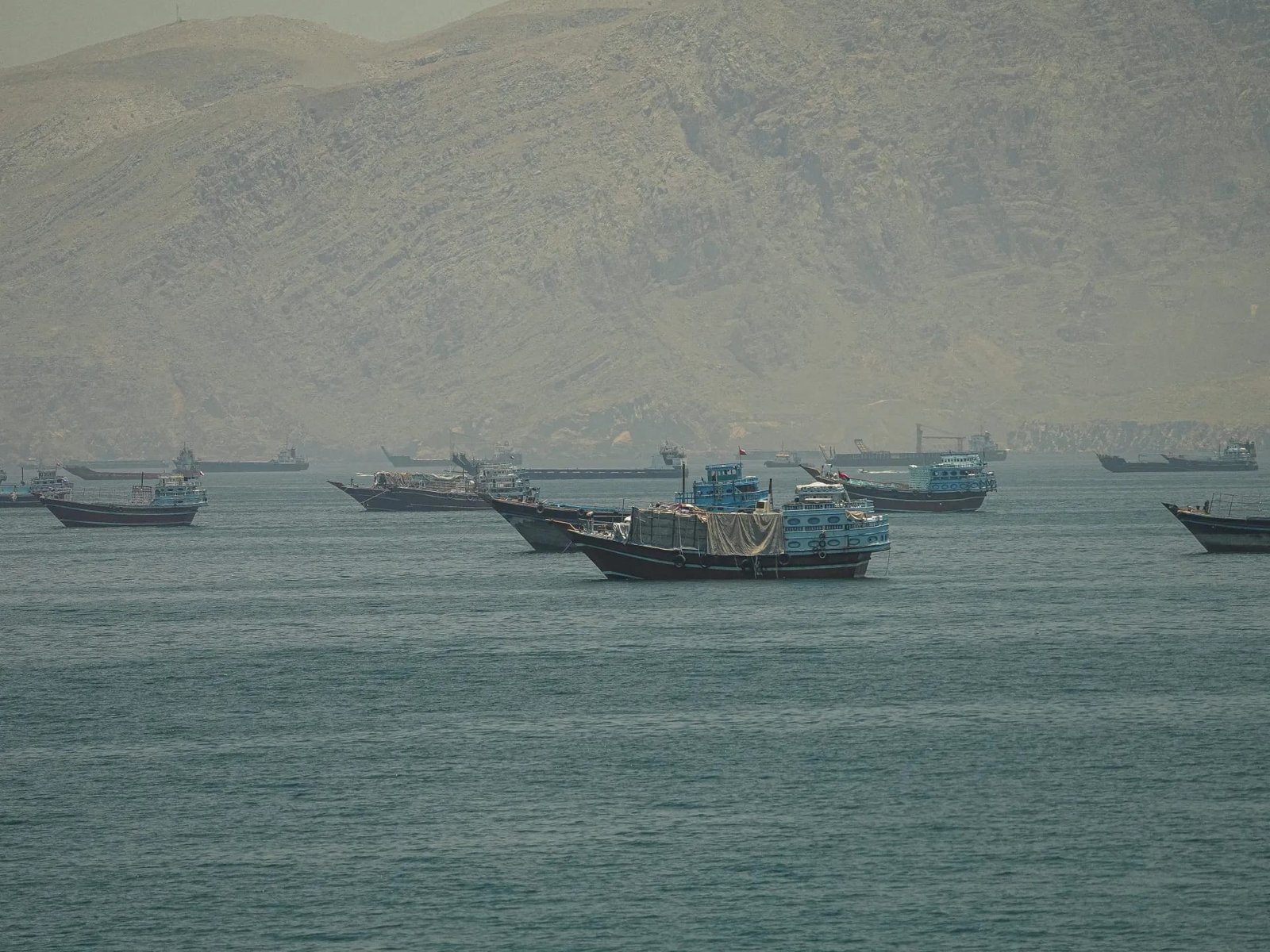
Iran’s decision to act on its long-promised threat to close the Strait of Hormuz has brought United States countermeasures in the form of a US naval blockade. Despite doubts over the legality, feasibility and efficacy of Iran’s initial move and flip-flops about the continuation of the closure, the immediate global impact, surging oil prices and cascading market shocks appear to have surprised even Iran itself, judging by reactions from regime loyalists on state and social media.
A radical idea once dismissed as rhetorical bluster or, at worst, a doomsday scenario, has emerged as a weapon of mass disruption, potentially more potent than the weapon of mass destruction Iran has long been suspected of pursuing.
Considerable attention has been paid to what closure means for energy, food and trade security in Europe, Africa and Asia. Less notice has been given to its domestic political consequences inside Iran, and to the deeper shift it may signal: from a defensive doctrine built on nuclear capability to one built on control of the strait.
Until the June 2025 US attack on Iran’s main nuclear fuel production facilities, the Islamic republic had spent billions on R&D, manufacturing and the protection of its nuclear programme, and lost billions more in income and opportunity to the isolation and sanctions the programme entailed.
The nuclear file was also a driver of political repression at home. Since 2005, some of the sharpest divisions between moderates and hardliners have been over the programme and its accumulating costs. Nearly every presidential election after 2005 became, to some degree, a referendum on the nuclear file and how to manage its fallout. Much of the opposition to Supreme Leader Ayatollah Ali Khamenei’s authoritarianism stemmed from his insistence on preserving this costly project and tolerating the distortions it imposed on the economy.
Every figure or faction that criticised the programme and favoured a diplomatic resolution was gradually purged. By 2021, after most reformists and moderates had been barred from the presidential race, even Khamenei’s longtime confidant Ali Larijani (later assassinated by Israel in March 2026, shortly after Khamenei himself was killed) was disqualified, largely because of his role as parliament speaker in advancing the 2015 Joint Comprehensive Plan of Action (JCPOA).
Evidence after the latest US-Israeli assault does not yet point to a settled doctrinal revolution, but a real internal debate is now under way over whether control of the strait can replace nuclear latency as Iran’s main deterrent. Iran’s reported offer in the Pakistan talks to suspend enrichment for several years is significant. Even if tactical and temporary, it suggests that parts of the Iranian state no longer treat enrichment as an untouchable strategic core, and are willing to elevate leverage rooted in Hormuz and maritime disruption in its place.
Other signs point the same way. Since succeeding his father, the new Supreme Leader Mojtaba Khamenei did not mention the nuclear programme once in his public statements. He has, however, repeatedly emphasised Iran’s right to govern the Strait of Hormuz.
The extreme right-wing populist faction in the conservative camp, symbolised by former nuclear negotiator and national security adviser Saeed Jalili and the Paydari (Steadfastness) Front, has shown less fixation on the nuclear question. Foad Izadi, one of its key analysts, did not raise it once during a recent 50-minute appearance on state television, instead praising the Strait of Hormuz as a source of revenue greater than oil exports. “How long do we need to chase Americans and beg them to lift the sanctions?” he asked. “It’s now India, as a buyer of Iranian oil, that has to lobby the American Congress to lift sanctions so it can pay for it.”



 United Arab Emirates Dirham Exchange Rate