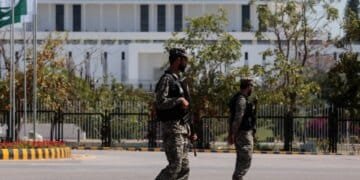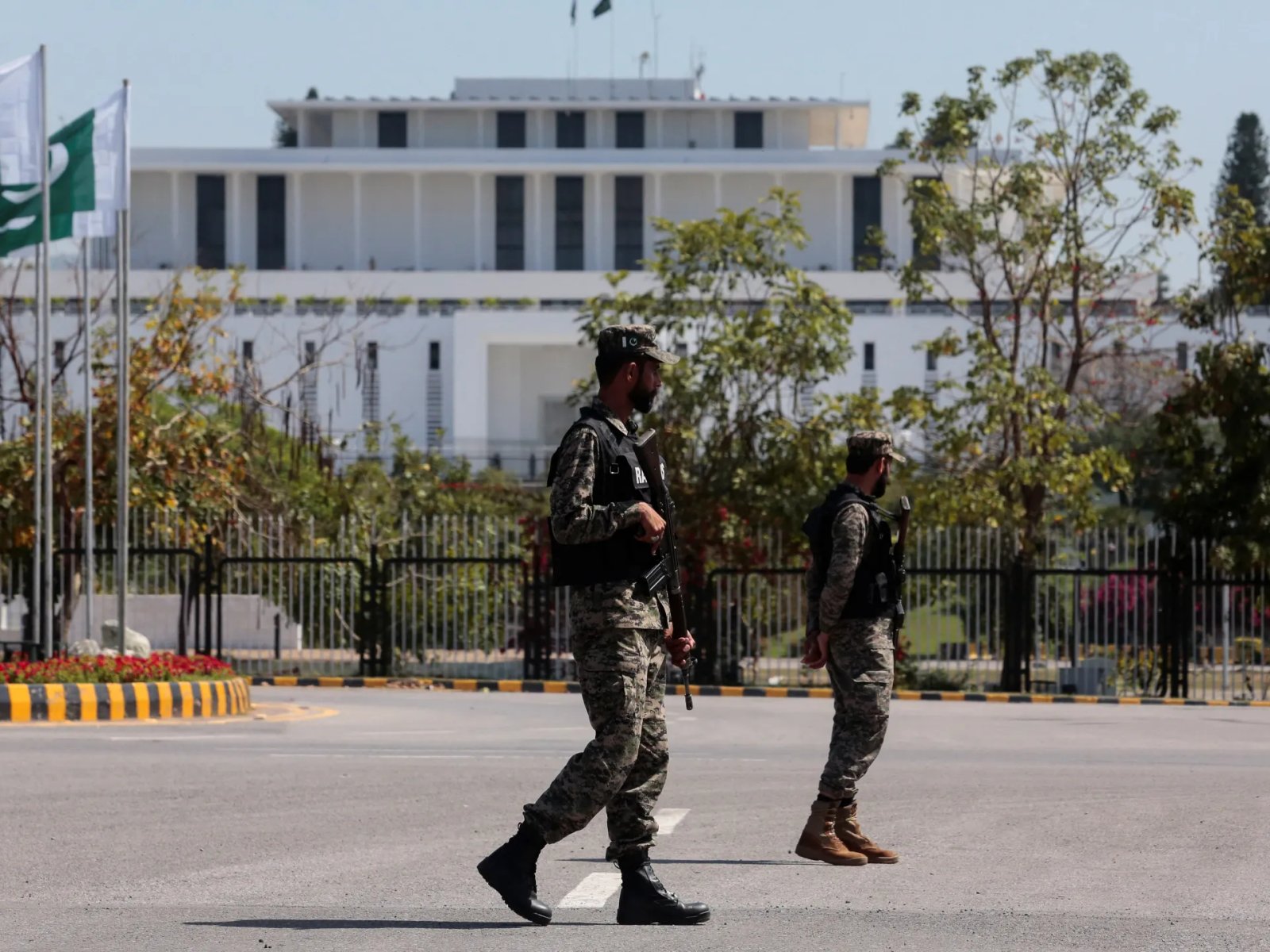
Expectations for the upcoming talks between the United States and Iran in Pakistan are understandably modest. There is even a risk that the meeting won’t take place at all.
Yet, paradoxically, the failure of the talks may still shift the situation in a positive direction. Indeed, the true measure of the ceasefire’s success may not be whether it yields a lasting accord with Iran. It may lie instead in what it forestalls: Even in the absence of a durable deal, Washington may have found a way to avoid going back into a futile war.
Tehran’s reaction to the talks has been ambivalent. The government has cast the ceasefire as a victory, projecting strength at home and abroad. But many voices close to the security establishment are less sanguine, warning that Iran may have sacrificed momentum and weakened its deterrent posture by settling for anything short of a complete and immediate end to hostilities.
Still, whatever the internal debate, there is little dispute about one point: The ceasefire, as it stands, reflects Iran’s terms more than America’s.
Let us consider what the ceasefire entails. The negotiations will proceed on the basis of Tehran’s 10-point proposal, not US President Donald Trump’s 15-point plan for Iranian capitulation. As part of this, Iran will retain control of the Strait of Hormuz during the truce – continuing to collect transit fees from passing vessels.
Washington appears to have conceded two critical points: That it tacitly acknowledges Iran’s authority over the strait, and that Tehran holds the upper hand in setting the terms of the talks. Trump himself seemed to signal as much, describing the Iranian proposal on social media as a “workable” foundation.
Unsurprisingly, this has raised eyebrows in Washington, given the scope of Iran’s demands. They range from recognition of Iran’s continued control over the strait and acceptance of uranium enrichment, to the lifting of all US primary and secondary sanctions – as well as United Nations sanctions – to a withdrawal of US combat forces from the region, and a comprehensive ceasefire that would extend to Israel’s operations in Lebanon and Gaza.
It is difficult to imagine Washington agreeing to such terms in full. Just as uncertain is how far Iran is willing to bend – whether it would pare back its demands or hold firm on a maximalist position.
The geopolitical consequences would be profound if the final outcome reflects these demands. Yet it is equally important to recognise that Tehran is unlikely to wield control of the Strait of Hormuz as a blunt instrument of coercion. Rather, it is more likely to use that leverage to rebuild economic ties with Asian and European partners – countries that once traded extensively with Iran but were pushed out of its market over the past 15 years by US sanctions. Even so, this would be a bitter pill for Iran’s regional rivals.




 United Arab Emirates Dirham Exchange Rate