
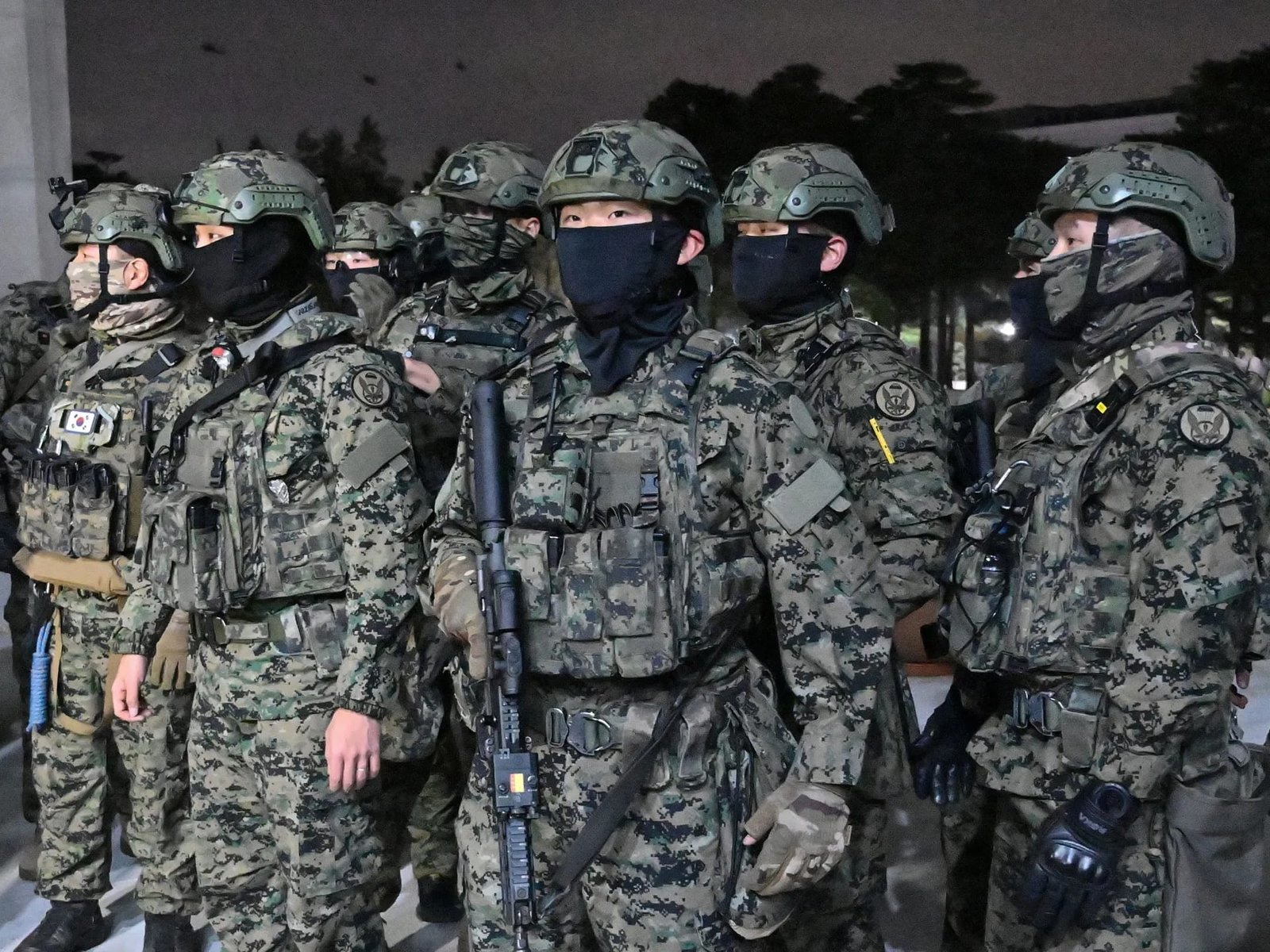
One year ago, on December 3, 2024, South Korea was thrust into a political crisis after then-President Yoon Suk Yeol declared martial law, citing rising unrest and an alleged threat to national security.
Troops were deployed, Yoon ordered the detention of opposition lawmakers, and key state institutions, including the National Assembly, were placed under military command. Press freedoms were also curtailed, though journalists continued reporting in defiance of the restrictions, and citizens mobilised to demand an end to the decree.
The move sparked widespread demonstrations and, within just six hours, the parliament was surrounded by protesters and police as lawmakers voted against the decree, forcing Yoon to withdraw it.
Within days, the Supreme Court declared the brief martial law unconstitutional. Weeks later, the president was impeached and removed from office, ending an extraordinary moment in South Korea’s democratic history.
Yoon later issued a public apology for the “anxiety and inconvenience” he caused.
But elsewhere, the story often unfolds very differently.
Several countries remain under martial law or effective military rule, with wide-ranging implications for civil liberties, political opposition and daily life.
So, where does martial law exist today and what does it mean for the people living under it?
Martial law is an emergency system of governance in which the military assumes authority over some or all civilian functions.





 United Arab Emirates Dirham Exchange Rate