Proposal on cards for non-resident Pakistan to pay Rs10,000 as membership fee; The foundation would have more financial muscle to improve services rather than scrambling for limited resources
Overseas Pakistanis living in the UAE may soon have to dig into their pockets, as the Overseas Pakistanis Foundation (OPF) has floated a proposal to make OPF membership compulsory, with a one time fee of Rs10,000 (approximately Dh130) for five years.
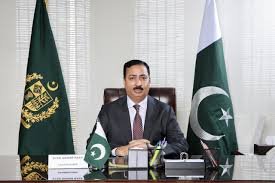
Making his intentions clear, OPF Chairman Syed Qamar Raza said universal membership would help the foundation get its house in order and better serve the diaspora.
“If all overseas Pakistanis come under one umbrella, we can deliver more effectively because we’ll finally have the necessary financial muscle,” Raza told Khaleej Times.
The OPF Chairman noted that the proposal has already cleared one hurdle, having received approval from the Ministry of Overseas Pakistanis and Human Resource Development, and is now awaiting the final green light from the prime minister.
“The fee is Rs10,000 for five years — a small price to pay,” he said, adding that it remains modest by international standards.
Established as a non profit body to tackle the everyday problems faced by Pakistanis abroad, OPF now aims to roll out a wider range of facilities and support services for the country’s overseas community.
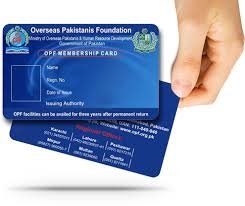
If approved, the plan would cast a wide net, covering more than 12 million overseas Pakistanis across the UAE, other Gulf countries, the wider Middle East and beyond.
Benefits of OPF membership
The mandatory OPF membership would give OPF a steady stream of funding. With millions of overseas Pakistanis contributing a modest amount, the foundation would have more financial muscle to improve services rather than scrambling for limited resources, according to an analyst.
“With predictable funding, OPF could roll out improved services such as legal assistance, dispute resolution, welfare schemes, housing facilitation, education support, and emergency help during crises. In theory, members would get more than just a membership card — they’d get tangible value in return,“ he said.
Mandatory membership would also bring overseas Pakistanis under one umbrella, giving OPF stronger negotiating power with Pakistani authorities and foreign governments on labour rights, visa issues, pensions, and repatriation matters. “A comprehensive membership database would help the government understand where overseas Pakistanis live, work, and what issues they face. Better data often leads to better policies — at least on paper,” he said.
“Making OPF membership universal signals formal recognition of the vital role overseas Pakistanis play in keeping the economy afloat through remittances, investments and foreign exchange inflows,” he added.
Backbone of Pak economy
Overseas Pakistanis continue to be the backbone of the country’s economy, pumping billions of dollars into Pakistan each year through investments and remittances. Following a record inflow of $38.3 billion in remittances during 2024–25, officials expect the figure to climb even higher, potentially reaching $41–42 billion.
According to the State Bank of Pakistan, workers’ remittances posted double digit growth between July 2025 and February 2026, rising 10.5 per cent to $26.5 billion, compared with $24 billion in the same period a year earlier.
In February 2026 alone, Pakistan received $3.3 billion in remittances — up 5.2 per cent year on year — with the UAE leading the pack at $696.2 million, followed closely by Saudi Arabia ($685.5 million), the UK ($532 million) and the US ($319.5 million).
Within the UAE, more than two million Pakistanis earn their livelihoods across a wide spectrum of professions, making the community one of the country’s largest overseas populations.

Raza is currently criss crossing the globe to take stock of the challenges faced by Pakistanis abroad. His recent stops included Germany, South Korea and Japan, where he met senior officials and community representatives.
During his UAE visit, he also sat down with prominent businessmen and community figures — including Mian Munir Hans, Iqbal Dawood and Syed Salem Akhter — as well as consulate officials, to hear concerns straight from the horse’s mouth and better understand the issues confronting the diaspora.





 United Arab Emirates Dirham Exchange Rate