President says several countries have denied refueling to Philippine carriers, forcing airlines to carry return fuel—as Vietnam and others prepare fuel surcharges on international routes.
MANILA — Philippine President Ferdinand Marcos Jr. has warned that grounding commercial aircraft due to a severe jet fuel shortage—triggered by the ongoing U.S.-Israeli war with Iran—is now a “distinct possibility,” according to an interview with Bloomberg News on Tuesday.
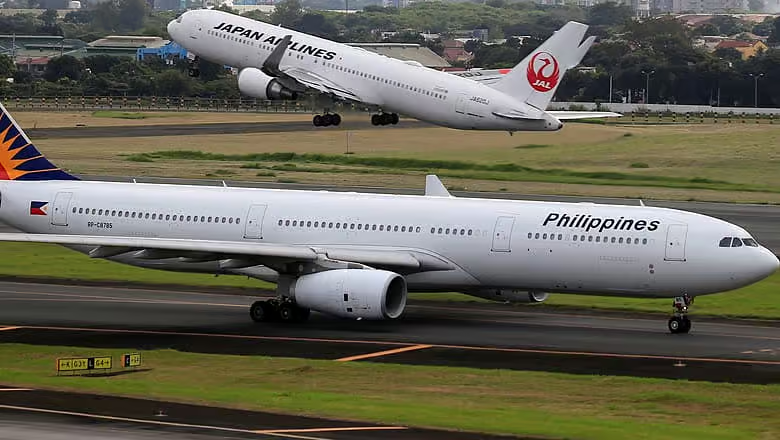
The crisis has disrupted global fuel supply chains, with several countries informing Philippine carriers that they will not be able to refuel aircraft on their territories. As a result, Philippine airlines are being forced to carry sufficient fuel for both outbound and return journeys, severely limiting payload capacity and operational flexibility.
Marcos disclosed the mounting pressure on the aviation sector in an interview with Bloomberg, highlighting the cascading effects of geopolitical instability on regional travel and logistics.
The fuel shortage comes as other Asian nations grapple with rising costs. Vietnam, among others, has announced that airlines are preparing to implement fuel surcharges on international routes starting in early April, a move that could further increase travel costs for passengers across the region.
Aviation analysts warn that if the refueling restrictions expand or the supply situation deteriorates further, Philippine carriers may be forced to cancel or consolidate flights, potentially stranding passengers and disrupting trade routes.
The Philippine government has not yet announced specific contingency measures but is reportedly in talks with partner nations and fuel suppliers to mitigate the impact.
Passengers are advised to check with their airlines for potential schedule changes as the situation continues to evolve.




 United Arab Emirates Dirham Exchange Rate