
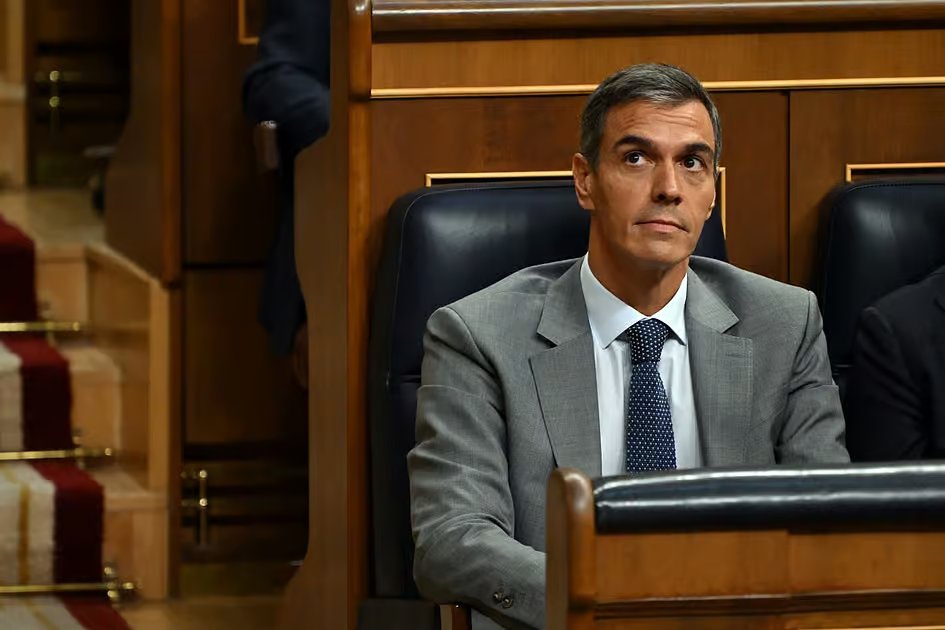
Facing the electorate now is a risky move, as Sanchez’s Socialist Party is trailing in opinion polls
Sanchez has stood out globally for taking a strong stance on progressive issues from Palestinian statehood to defending multilateral institutions and cracking down on “tech oligarchs”, even as a series of setbacks and scandals weakened his position at home.
An election defeat would spell the end of one of Europe’s last few left-leaning governments at a time when the far-right is making unprecedented gains across the region as a growing swathe of European voters desert the centre ground.
Opinion polls suggest a coalition led by the conservative People’s Party (PP) with the support of Vox is the most likely outcome in Spain, ushering a far-right party into central government for the first time since the return of democracy after the death of dictator Francisco Franco.
Despite never winning enough votes to form a majority government, he has cobbled together a series of fragile and seemingly impossible coalitions including voices from the far-left to the separatist right to remain in power for three successive terms lasting eight years.
But growing fragmentation among his partners has meant the government has passed little in the way of legislation in its third term and failed to pass a budget since 2023, even as Spain’s economy has continued to be one of the best performing in the developed world.
Sanchez took office after leading a move to oust centre-right Mariano Rajoy in the wake of major corruption scandals within Rajoy’s People’s Party. However, senior members of Sanchez’s own Socialist Party have in the past year faced allegations of graft, dragging down the party’s already weak approval rating which has hovered at around 26-31% throughout his tenure.







 United Arab Emirates Dirham Exchange Rate