
For that, collective action would be needed now.
The crisis caused by the US-Israel war on Iran has affected the member states of the Gulf Cooperation Council (GCC) at different levels.
Oman has barely felt any shock as its ports and terminals continue operating as usual. Saudi Arabia and the United Arab Emirates have been able to reroute some oil exports through terminals in Yanbu and Fujairah, respectively, to bypass the Strait of Hormuz. Kuwait, Bahrain and Qatar, on the other hand, have been practically cut off from the global market and are facing the prospect of economic contraction.
Under these circumstances, the GCC states more than ever need to demonstrate unity and address the crisis through collective action. The issue of solidarity is not about showing benevolence to neighbours. It is about setting up mechanisms now that can diminish the consequences and value of any future threat of closure. It is about the survival of the whole idea of GCC unity and the leverage it has on the global scene.
Even if some sort of agreement is reached between the warring sides today, the GCC will continue to suffer under the shadow of the nearly three-month closure. States face the risk of losing clients due to the risk of not fulfilling their obligations or being perceived as a risky supplier. Only a joint effort can stop a free fall.
So far, self-interested approaches are winning over collective action. For instance, the UAE’s exit from OPEC was largely driven by the perception of the Emirati leadership that the Strait of Hormuz crisis was an opportunity to grab greater oil market share.
If this trend of unilateral crisis response continues, it would have grave economic consequences for the whole GCC and threaten its existence. With no burden-sharing mechanism, Gulf countries would end up competing against each other in a zero-sum game. This would reduce the influence the GCC has as a regional bloc and diminish its ability to sway energy markets.
Up until now, there have been some demonstrations of solidarity in rhetoric. During the GCC consultative meeting in Jeddah on April 28, Gulf leaders attempted to show unity and discuss possible ways out of the crisis. The meeting led to discussions about what the GCC states could do in practical terms, yet there are still no signs that these discussions have moved beyond the expert level.
Nevertheless, there are practical steps the GCC can take now that could help address the present crisis and ensure stability in the face of future risks. One of them could be the introduction of swap arrangements.
Thus, instead of Kuwaiti, Qatari or Bahraini cargo physically passing through the Strait of Hormuz, a buyer can receive an acceptable substitute at Yanbu, Fujairah, Duqm, Ras Markaz, Sohar, Qalhat, Singapore, India, Korea, Japan or Europe, while the parties involved settle the accounts through future delivery, cash compensation, product exchange, or a retained-volume fee.
The swap does not require the trapped commodity to move immediately. It requires a transparent title, valuation and reconciliation, so that a substitute commodity can be delivered to the end user.
The strongest swap deals, therefore, resemble clearing systems. They are most reliable when they are established before the crisis, but they can also be assembled during a crisis if the parties already have pre-existing experience of trading, a trusted customer base or alternative physical infrastructure to be utilised.
In fact, the swap deals are not something completely unfamiliar to the GCC member states. In 2013, when Egypt failed to fulfil its contractual gas obligations, Qatar agreed to export its own liquefied natural gas (LNG) directly to the customers that Egypt otherwise could not serve while it channelled its gas for domestic needs.
In 2021, the UAE’s Emirates National Oil Company (ENOC) won a tender to swap 84,000 tonnes of Iraqi fuel oil for 30,000 tonnes of Grade B fuel oil and 33,000 tonnes of gas oil to supply to Lebanon. In 2024, the state-owned Oman LNG conducted about two swap tenders per month, with Atlantic cargoes originating from the United States delivered to Spain, while the company delivered its LNG to clients in Asia.
Collective action, common interest
All of these examples show that Gulf countries and their national energy companies have the required expertise to carry out intra-GCC swaps.
The most practical way to implement such deals now would be to establish an energy swap facility through a coordinated clearing mechanism among national oil companies, major regional refiners, selected traders, insurers, banks and key Asian and European buyers.
In the immediate term, swap arrangements imply that one group of countries – Saudi Arabia, Oman and the UAE – would sacrifice a bit of income and market share to the advantage of the others, namely Qatar, Bahrain and Kuwait, by allocating part of their current export, storage or transport capacities. But in the longer term, all would benefit.
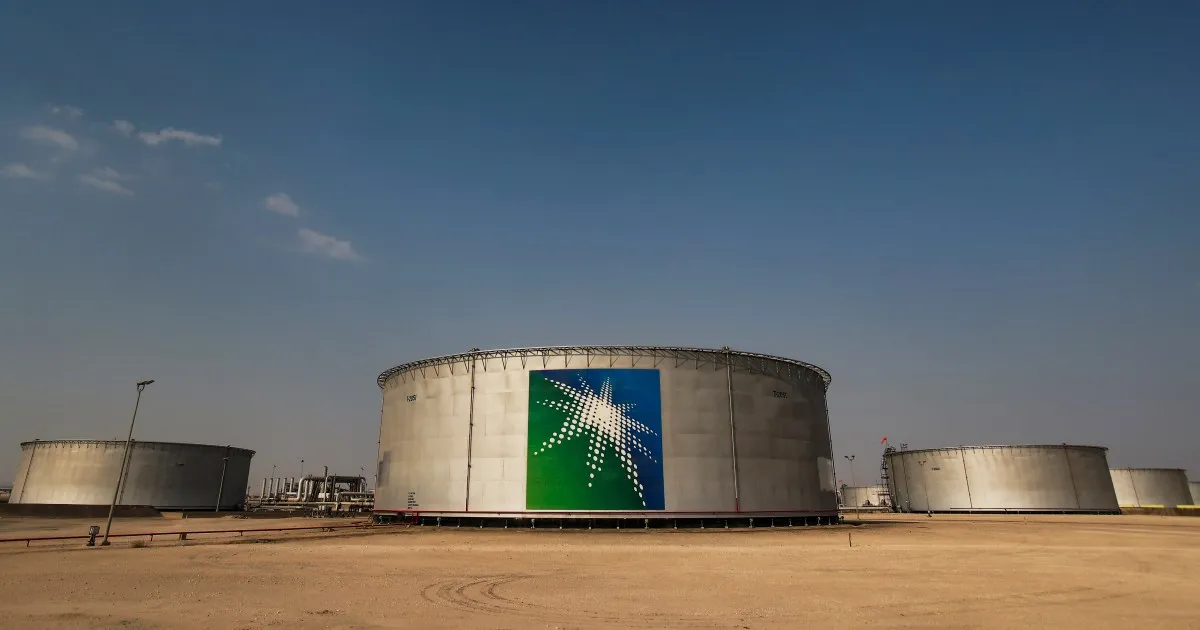
The critical call is on Saudi Arabia, which has the largest options to bypass Hormuz and provide the largest pool of deliverable crude. Its command of customer credibility, global familiarity with Saudi oil grades, Red Sea export infrastructure and Aramco’s trading capacity make it the main pillar of any future swap system.
Complementing its role as market regulator within OPEC/OPEC+ with the leadership within the GCC, Riyadh can help stabilise the market by covering priority cargoes for strategic buyers.
The UAE can also play a major role by utilising its export capacity through Fujairah, and so can Oman, which has crude storage capacity at Ras Markaz, refining capacity at Duqm, LNG experience and ports that can receive and dispatch cargoes without having to cross the Strait of Hormuz.
If such swap deals are implemented, they can strengthen the GCC unity and help the members avoid internal economic rivalry in the future. More importantly, they can encourage the launch of a larger regional infrastructure drive that would lessen dependence on the Strait of Hormuz and diminish its value as a geopolitical tool to be used against the Gulf.
If there are a well-functioning swap mechanism and infrastructure in place that can be used whenever a threat of closure is made, then clients would feel more confident in continuing their relationships with all Gulf suppliers. In the longer term, this could serve as the GCC’s insurance against any new turbulence in the region.
The views expressed in this article are the authors’ own and do not necessarily reflect media’s editorial stance.




 United Arab Emirates Dirham Exchange Rate