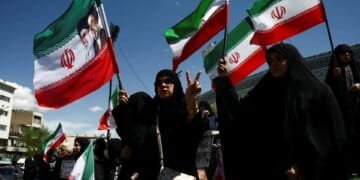
On the 40th day of the war that Washington called “Epic Fury” and Tehran named “True Promise 4”, United States President Donald Trump and Iran’s Supreme National Security Council accepted a Pakistani-brokered ceasefire. Two weeks of ceasefire — no missiles, no air strikes — and a promise that negotiators would meet in Islamabad on Saturday, April 11, 2026.
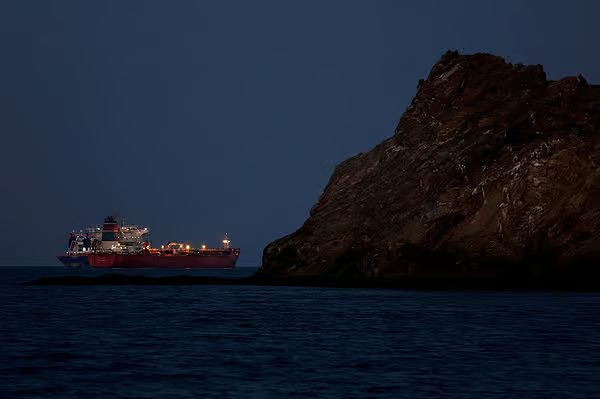
For the first time since late February, ships would be allowed to pass safely through the Strait of Hormuz. The ceasefire explicitly incorporates Iran’s 10-point peace proposal, and for the first time since the war began on February 28, the world has something resembling a diplomatic roadmap.
Yet before the architecture of this agreement is examined, it is worth pausing to assess the conflict itself: its origins, its legal standing, and who ultimately absorbed its costs.
This war did not emerge organically from the long arc of US-Iran confrontation that has defined Middle East geopolitics for 47 years. It was not the product of a specific Iranian act of aggression, nor did it follow the procedural frameworks that international law requires to justify the use of force. Rather, it was born from Israel’s strategic doctrine post-October 7, 2023 — what Israeli planners quietly described as “zeroing out threats” — a systematic campaign to neutralise perceived existential risks, of which Iran was considered the most consequential.
The US provided the military capacity. Israel provided the strategic rationale. Neither provided a United Nations Security Council mandate, a credible invocation of self-defence under Article 51 of the UN Charter, or any legal architecture that would satisfy the threshold requirements of international law. This was a war of choice. And, as with most wars of choice, it was presented to domestic and international audiences through the language of necessity and pre-emption.
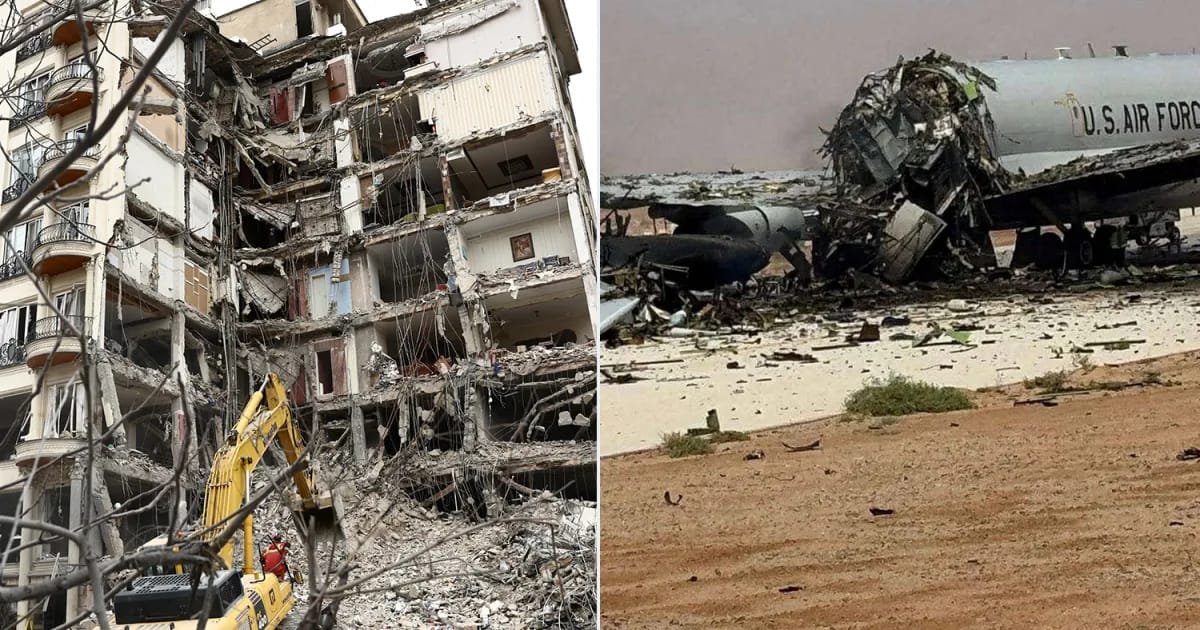
The consequences were not difficult to anticipate. Iran — its military infrastructure degraded, its economy under mounting pressure — responded as any state controlling a critical geographic chokepoint might be expected to respond. The Strait of Hormuz was closed. An operation launched under the banner of regional security rapidly produced one of the most serious energy disruptions the global economy had experienced in decades, with reverberations felt across markets in Tokyo, Berlin and Sao Paulo.
Iran’s 10-point peace framework, now embedded in the ceasefire agreement, merits analysis on its own terms, rather than through the reductive lens that has often characterised Western commentary on Iranian diplomacy.
The proposal rests on several interlocking demands: a formal guarantee against future military attacks on Iranian territory; a permanent end to hostilities rather than a temporary suspension; a cessation of Israeli military operations in Lebanon; the lifting of US sanctions; and a halt to regional fighting involving Iranian allies. In return, Iran has committed to reopening the Strait of Hormuz, establishing a codified framework for safe maritime passage, splitting transit fees with Oman, and directing those revenues towards reconstruction rather than extracting reparations.
To be clear, it is unclear how much — if any of this — has already been accepted by the US, let alone by Israel.

 United Arab Emirates Dirham Exchange Rate