
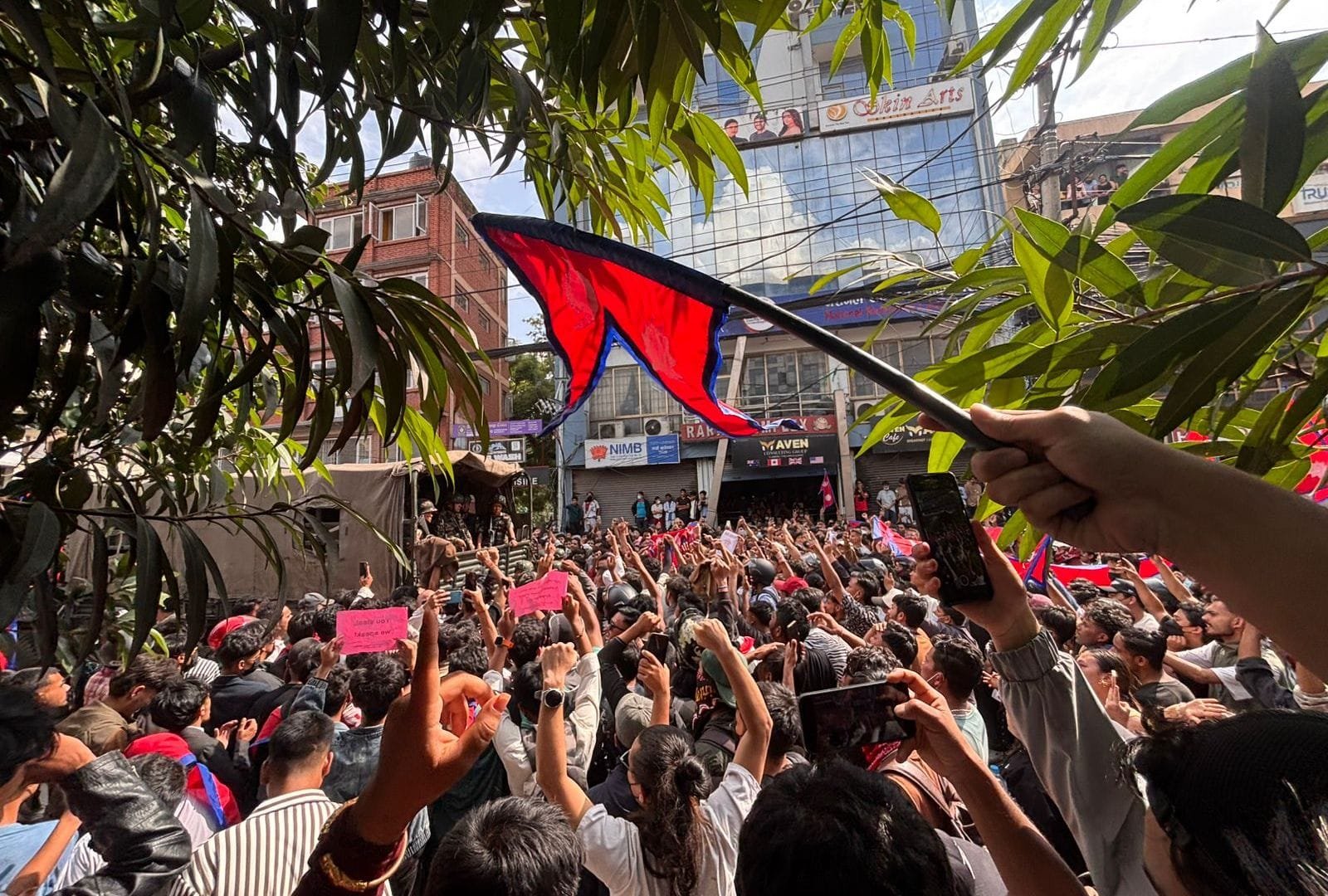
Kathmandu, Nepal – Pabit Tandukar was shouting slogans against Nepal’s government outside the country’s parliament building in the capital Kathmandu when he felt sharp pain cutting through his leg.
The 22-year-old university student was taken to the trauma centre of Kathamandu’s Bir Hospital on Monday, where doctors confirmed he had been hit by a live copper bullet.
“We were there for a peaceful protest. They were initially firing tear gas at us and we were pushing back. Suddenly, I was shot,” Tandukar told media.
At least 19 protesters were killed, and hundreds – like Tandukar – were injured after security forces fired live ammunition, rubber bullets and tear gas shells at youth agitators on Monday, after what began as a peaceful protest descended into violent clashes with law enforcement officers.
The killings have pushed Nepal into a political crisis. Home Minister Ramesh Lekhak resigned from the position on Monday evening, claiming moral responsibility, and on Tuesday, Prime Minister KP Sharma Oli resigned.
But the thousands of young people who hit the streets of Kathmandu and other cities in Nepal on Monday, as part of what the organisers have called a Gen-Z movement, are demanding more – a dissolution of parliament and new elections.
The protests have erupted amid growing criticism of alleged corruption, and anger over perceptions that the families of the country’s ruling elite – including leading politicians – live lives of relative luxury while Nepalis struggle with a per capita income of less than $1,400 a year.
Then, the government last week banned 26 social media platforms, including Facebook, YouTube and X, after they missed a September 3 deadline to register with the country’s authorities under a controversial new law. That ban further raised anger against the government among young, digitally native Nepalis, though the government said it was trying to stop the use of fake online identities to spread rumours, commit cybercrimes, and disturb social harmony.
By Tuesday, though, that simmering anger and the protests it led to had exploded into even more violence, with the killings of civilians by security forces becoming the lightning rod galvanising youth, who returned to the streets for a second day in a row.




 United Arab Emirates Dirham Exchange Rate