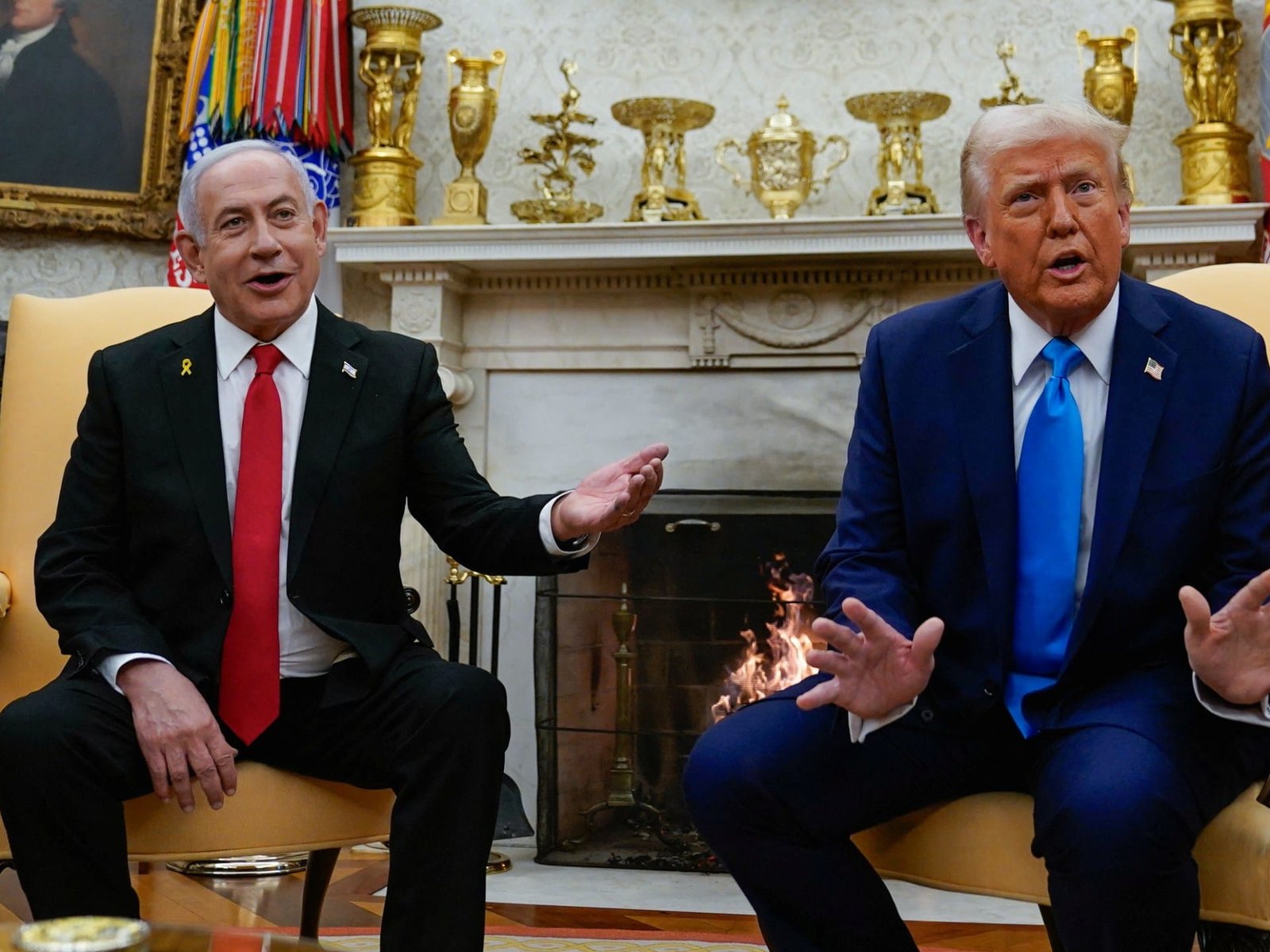
Trump says a deal for a 60-day ceasefire could lead to an end to the war, but others are more pessimistic.
Israeli Prime Minister Benjamin Netanyahu is visiting the United States on Monday, a visit analysts expect will focus on celebrating Israel and the US’s self-anointed victory against Iran and discussing a proposal for a ceasefire in Israel’s war on Gaza.
This is the third time this year Netanyahu will be meeting US President Donald Trump, who claims the US and Israel “obliterated” Iran’s nuclear programme during a 12-day war and that he would resume bombing Iran if it restarts nuclear activities.
Last week, Trump said Israel had agreed to conditions for a 60-day ceasefire in Gaza, which would allow all parties to work towards an end to Israel’s 21-month-long war on the besieged enclave.
On July 4, Hamas gave a “positive” response to Qatari and Egyptian mediators about the latest ceasefire proposal.
On Friday, after Hamas’s response to the proposal, Trump said there could be a “deal next week” and promised to be “very firm” with Netanyahu to ensure a ceasefire.
Israel has since said that Hamas has requested changes to the proposal that it found “unacceptable”, but that Israeli negotiators would be going to Qatar on Sunday to discuss the proposal.
Many experts told media that they are not optimistic a temporary ceasefire will lead to a permanent end to the war.
“The way [the ceasefire talks] are being framed leaves me sceptical,” said Omar Rahman, an expert on Israel-Palestine with the Middle East Council for Global Affairs.
Rahman added that he believes Trump was focused on getting the Israeli captives released, but not on ending the war and the suffering of the people of Gaza.
Trump previously promised an end to the war after pushing for a ceasefire just days before he became president in January.
However, two months later, Trump did nothing when Israel unilaterally resumed its attacks on Gaza, killing thousands more people.
Mairav Zonszein, an expert on Israel-Palestine for the International Crisis Group, said that could happen again.
“It all rests on Trump and the US to sustain real pressure [on Netanyahu], but that is highly doubtful,” she told media.
Yaser al-Banna, a Palestinian journalist in Gaza, said many in the Strip are divided over whether a ceasefire will end the war. While everyone prays it will, some people cannot imagine Netanyahu sticking to a deal.
Netanyahu insists that the war will not end without a “total victory” over Hamas, a concept he has not defined.
“About half the people in Gaza are very pessimistic… The other half believes this time could be different due to shared interests among Israel, the Palestinians, Arab states and the US to end this war,” he said.
Many analysts believe that Trump is driven by his desire to strike grandiose deals in order to boast about his achievements in global affairs.
On Monday, he is likely to take credit for ostensibly dismantling Iran’s nuclear programme – even though that may not be true – and express his desire to retrieve the rest of the Israeli captives in Gaza.
He also wants to get the “Gaza issue” out of the way to pursue more normalisation deals between Israel and neighbouring Arab states, said Khaled Elgindy, an expert on Israel-Palestine and a professor of Arab Studies at Georgetown University in Washington, DC.
“Trump wants to be able to say that he got back the Israeli hostages… and got a Palestinian state… Then he can call himself master of the universe, but getting those things is much harder than he thinks,” Elgindy told media.
It’s unclear whether Netanyahu’s political calculations align with Trump’s ambitions.
Israel’s next parliamentary elections have to take place before October 2026, and Netanyahu could go to the polls sooner, riding on a likely wave of popularity if he succeeds in returning the remaining captives.







 United Arab Emirates Dirham Exchange Rate