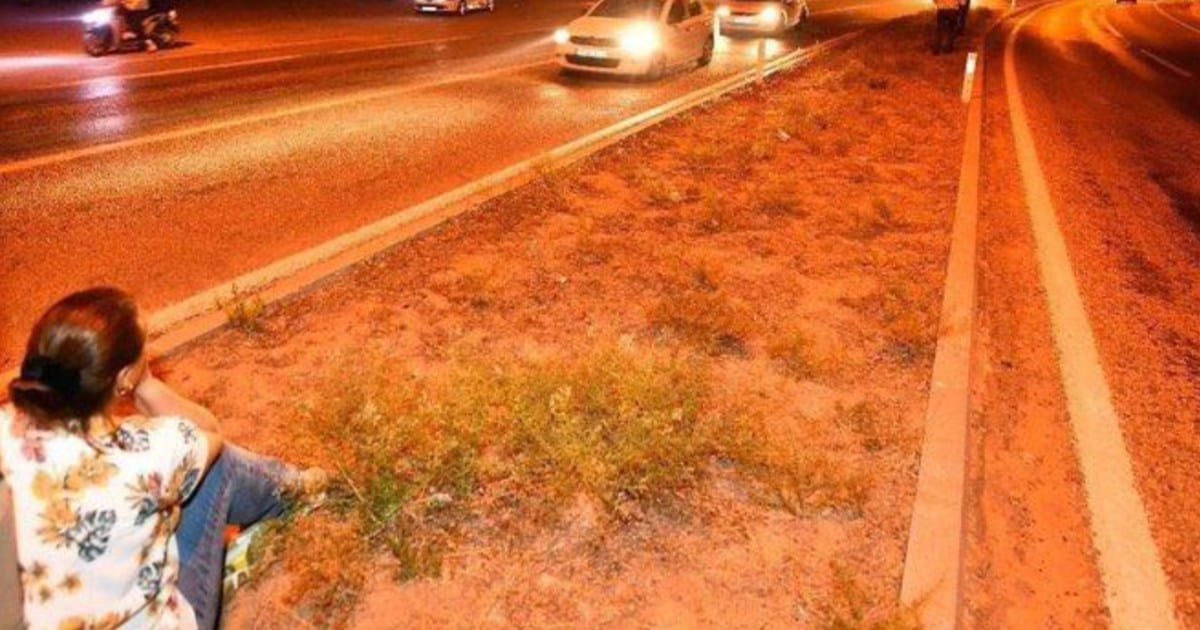
Recent wildfires have torn through southeastern Turkiye’s Hatay, still recovering from a February 2023 earthquake.
Antakya, Turkiye – The darkening sky and thick, acrid smoke carried by scorching winds filled residents of Turkiye’s Hatay province with dread.
“It was like waking up, but you’re back in a nightmare,” said Hatice Nur Yilmaz, 23, her voice trembling on the phone as she described seeing flames from her container home in Antakya, Hatay’s largest city.
Yilmaz studies at Osmangazi University, in northwest Turkiye’s Eskisehir, almost 400 miles (643 kilometres) away from Antakya.
But she was back in her family’s temporary home – Antakya is still rebuilding following the earthquake – when the fires broke out in Hatay. And, despite the home being untouched this time, it brought back some of the scars of the past.
“We looked at the sky … confused at first. Smoke billowed from the mountains. The wind picked up and the flames kept rising,” Yilmaz recounted, describing “the same panic, the same suffocating fear”.
Turkiye has been battling wildfires since the end of June, but a particularly bad outbreak at the start of July has killed at least three people and displaced more than 50,000 others.
Hatay, in southeastern Turkiye, has been particularly badly hit, stirring painful memories for survivors of the earthquake that devastated this region two and a half years ago.
The quake and powerful subsequent tremors killed more than 53,000 people in Turkiye and destroyed or damaged hundreds of thousands of buildings across the country’s south and southeast, including the family’s home. About 6,000 people are also believed to have died in neighbouring northern Syria.
More than two years after the quakes, Yilmaz’s family is among nearly half a million people still displaced, according to the International Federation of Red Cross and Red Crescent Societies.
“As soon as I saw the news [of the fires], I called my uncle’s wife because their house was very close to the fires,” Yilmaz said.
“She was weeping. She said, ‘We’re gathering what we can, they’re telling us to flee.’”
Yilmaz’s uncle had moved to Gulderen, on the outskirts of Antakya, to get away from the city centre of Antakya, where reconstruction work is continuing.
Chaotic self-reliance
The fires consumed fragile threads of normalcy that survivors had painstakingly rebuilt. “Gardens with fruit trees, vegetables, all burned … but thankfully not their houses”.
“A neighbour’s haystack was gone. Animals trapped, perished,” Yilmaz relayed from her call with her relatives.
Neighbours formed bucket brigades using well water and garden hoses, while others scrambled for generators to power pumps due to electricity cuts.
For Ethem Askar, 42, a steel contractor from Antakya’s neighbourhood of Serinyol who was involved in volunteer initiatives during both catastrophes, the parallels in disaster response are inescapable.
“Just as it was late in the earthquake, it was the same in the fire,” he stated bluntly, adding that during one of the fires, it took hours for the emergency services to send enough helicopters to put out the blaze.
“If there had been a proper first intervention, this scale of devastation wouldn’t have happened,” Askar said.
To compensate, Askar and other residents attempted to help out.
“Our group, about 45 volunteers – the same ones who did debris removal, food distribution, teaching children after the quake – we mobilised again,” Askar said.
“The initial response is minimal, then, when it’s almost too late, more resources arrive. By the next day, the fire was massive.”
He described frantic evacuations, a grim replay of digging through rubble.
Firefighters were able to evacuate residents and their animals from highland villages and relocate people to student dormitories and animals to other stables, but the villages sustained significant damage.




 United Arab Emirates Dirham Exchange Rate