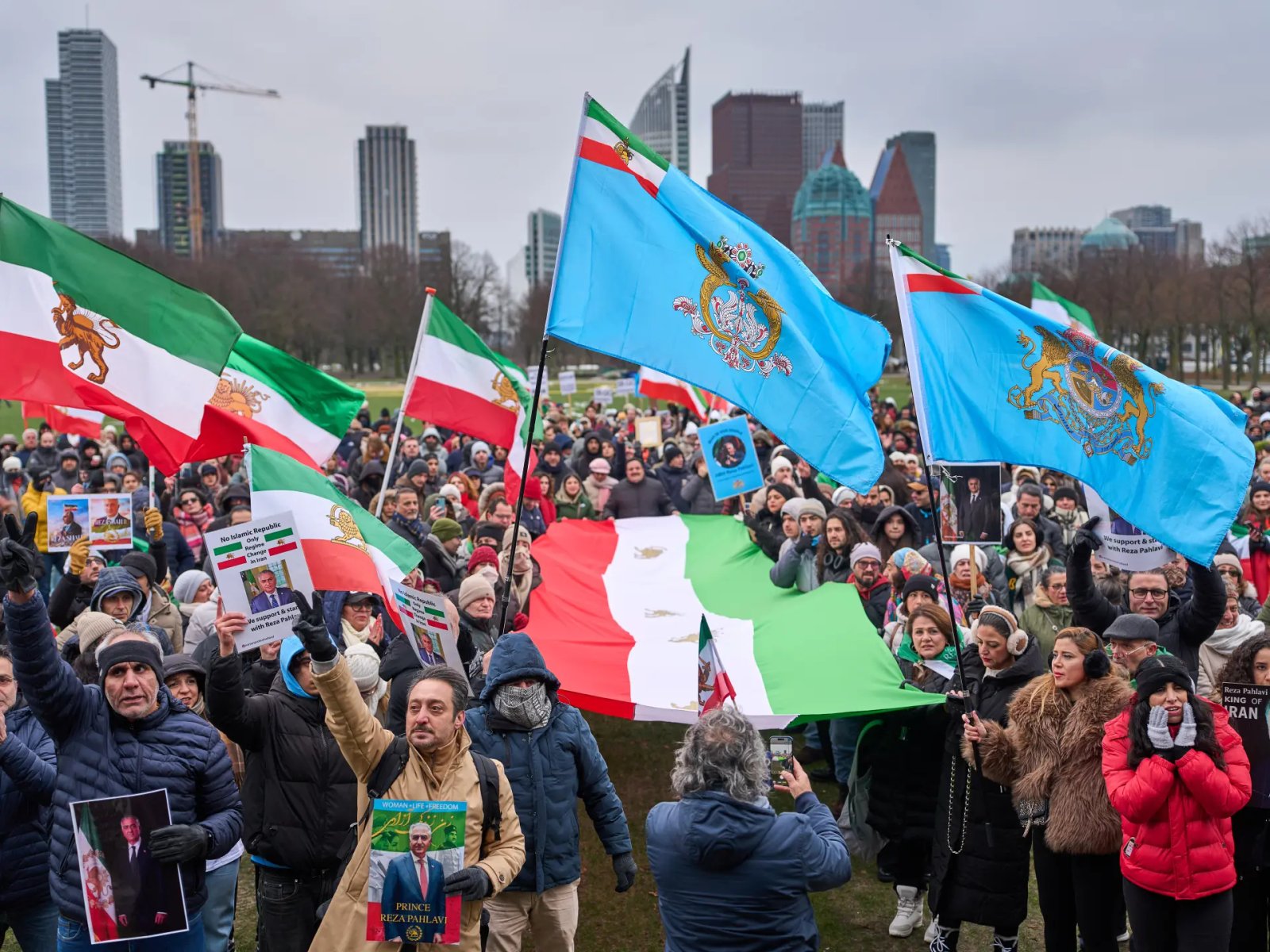
Analysts say Musk’s move may give a small boost to some protesters, but matters little during internet blackouts.
Amid intensifying protests in Iran, the world’s richest man has weighed in.
On January 4, Elon Musk, the multi-billionaire owner of social media platform X, responded to a post by Iran’s Supreme Leader Ayatollah Ali Khamenei that said “we will not give in to the enemy” by suggesting in Farsi that he was delusional.
Then, on Saturday, Musk’s platform X changed the Iranian flag emoji on the site from the one used since the Islamic revolution in 1979 to the pre-revolution flag featuring a lion and sun.
Some demonstrators inside and outside of Iran have waved the pre-1979 flag as a protest against the current regime.
Musk’s moves have gained some support from critics of the regime in Tehran. However, analysts debate the extent to which such moves can have an impact on the ground in Iran.
Protests in Iran began on December 28 amid soaring inflation in the country. They’ve since spread to more than 100 cities and towns, and are now reportedly taking place in every province in the country.
“The focus of the protests is on the core of the state and governance of the country because political, economic, social, cultural, or even environmental policies have not worked for [protesters],” Negar Mortazavi, a senior fellow at the Center for International Policy, told media. “Economics, though, was the start of it.”
“The Trump administration’s decision to quit the Iran nuclear deal in 2018 and reimpose sanctions – and its failure to reach a new deal with Iran last year – have crippled the economy and increased corruption, benefitting a small sanctions-busting elite,” said Barbara Slavin, a distinguished fellow at the Stimson Center in Washington and a lecturer in international affairs at George Washington University.
“Add to that the severe blows inflicted on Iran’s regional allies since October 7, 2023, the Israeli and US strikes last summer, and it is hard to see a way out [for the regime].”
What’s behind the protests?
The Iranian regime has enforced an internet blackout in the country since Thursday, though some videos have still managed to circulate online of masked protesters clashing with security forces in Iranian cities.
The semiofficial news agency Tasnim reported on Sunday that the number of security personnel killed has reached 109. Opposition activists say the death toll is higher and includes dozens of protesters.
Musk, a longtime tech mogul heading US government-supported companies including Tesla and SpaceX, left a role with the Trump administration, where he led the so-called Department of Government Efficiency (DOGE), in late May.
Musk’s work with DOGE was widely criticised, though his purchase of social media platform X and vocal support for racist policies have also attracted widespread condemnation in recent years.
Today, Musk is more focused on his private businesses, though he still wades into politics from time to time, particularly to push right-wing conspiracy theories about “white genocide” and immigration.
As for Iran, during the 2022 “Women, Life, Freedom” protests and again in 2025’s 12-Day War – which killed more than 610 people in Iran and 28 in Israel – Musk provided internet access to people inside the country through his satellite service Starlink.
Iran has reportedly jammed Starlink signals during the latest protests.
“The state uses internet disruption and shutdown to prevent more mobilisation of protesters and communication between protest groups and also to prevent news of it spreading,” Mortazavi said.





 United Arab Emirates Dirham Exchange Rate