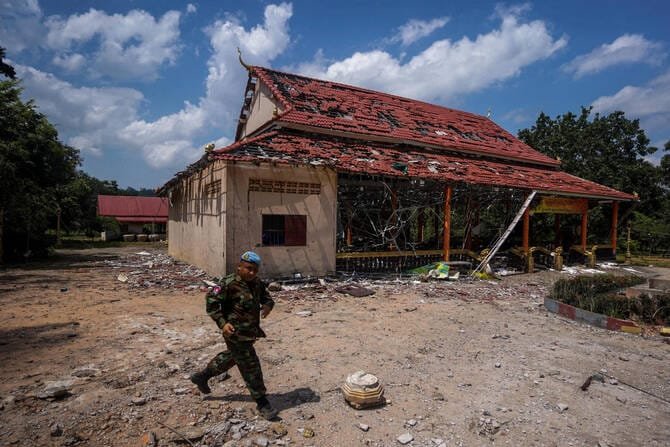
Despite the former US president’s assurance that the nations “are going to be fine,” Bangkok demands an apology and suspends a US-brokered ceasefire, accusing Cambodia of laying new landmines.
WASHINGTON – A U.S.-brokered ceasefire between Thailand and Cambodia is on the brink of collapse, revealing the fragility of diplomatic efforts to resolve a long-running border dispute, despite former President Donald Trump’s optimistic assessment.
The tension resurfaced after Thailand suspended the ceasefire agreement, which was brokered by Trump and Malaysian Prime Minister Anwar Ibrahim in July following deadly clashes that displaced hundreds of thousands. Bangkok is demanding a formal apology from Phnom Penh over allegations that Cambodian forces laid fresh land mines, injuring Thai soldiers—a claim Cambodia denies.
On Friday, Trump stated he had spoken to both countries’ leaders and believed they were “doing great” and “going to be fine.” However, this optimism was immediately contradicted by the hardline stance from Bangkok.
Thai Prime Minister Anutin Charnvirakul declared on Saturday that his country would not adhere to the agreement until Cambodia admits to the violation and apologizes. In a Facebook post following his calls with Trump and Anwar, Anutin asserted Thailand’s right to protect its sovereignty and asked the mediators to press Cambodian Prime Minister Hun Manet to comply with the deal.
In contrast, Hun Manet stated on the same platform that Phnom Penh remained committed to the ceasefire and expressed hope for continued dialogue. The conflicting statements from the two leaders highlight the deep-seated tensions that continue to threaten stability in the region.
Malaysia’s Anwar, who has acted as a mediator, posted on social media that both sides expressed readiness to continue with diplomatic efforts, even as the path forward remains uncertain.






 United Arab Emirates Dirham Exchange Rate