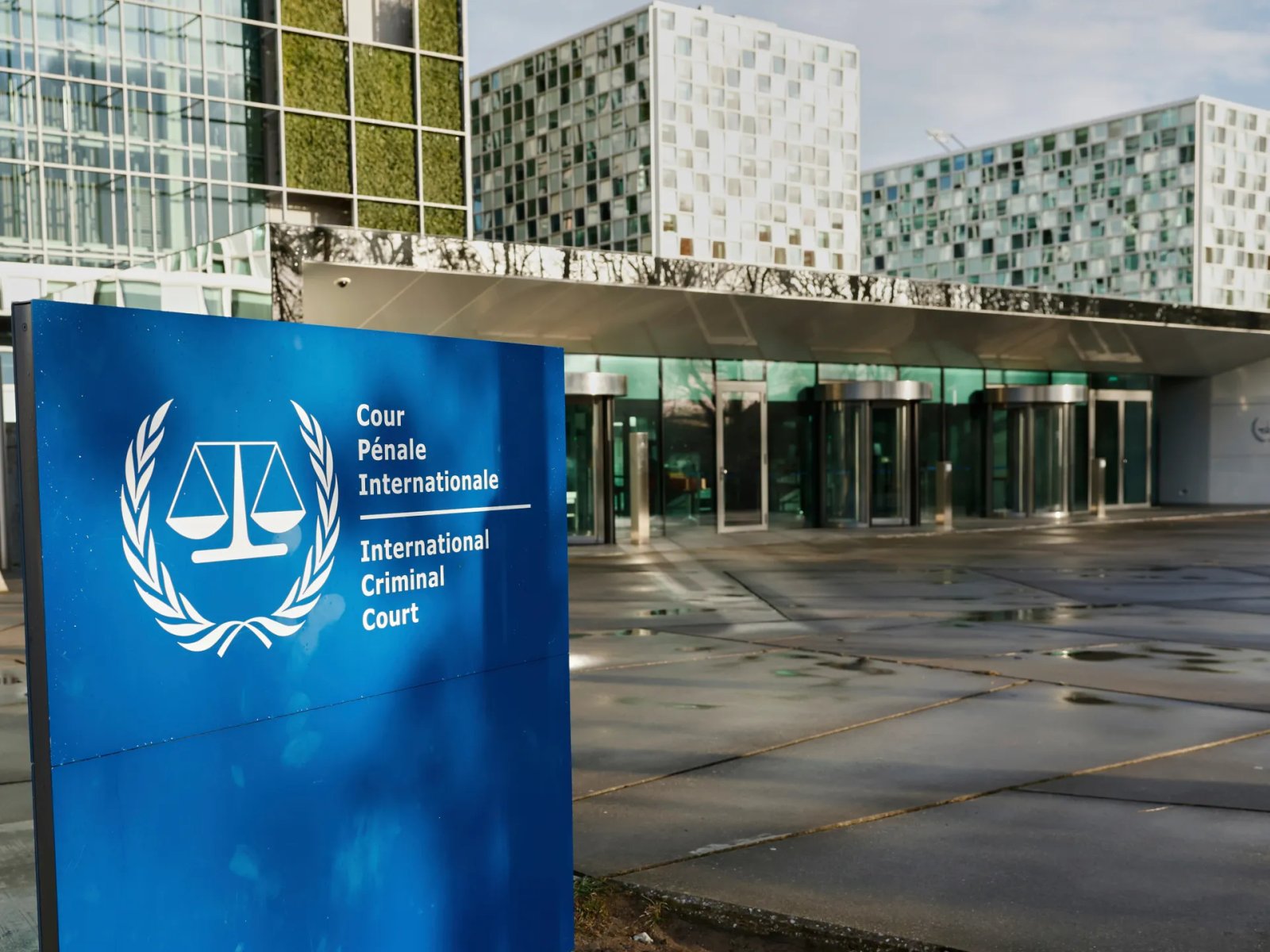
In January, I was retained by the prosecutor of the International Criminal Court (ICC), Karim Khan, who is facing an investigation into allegations of misconduct and abuse of authority. I was tasked with undertaking a gender-competent analysis of the then-undisclosed evidence collected by the United Nations Office of Internal Oversight Services (OIOS), which was tasked by the president of the Assembly of States Parties (ASP) with the inquiry.
I would also lead the drafting of defence submissions to the Judicial Panel, comprising three eminent judges selected by the Bureau of the ASP, the ICC’s executive oversight body. The Judicial Panel was charged with legally characterising any facts found by the OIOS in the course of its investigation. This process, not contemplated in existing court regulations, was designed and implemented by the bureau and established specifically for this complaint.
As a condition of receiving the disclosure, I signed a confidentiality agreement that bars me from discussing the evidence. I am permitted, however, to respond to any inaccurate or misleading information placed into the public domain. I intend to abide by these obligations in this article.
The OIOS’s investigation began in November 2024 and ran until December 2025. All parties had lengthy interviews and were able to submit any material that they believed to be relevant. OIOS investigators also interviewed many others and independently collected material. Contrary to what has been reported with regard to the allegation of sexual misconduct, there are no corroborating witnesses. The material collected ran to more than 5,000 pages.
The Judicial Panel spent three months reviewing the OIOS report and the mass of underlying material. In March, the judges handed down an 85-page report, in which they recounted and analysed the evidence. In their conclusion, as has been publicly reported, the judges stated that they were “unanimously of the opinion that the factual findings by OIOS do not establish misconduct or breach of duty under the relevant legal framework”.
This finding did not surprise me. The totality of evidence collected by the OIOS was not, in my view, capable of meeting the long-accepted standard of proof of beyond reasonable doubt. I remain unconvinced that a lower standard of proof would have yielded a different outcome. The doubts inherent in the evidence were not merely reasonable; they were serious.
So far, so straightforward. Once the Judicial Panel’s conclusion became publicly known, however, a number of intriguing events unfurled.
First, the bureau circulated an “OIOS Report Summary”, which did not summarise the concluding operative section of the OIOS report, titled “Findings”, but rather drew from the report’s brief narrative overview in an early section titled “Overview”. That the summary was misaligned with the OIOS’s findings was evident, not only from reading the OIOS report’s “Findings”, but also from the Judicial Panel’s analysis of the OIOS report, which repeatedly referenced the lack of conclusive factual findings made by the OIOS.
The purported summary, which gave the impression that the OIOS had made conclusive factual findings with regard to the sexual misconduct allegations, promptly leaked.




 United Arab Emirates Dirham Exchange Rate