
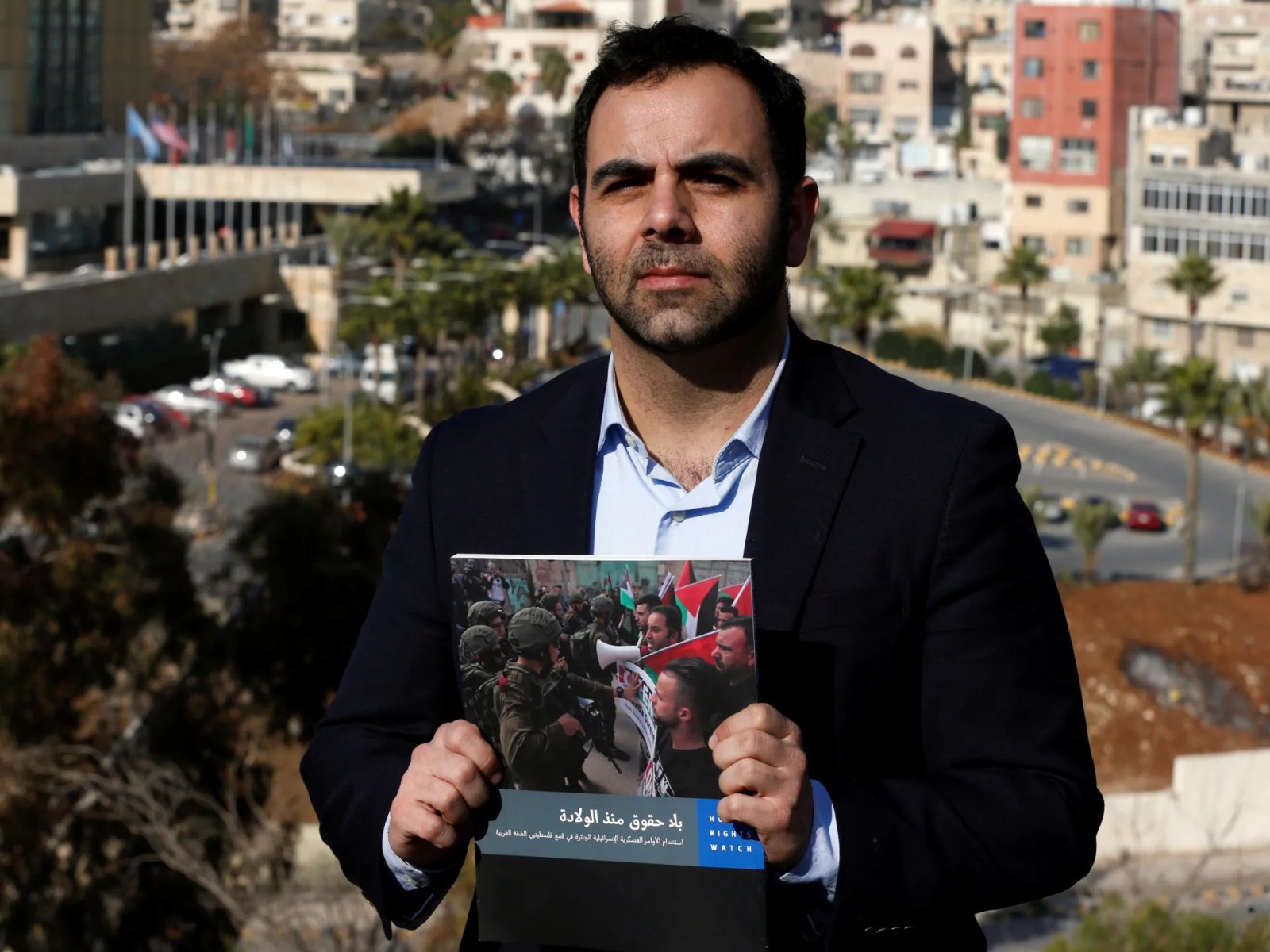
The Israel-Palestine director of Human Rights Watch (HRW) has resigned in protest, saying the organisation’s new chief blocked a report accusing Israel of committing “crimes against humanity” in its denial of Palestinian refugees’ right of return.
Omar Shakir, who has worked for the rights group for more than 10 years, told media on Tuesday that the report “sought to connect the erasure of camps in Gaza with the emptying of camps in the West Bank, with the full assault led by the Israeli government against UNRWA, the [United Nations] aid agency for Palestinian refugees and underscoring how in the midst of this Nakba 2.0 that we’re seeing unfold beyond us, it’s critical that we learn the lessons from Nakba 1.0”.
The Nakba, which means “catastrophe”, refers to the forced displacement of 750,000 Palestinians expelled from their homes and land by Zionist armed groups and then the newly created state of Israel in 1948. Thousands of Palestinians were also killed during the Nakba.
Shakir said the report documented how the denial of return “amounts to a crime against humanity”.
He said he had been told that Executive Director Philippe Bolopion, who took the helm of HRW late last year, was worried the report would be misread by “detractors” as a call to “demographically extinguish the Jewishness of the Israeli state”, according to his resignation letter seen by media and dated January 15.
Shakir wrote: “Through this process, I have lost my faith in the integrity of how we do our work and our commitment to principled reporting on the facts and application of the law.”
The report was slated to be published on December 4 and had been given the greenlight by others in HRW during an internal review, Shakir said.
In a statement to media, HRW said it had received the resignations of two people working on Israel-Palestine after “a decision to pause the publication of a draft report on the right of return of Palestinian refugees”.
“The report in question raised complex and consequential issues. In our review process, we concluded that aspects of the research and the factual basis for our legal conclusions needed to be strengthened to meet Human Rights Watch’s high standards,” the group said.







 United Arab Emirates Dirham Exchange Rate