
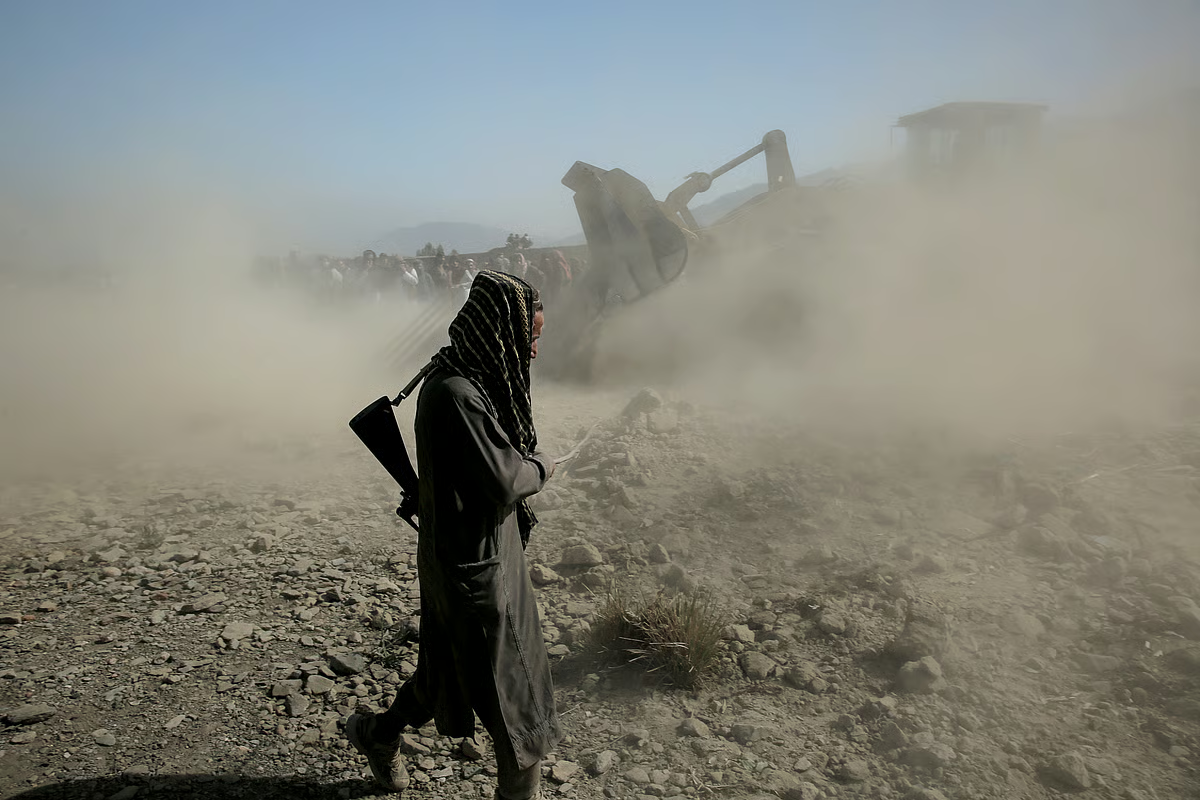
Overnight air and ground assaults mark the most dramatic escalation in months, shattering a fragile ceasefire along the disputed border.
SHARJAH, UAE – Pakistan has declared an “open war” against the Taliban administration in Afghanistan following a series of intense overnight strikes that targeted militant hideouts in major Afghan cities, including Kabul and Kandahar.
The strikes, which Pakistani security sources confirm involved both air and ground forces, targeted what Islamabad describes as Tehreek-e-Taliban Pakistan (TTP) headquarters and ammunition depots along the border. The dramatic escalation on Friday threatens to completely unravel the fragile ceasefire along the 2,600-kilometer (1,615-mile) Durand Line and pushes the neighboring states to the brink of a full-scale conflict.
“We have reached our limit. Now it is open war between us and you,” Pakistani Defence Minister Khawaja Asif posted on X, signaling a stark shift in rhetoric following days of mounting skirmishes.
Taliban spokesperson Zabihullah Mujahid confirmed that Pakistani forces conducted airstrikes in parts of Kabul, Kandahar, and Paktia. A Reuters witness in the Afghan capital reported hearing loud blasts followed by the wail of numerous ambulance sirens.
Conflicting Casualty Figures
Both sides are reporting heavy losses, though the figures are sharply disputed and difficult to verify independently.
- Pakistan’s Account: Government spokesperson Mosharraf Zaidi stated that 133 Afghan Taliban fighters were killed and over 200 wounded. He added that 27 militant posts were destroyed and nine captured. Video shared by Pakistani officials showed flashes of artillery fire along the border and a building in Paktia, identified as a Taliban headquarters, engulfed in flames.
- Afghanistan’s Account: Zabihullah Mujahid offered a different tally, claiming that 55 Pakistani soldiers were killed and 19 of their posts seized. He reported eight Taliban fighters killed and 11 wounded, adding that 13 civilians were injured in the Nangarhar province.
Zaidi characterized the operations as necessary counterstrikes against “unprovoked Afghan attacks.”
The Core of the Conflict: The TTP Dispute
This escalation is the latest and most severe chapter in a long-running dispute over cross-border militancy. Islamabad accuses the Afghan Taliban government of harboring and providing sanctuary to the TTP, a militant group that shares ideology with the Afghan Taliban but targets the Pakistani state.
The Taliban administration in Kabul denies these allegations, insisting it does not allow any group to use Afghan soil to attack other countries. Following Pakistani airstrikes earlier this week—which Islamabad said targeted TTP and Daesh camps—the Taliban warned of retaliation. That promise materialized Thursday night when the Taliban launched what it described as retaliatory attacks on Pakistani military installations along the frontier.
The rapid deterioration of relations signals a dangerous new phase in an already volatile region, effectively ending any pretense of diplomacy between the two uneasy neighbors.






 United Arab Emirates Dirham Exchange Rate