
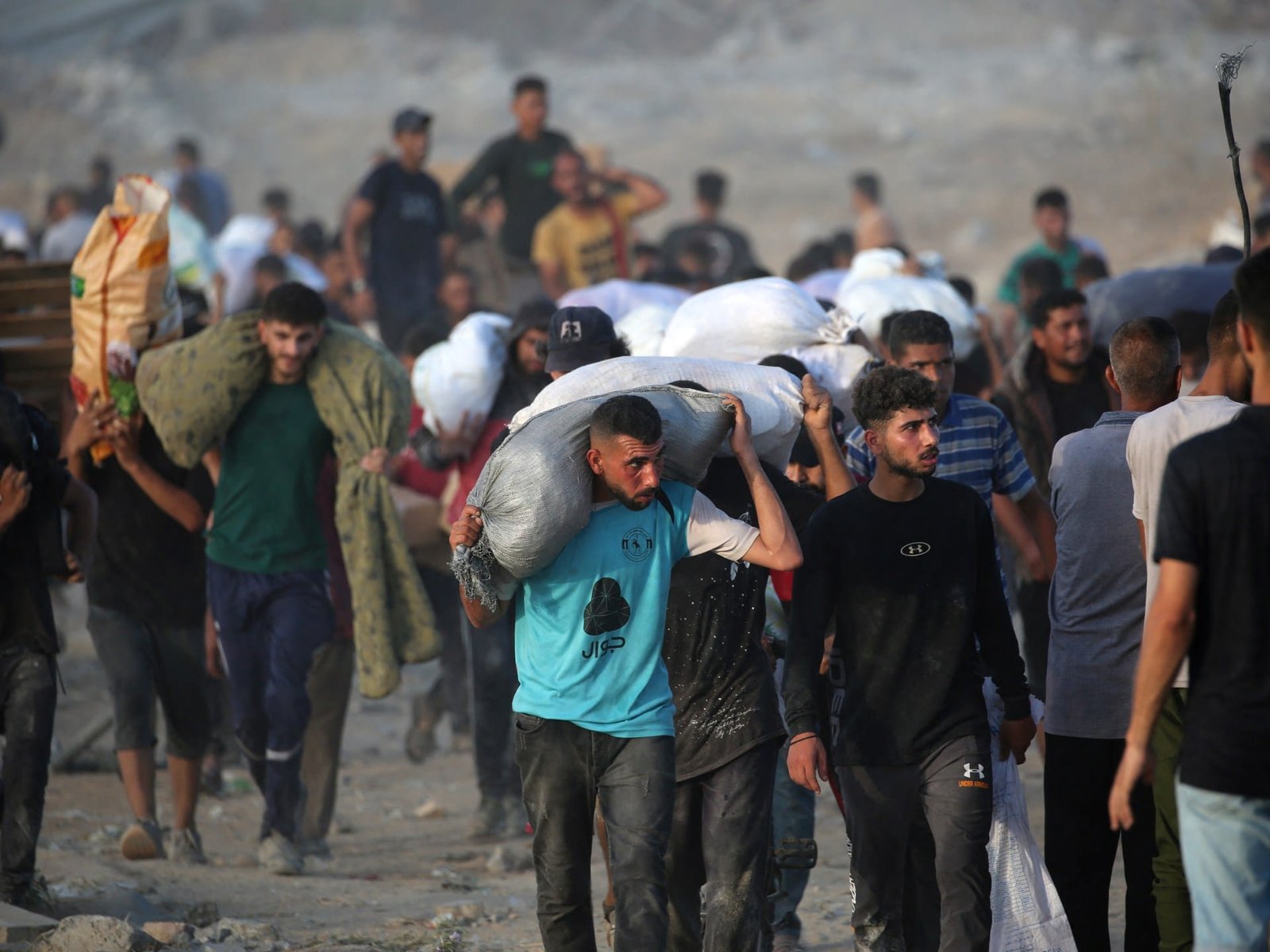
An OHCHR spokesperson says the figure is as of June 27, adding that more incidents have taken place since then.
The United Nations human rights office has said it recorded at least 613 killings of Palestinians, both at controversial aid points run by the Israeli and United States-backed Gaza Humanitarian Foundation (GHF) and near humanitarian convoys.
“This is a figure as of June 27. Since then … there have been further incidents,” Ravina Shamdasani, the spokesperson for the UN Office of the High Commissioner for Human Rights (OHCHR), told reporters in Geneva on Friday.
The OHCHR said 509 of the 613 people were killed near GHF distribution points. The Gaza Health Ministry has put the number of deaths at more than 650 and those wounded as exceeding 4,000.
The GHF began distributing limited food packages in Gaza at the end of May, overseeing a new model of deliveries which the UN says is neither impartial nor neutral, as killings continue around the organisation’s sites, which rights groups have slammed as “human slaughterhouses”.
Mahmoud Basal, a civil defence spokesperson in Gaza, said they “recorded evidence of civilians being deliberately killed by the Israeli military”.
“More than 600 Palestinian civilians were killed at these centres,” he said. “Some were shot by Israeli snipers, others were killed by drone attacks, air strikes or shootings targeting families seeking aid.”
Medical sources have told media that Israeli forces have killed 51 Palestinians in Gaza since dawn on Friday.
In Khan Younis in southern Gaza, the Israeli military killed at least 15 Palestinians following a series of deadly attacks on makeshift tents in the al-Mawasi coastal area, which was once classified as a so-called humanitarian safe zone by Israel. Attacks there have been relentless.
A mother, whose son was killed while trying to get food, told media that she “lost everything” after his death.
“My son was a provider, I depended totally on him,” she said, adding: “He was the pillar and foundation of our life.”
The woman called the GHF’s aid distribution centres “death traps”.
“We are forced to go there out of desperation for food; we go there out of hunger,” she said.
‘I lost everything’
“Instead of coming back carrying a bag of flour, people themselves are being carried back as bodies,” she added.
The World Health Organization said on Friday that Nasser Hospital in Khan Younis is operating as “one massive trauma ward” due to an influx of patients injured around GHF sites.
He recounted the harrowing cases of a 13-year-old boy shot in the head, as well as a 21-year-old with a bullet lodged in his neck, which rendered him a paraplegic.
According to the UN, only 16 of Gaza’s 36 hospitals remain partially operational, their collective capacity merely above 1,800 beds – entirely insufficient for the overwhelming medical needs.
The Israeli army has targeted the health institutions and medical workers in the besieged enclave since the beginning of its war on Gaza in October 2023.
“The health sector is being systematically dismantled,” Peeperkorn said on Thursday in a separate statement, citing shortages of medical supplies, equipment and personnel.
The UN, humanitarian organisations and other NGOs have repeatedly slammed the GHF for its handling of aid distribution and the attacks around its distribution sites.
More than 130 humanitarian organisations, including Oxfam, Save the Children and Amnesty International, on Tuesday demanded the immediate closure of the GHF, accusing it of facilitating attacks on starving Palestinians.
The NGOs said Israeli forces and armed groups “routinely” open fire on civilians attempting to access food.
The UN agency for Palestinian refugees (UNRWA), which was carrying out aid distribution for decades before the GHF, has called for investigations into the killings and wounding of Palestinians trying to access food through the GHF.
UNRWA noted that while it operated about 400 sites across the territory, the GHF has set up only four “mega-sites”, three in the south and one in central Gaza – none in the north, where conditions are the most severe.




 United Arab Emirates Dirham Exchange Rate