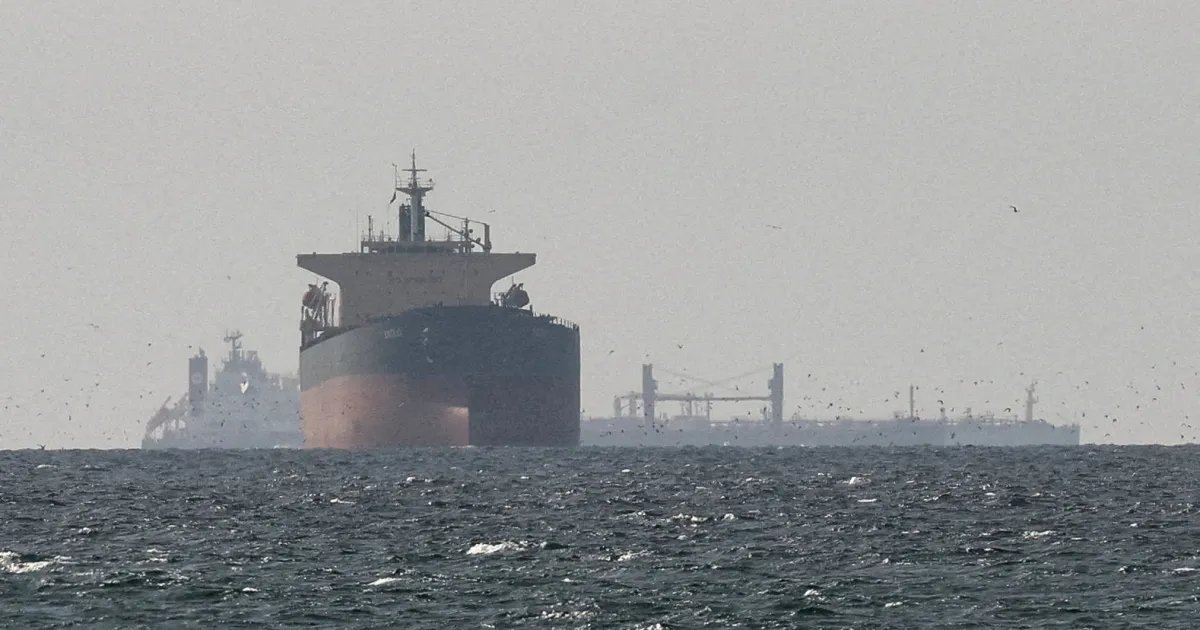
The announcement of a ceasefire by United States President Donald Trump on Tuesday has brought some relief to the Gulf region, seafarers and the energy markets. Iran has agreed to open the Strait of Hormuz for commercial traffic as long as vessels coordinate movements with its authorities.
Irrespective of what happens next – whether a durable peace deal is negotiated or hostilities resume – the global misery caused by Iran’s closure of the strait demonstrates a clear need for long-term solutions that are solidly rooted both in law and in fact.
No one has a greater stake in such solutions than Iran and its Arab neighbours. They all use the strait to reach customers worldwide and to feed their own people. Now, they will have not only to repair wartime damage, but also to restore international confidence in the world’s most critical waterway.
Fortunately, for all concerned, the would-be participants in this diplomatic exercise will find that much of the work has already been done. Since its foundation in 1945, the United Nations has led a series of processes aimed at reducing the scope for conflict between nations, and few of these have been more significant than the UN Convention on the Law of the Sea.
The International Maritime Organization (IMO), the 1958 Convention on the Territorial Sea and the Contiguous Zone, the 1969 Vienna Convention on the Law of the Treaties, and the 1982 United Nations Convention on the Law of the Sea (UNCLOS) all provide a legal framework for marine and maritime activities, including the rules and the science required to delimit fair and equitable borders at sea.
They also set out rules governing transit passage through straits, stating that “all ships and aircraft enjoy the right of transit passage, which shall not be impeded”, and no exceptions apply to the Strait of Hormuz.
Although these treaties and conventions do not resolve all territorial or sovereignty issues, a process left to duly formed international courts and tribunals, their legal and scientific standards have largely been accepted as part of customary international law by those same courts.
There is more. Under the international law of treaties, as codified in the Vienna Convention on the Law of Treaties, a country (such as Iran) that has signed but not ratified a treaty is nonetheless obligated to “refrain from acts that would defeat the object and purpose of a treaty that it has signed pending the ratification process”.
This rule is also generally considered as declaratory, meaning that it is also binding on any country that has signed but not ratified the Vienna Convention itself (absent its consistent objection).





 United Arab Emirates Dirham Exchange Rate