
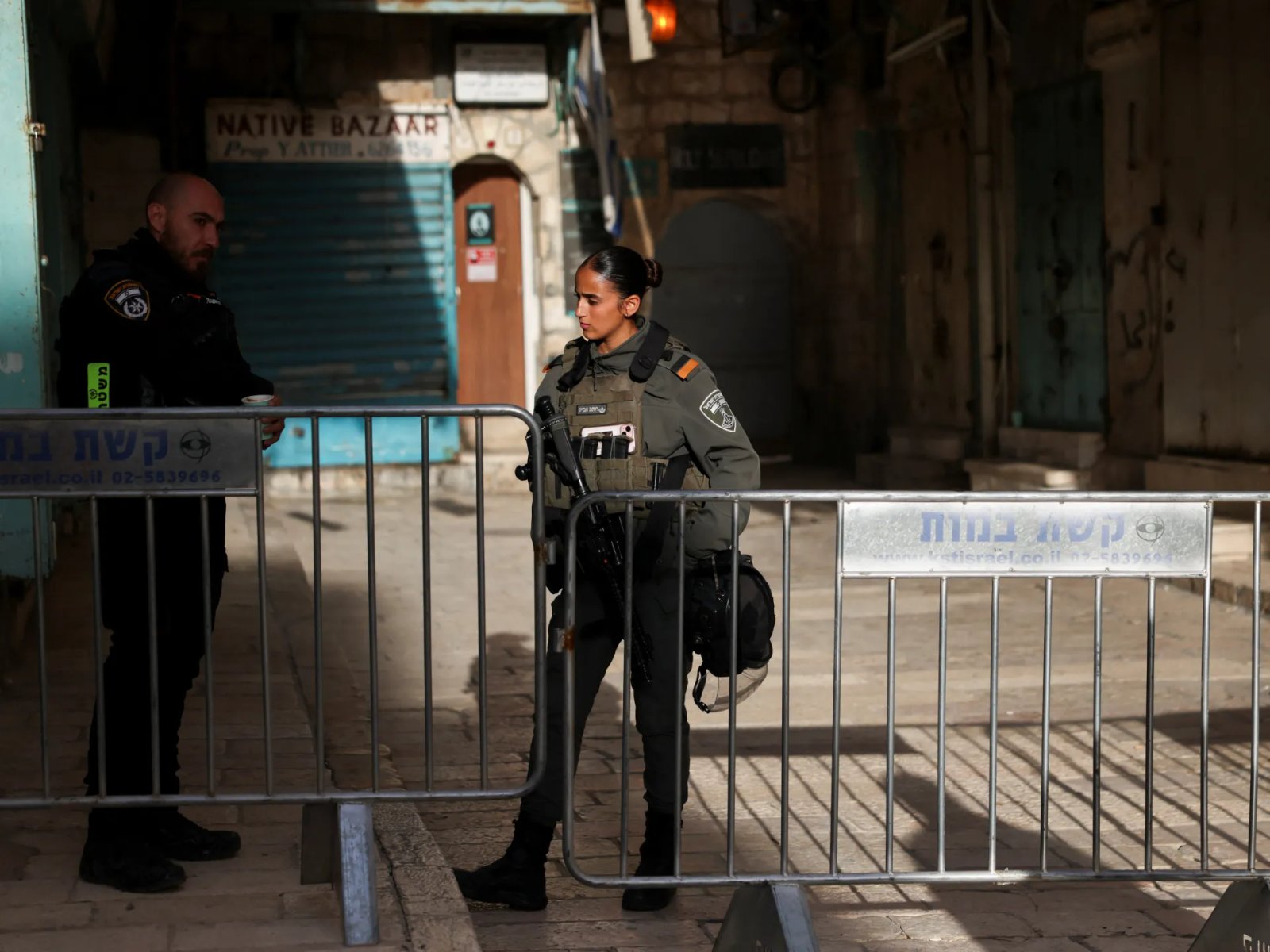
On Holy Saturday as Palestinian Christians tried to reach the Church of the Holy Sepulchre in Jerusalem, Israeli security forces started attacking and arresting them. On the following day, Orthodox Easter, Israeli National Security Minister Itamar Ben-Gvir and his supporters stormed into the Al-Aqsa Mosque compound, where they performed prayers despite a ban on non-Muslim religious rituals there.
These incidents followed Israel’s unprecedented closure of the Al-Aqsa Mosque compound and the Church of the Holy Sepulchre for 40 days under the guise of “safety” during the United States-Israeli war on Iran. As a result, prayers at Al-Aqsa did not take place on Fridays or during Eid al-Fitr while Cardinal Pierbattista Pizzaballa, the Latin patriarch of Jerusalem, and other religious figures were prevented from reaching the Church of the Holy Sepulchre on Palm Sunday to lead services.
By now it is clear that Israel does not simply violate the Status Quo on occasion. Instead, it is actively trying to impose new rules – under which Muslim and Christian worship would be subject to full Israeli control. Despite what Israeli officials may claim, it is clear that Israeli control over Jerusalem would not guarantee “equality”. Rather, it would normalise a profound disregard for the Palestinian people and their Muslim and Christian heritage.
In essence, the Israeli occupation considers Palestinian Christians and Muslims as “residents” rather than a people with ancient roots in the city and the right to self-determination. Their existence conflicts with the Zionist idea of Jerusalem being an exclusively Jewish city.
Since the 16th century, religious life in Jerusalem has largely been regulated by the Status Quo agreement, articulated during the Ottoman period, which implies a set of historical rights and arrangements. Subsequently, the Status Quo was recognised in the Treaty of Paris (1856), which put an end to the Crimean War between the Russian and Ottoman empires, and the Berlin Treaty of 1878, which settled the loss of territory by the Ottomans in the Balkans.
The Status Quo was in force at the time the Balfour Declaration was issued in 1917 and was respected during the British Mandate.
The sensitivity of the issue of the holy sites became clear when the United Nations voted on the partition of Palestine, designating Jerusalem and Bethlehem as a “corpus separatum”, an international status aimed at protecting the Status Quo. This arrangement included several elements, such as exempting church properties from taxation.
After the Nakba in 1948 when Zionist militias ethnically cleansed the western parts of Jerusalem, which particularly affected Christian Palestinians, Israel’s admission to the UN was conditioned upon its commitment to respect, among other provisions, the UN General Assembly Resolution 181, which reaffirmed “existing rights” of worship. This commitment was also reaffirmed in Israel’s agreement with France, known as the Chauvel-Fischer Agreement, in which Israel agreed to respect the Status Quo benefits for Christian sites under French protection in exchange for French recognition of its statehood.
The Status Quo is not ambiguous; it is a well-established system that cannot be unilaterally changed. In other words, the Israeli occupation either respects it or violates it. Clearly, the ongoing normalisation of Israel’s illegal annexation of Jerusalem – supported by initiatives such as the US recognition of Jerusalem as the Israeli capital – aims to strengthen a Jewish-Zionist supremacist system over the city, including its holy sites.





 United Arab Emirates Dirham Exchange Rate