Feminist attention is not neutral. It is shaped, directed, and unevenly distributed.
In 2022–2023, Western feminist institutions mobilised loudly in support of protests in Iran, celebrating women’s resistance to compulsory hijab as a defining feminist struggle. Today, as war kills women and girls and destroys their access to education, that same infrastructure has fallen conspicuously silent. This contrast is not accidental. It exposes a deeper logic of selective solidarity, one that determines which forms of gendered violence are recognised and which are allowed to disappear. I write this as an Iranian woman and academic working on law, society, and gender, situated within that uneven terrain of visibility.
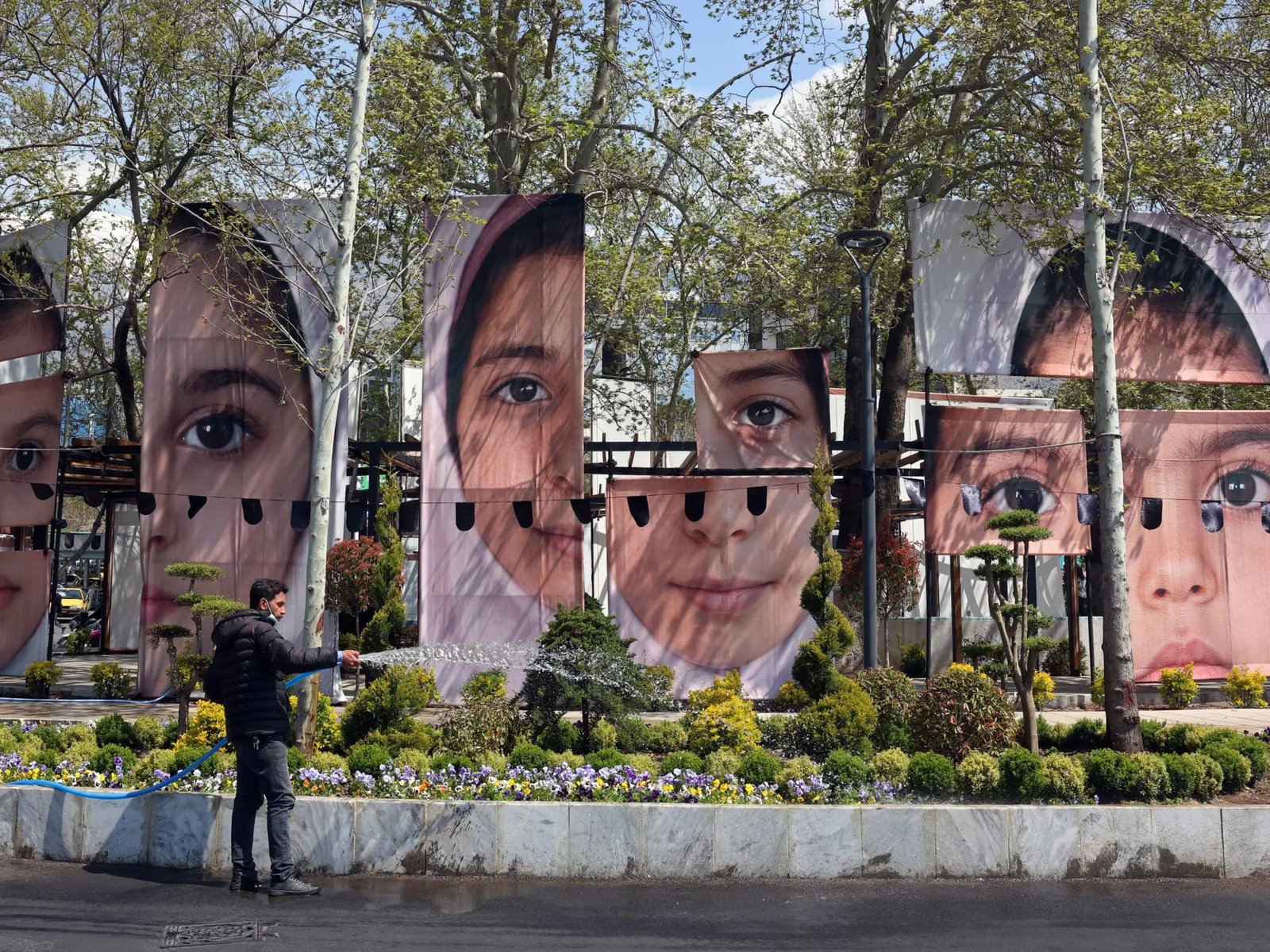
In the 40 days of strikes, the Iranian Health Ministry reported that 251 women and 216 children were killed. Among them were the victims of the missile strike on the girls’ school in Minab, where more than 165 children, most of them young girls, lost their lives. These were not casualties in transit or by chance; they were children sitting in classrooms, learning, when an American strike ripped the space around them apart and buried them under the rubble. Their desks, their books, their voices, all the traces of the future they once had, were buried with them. And yet, despite the scale and visibility of this violence, it has not generated the kind of sustained feminist outrage that we witnessed in 2022. When Iranian women removed their headscarves, their images circulated globally, amplified across academic institutions, activist networks, and media platforms for weeks and months. This year, that visibility was never afforded to the hundreds of women, girls, and children torn to pieces by American and Israeli missiles. What we are witnessing is not simply a gap in attention, but a patterned withdrawal, a refusal to recognise certain forms of violence as feminist concerns.
Minab should have been a moment that forced visibility, one that at least briefly interrupts a wider, more enduring silence. If the killing of girls in a classroom is not a feminist issue, then what is?
War has never been gender neutral. Women and children are not incidental victims; they are among its primary targets. What happened in Minab is not outside that pattern, but its clearest expression. The destruction of that school is not only a humanitarian crisis; it is a feminist one. It is the erasure of a generation at the very moment of its formation. And yet it is precisely here that the limits of mainstream feminist engagement become visible. The same networks that once amplified images of Iranian girls resisting dress codes have remained largely silent in the face of their killing. The shift is not accidental. It reveals the terms under which feminist recognition is granted and withdrawn.
Night after night, mothers come to the cemetery in Minab, carrying the small things their daughters once held, sitting beside freshly dug graves until morning.
This is not private sorrow but the lived aftermath of war, and still it is met with silence. Such scenes do not circulate in the same way that protest images once did.
They do not fit the visual or political narratives through which Western feminism has come to recognise Iranian women.
In 2022, Iranian women’s bodies became symbols of resistance, legible within a familiar script of liberation from religious patriarchy. In 2026, those same bodies are sites of war, but no longer of global feminist concern. What cannot be easily narrated within that script is allowed to disappear, even as it unfolds in plain sight.







 United Arab Emirates Dirham Exchange Rate