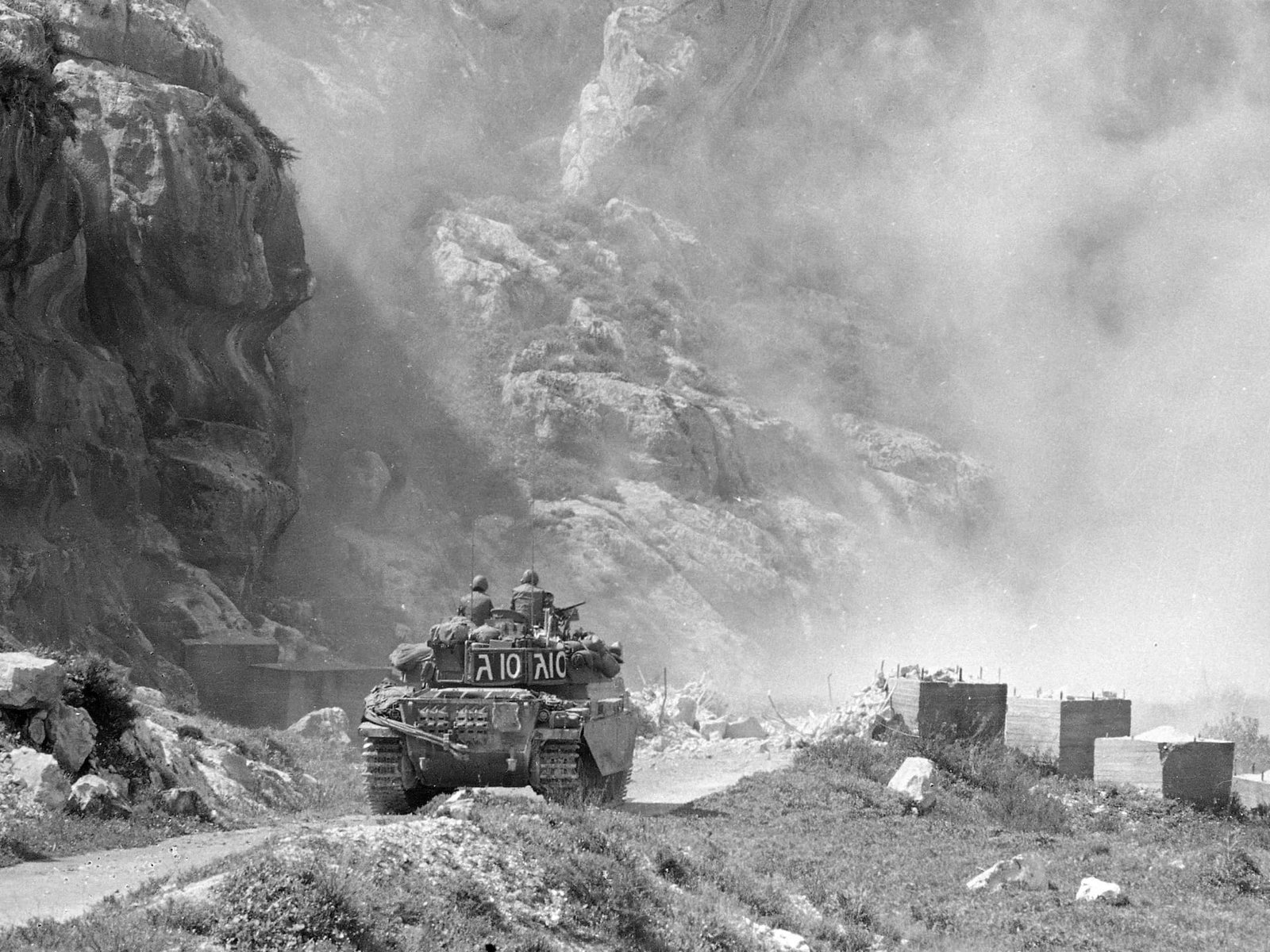
Resolving the conflict in Lebanon necessitates taking into account its long, layered history and new geopolitical realities.
Amid a fragile ceasefire in Lebanon, President Joseph Aoun is preparing for what some claim would be a “historic trip” to Washington. It appears that United States President Donald Trump may pressure him into meeting Israeli Prime Minister Benjamin Netanyahu. If this summit takes place, it would be the first in history.
But a symbolic meeting would not be enough to resolve the conflict in Lebanon, which has deep historical roots and a wide geopolitical reach.
Despite the ceasefire, Israel continues to occupy parts of southern Lebanon. The aim of the ongoing operation, as declared by Defense Minister Israel Katz, is to establish a “security zone” over the entire area south of the Litani River – which represents 10 percent of Lebanon’s national territory.
The civilian population has been barred from returning to their homes while Israeli forces have continued bombing and mass demolition. Netanyahu appears to be using the narrative of “destroying Hezbollah” to cover up what is really a campaign of mass destruction and human relocation.
It is important to note that the occupation of lands south of the Litani River is not just a military objective for Israel. It is a historical aspiration.
In 1918, Yitzhak Ben-Zvi, the future second and longest-serving Israeli president, and David Ben-Gurion, the future first Israeli prime minister, published a book entitled The Land of Israel in which the two authors described “our country” as stretching from the Litani River to the Gulf of Aqaba.
In 1919, during the Paris Conference, the formal meeting of the victorious Allied Forces to set the peace terms following the end of World War I, a delegation of the World Zionist Organization led by Chaim Weizmann presented a memorandum for a Jewish state extending to the Litani River, as well as over the Sinai and other territories beyond the borders of today’s Israel.
During the war of 1948, the newly created Israeli state turned its gaze towards southern Lebanon, the country with the smallest army in the region. In October of that year, the Israeli army conquered the village of Hula without encountering any form of resistance. More than 80 defenceless villagers were killed. The main perpetrator of that massacre, Shmuel Lahis, was sentenced to just one year in prison and after receiving a presidential pardon in 1955, he became the director-general of the Jewish Agency.
The inception of the Lebanese Civil War in 1975 was fundamentally driven by the convergence of deep internal divisions and the destabilising presence of the Palestine Liberation Organization (PLO), which acted as a “state within a state” and engaged in cross-border attacks against Israel.
In March 1978, Israel launched Operation Litani, a major invasion of southern Lebanon aiming at crippling these PLO bases and establishing a buffer zone, resulting in significant civilian displacement and the deployment of United Nations peacekeeping forces.
Some members of the Shia community welcomed the Israeli expulsion of the PLO from the south. But when the Israeli army invaded again in 1982, it soon became clear that it had no intention of leaving. This accelerated the political mobilisation of the Lebanese Shia – Hezbollah being one of its main consequences.
In the following decades, Hezbollah became one of Israel’s main security concerns. The group used southern Lebanon to launch rockets and missiles on northern Israel and engaged in attacks on Israelis elsewhere.
Hezbollah also developed a close relationship with Israel’s foremost nemesis after 1979: The Islamic Republic of Iran. This relationship has evolved from an ideological dependence to a vital strategic partnership.
While the Iranian regime initially perceived Hezbollah as a key element in exporting its revolution, it now considers it its most effective regional asset and the first line of defence against Israel’s expansionist goals and policies in the region. Tehran has transferred military technology to its Lebanese ally, providing it with advanced missiles, drones, and cybercapabilities.
While it is true that Hezbollah has constituted a threat to Israel, the disparity in firepower cannot be overlooked. Between 2007 and 2022, Air Pressure documented 22,355 illegal violations of Lebanese airspace by Israeli forces. As for the period from October 7, 2023 on, Channel 4 reported that Israeli attacks in Lebanon outnumbered Hezbollah’s 5 to 1. In the year since the November 27, 2024 ceasefire, the UN Interim Force in Lebanon (UNIFIL) documented almost 7,800 air violations by Israeli forces.
First and foremost, there is no military solution to what is really a political problem; using force can only make things worse. There was no Hezbollah before the 1982 invasion of Lebanon. There was no Hamas before the occupation of 1967. And the list could go on. Every attempt to subdue, oppress, or erase other people or countries results in the pattern embodied by these movements.
Second, there are powerful actors on the scene that push for more conflict. In Lebanon, certain political players have decided to align with Israel, which will surely provoke a response from Hezbollah. Meanwhile, Netanyahu – who has a strong interest in maintaining a “permanent war” until the Israeli elections, to distract domestic public opinion and postpone court proceedings against him – will continue to fuel tensions.
Third, Iran was not attacked because it possessed nuclear weapons; rather, it was targeted because it did not have them, making it appear as a defeatable target. The same applies to Lebanon; there is no chance for peace and stability as long as the country is seen as an easily defeatable target.
Last but not least, we have witnessed the limitations of Israel’s military power and the eroding influence of several countries in the Gulf that were fully dependent on the US for their security. Outsourcing security will never bring a formal, lasting peace in Lebanon and the broader region, but, at best, a heavily enforced “armed stability” or “militarised stabilisation”.
Winning peace, which is often harder than winning war, requires a new negotiated regional order accepted, first and foremost, by local powers and players.
The views expressed in this article are the author’s own and do not necessarily reflect media’s editorial stance.





 United Arab Emirates Dirham Exchange Rate