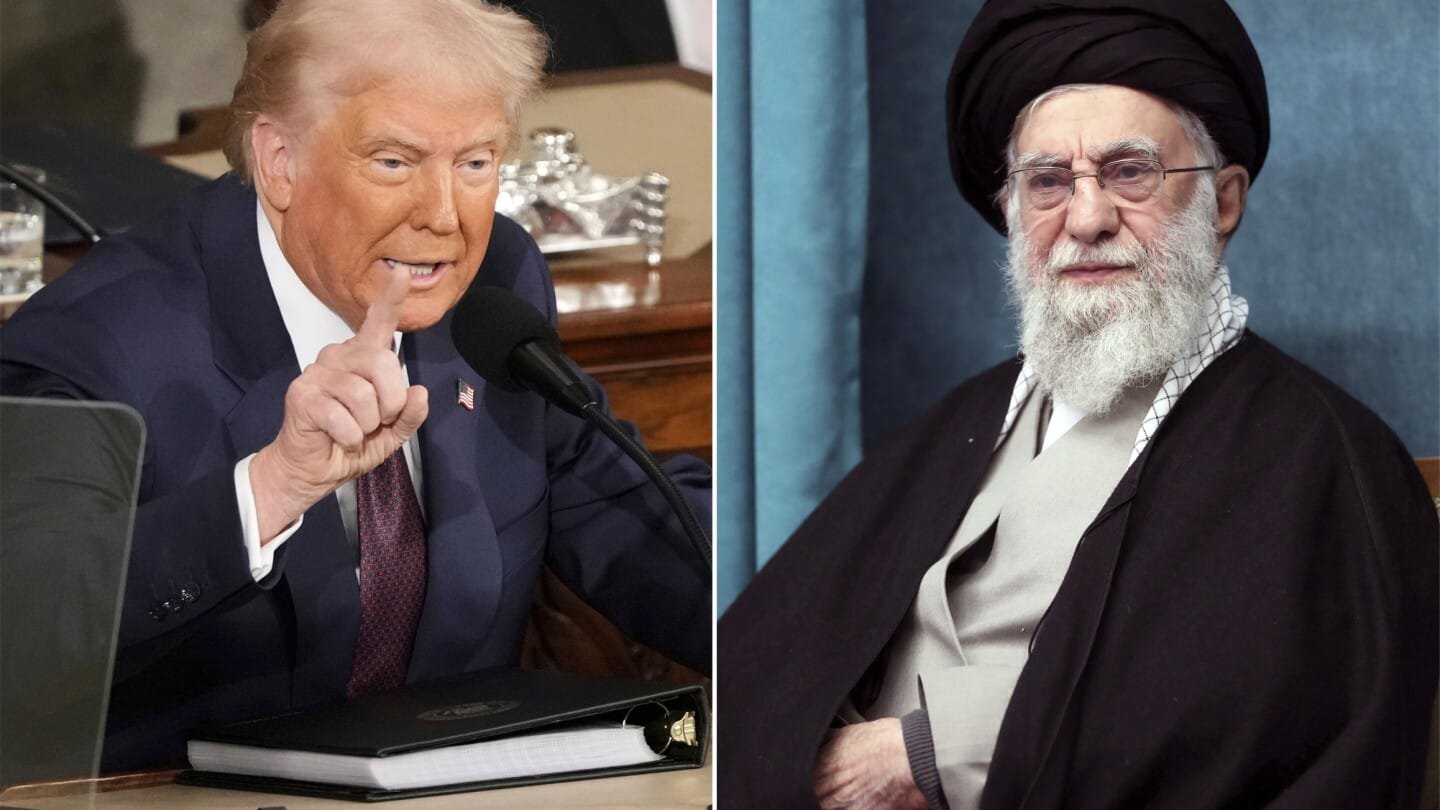
DUBAI, United Arab Emirates (news agencies) — Iran and the United States will hold talks in the sultanate of Oman on Saturday in an attempt to jump-start negotiations over Tehran’s rapidly advancing nuclear program.
Even before the talks, however, there was a dispute over just how the negotiations would go. President Donald Trump insists they’ll be direct negotiations. However, Iran’s foreign minister said they’ll be indirect talks through a mediator.
The difference may seem small, but it matters. Indirect talks have made no progress since Trump in his first term unilaterally withdrew the U.S. from Tehran’s nuclear deal with world powers in 2018.
Trump has imposed new sanctions on Iran as part of his “maximum pressure” campaign targeting the country. He has again suggested military action against Iran remained a possibility, while emphasizing he still believed a new deal could be reached by writing a letter to Iran’s 85-year-old Supreme Leader Ayatollah Ali Khamenei.
Khamenei has warned Iran would respond to any attack with an attack of its own.
Here’s what to know about the letter, Iran’s nuclear program and the tensions that have stalked relations between Tehran and Washington since the 1979 Islamic Revolution.
Trump dispatched the letter to Khamenei on March 5, then gave a television interview the next day in which he acknowledged sending it. He said: “I’ve written them a letter saying, ‘I hope you’re going to negotiate because if we have to go in militarily, it’s going to be a terrible thing.’”
Since returning to the White House, the president has been pushing for talks while ratcheting up sanctions and suggesting a military strike by Israel or the U.S. could target Iranian nuclear sites.
A previous letter from Trump during his first term drew an angry retort from the supreme leader.
But Trump’s letters to North Korean leader Kim Jong Un in his first term led to face-to-face meetings, though no deals to limit Pyongyang’s atomic bombs and a missile program capable of reaching the continental U.S.
Iranian President Masoud Pezeshkian rejected direct negotiations with the United States over Tehran’s nuclear program.
“We don’t avoid talks; it’s the breach of promises that has caused issues for us so far,” Pezeshkian said in televised remarks during a Cabinet meeting. “They must prove that they can build trust.”
Khamenei seemingly reacted to comments by Trump renewing his threat of military action.
“They threaten to commit acts of mischief, but we are not entirely certain that such actions will take place,” the supreme leader said. “We do not consider it highly likely that trouble will come from the outside. However, if it does, they will undoubtedly face a strong retaliatory strike.”
Iranian Foreign Ministry spokesperson Esmail Baghaei went further.

 United Arab Emirates Dirham Exchange Rate