
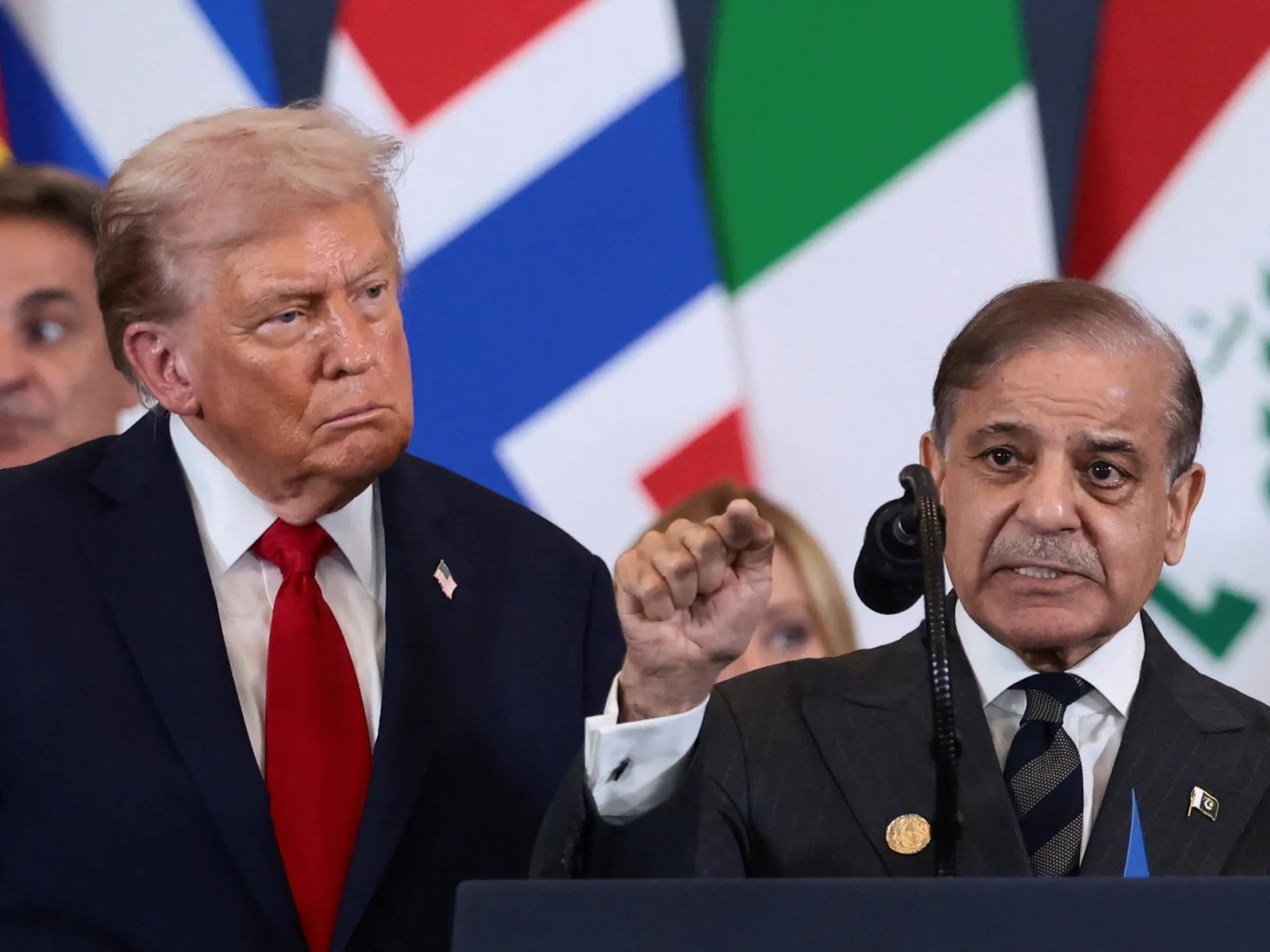
Islamabad balances alliances, economic needs and public sentiment as it weighs potential troop deployment to Gaza.
Islamabad, Pakistan – When the United Nations Security Council on Monday adopted a United States-authored resolution that paves the way for a transitional administration and an International Stabilisation Force (ISF) in Gaza, Pakistan – which was presiding over the council – had a seemingly contradictory response.
Asim Iftikhar Ahmed, Pakistan’s permanent representative to the UN, thanked the US for tabling the resolution and voted in its favour. But he also said Pakistan was not entirely satisfied with the outcome, and warned that “some critical suggestions” from Pakistan were not included in the final text.
Though the resolution promises a “credible pathway” to Palestinian statehood, Ahmed, in his comments to the council, said it did not spell that path out, and did not clarify the role of the UN, a proposed Board of Peace (BoP) to oversee Gaza’s governance, or the mandate of the ISF.
“Those are all crucial aspects with a bearing on the success of this endeavour. We earnestly hope that further details in coming weeks will provide the much-needed clarity on these issues,” he said.
But the country had already endorsed US President Donald Trump’s 20-point Gaza ceasefire plan in September – the basis for the UN resolution. And while several other Arab and Muslim countries have also cautiously supported the resolution, Pakistan, with the largest army among them, is widely expected to play a key role in the ISF.
The vote in favour of the resolution, coupled with the suggestions that Pakistan still has questions it needs answers to, represents a careful tightrope walk that Islamabad will need to navigate as it faces questions at home over possible military deployment in Gaza, say analysts.
“The US playbook is clear and has a pro-Israel tilt. Yet, we need to recognise that this is the best option that we have,” Salman Bashir, former Pakistani foreign secretary, told media. “After the sufferings inflicted on the people of Gaza, we did not have any option but to go along.”
In recent weeks, Pakistan’s top leaders have engaged in hectic diplomacy with key Middle Eastern partners.
But in recent weeks, Pakistan – the only Muslim nation with nuclear weapons – has also emerged as a key actor in the region’s security calculations, courted by both the United States and important Arab allies.
In September, Pakistan signed a Strategic Mutual Defence Agreement (SMDA) with Saudi Arabia, days after Israel had struck Doha, the Qatari capital. Then, in October, Prime Minister Sharif and Field Marshal Munir joined Trump and a bevy of other world leaders in Egypt’s Sharm el-Sheikh for the formal signing ceremony of the Gaza ceasefire agreement. Sharif lavished Trump with praise on the occasion.
By then, Trump had already described Munir as his “favourite field marshal”. Following a brief escalation with India in May, during which Pakistan said it shot down Indian jets, Munir met Trump in the Oval Office in June, an unprecedented visit for a serving Pakistani military chief who is not head of state.
In late September, Munir visited Washington again, this time with Sharif. The prime minister and army chief met Trump and promoted potential investment opportunities, including Pakistan’s rare earth minerals.
Now, Pakistan’s government is mulling its participation in the ISF. Though the government has not made any decision, senior officials have publicly commented favourably about the idea. “If Pakistan has to participate in it, then I think it will be a matter of pride for us,” Defence Minister Khawaja Asif said on October 28. “We will be proud to do it.”
Pakistan’s rising geopolitical value
That’s easier said than done, cautioned some analysts.
Palestine is an emotive issue in Pakistan, which does not recognise Israel. The national passport explicitly states it cannot be used for travel to Israel, and any suggestion of military cooperation with Israeli forces – or even de facto recognition of Israel – remains politically fraught.
Even while describing any participation in the force as a cause for pride, Defence Minister Asif said the government would consult parliament and other institutions before making any decision.
“The government will take a decision after going through the process, and I don’t want to preempt anything,” he said.
In a weekly press briefing earlier this month, Ministry of Foreign Affairs spokesperson Tahir Andrabi said the question of Pakistan’s contribution would be decided “after consultation at the highest level”.
“The decision will be taken in due course, as and when required. Certain level of leadership has stated that the decision will be taken with the advice of the government,” he said.
media reached out to Asif, the defence minister, Information Minister Attaullah Tarar, and the military’s media wing, the Inter-Services Public Relations, but received no response.
Some retired senior officers say Pakistan will not decide the matter behind closed doors.
Muhammad Saeed, a three-star general who served as Chief of General Staff until his 2023 retirement, said he expects the terms of reference and rules of engagement for any ISF deployment to be debated in public forums, including Pakistan’s National Security Council and parliament.
“This is such a sensitive topic; it has to be debated publicly, and no government can possibly keep it under wraps. So once the ISF structure becomes clear, I am certain that Pakistani decision-making will be very inclusive and the public will know about the details,” he told media.
Kamran Bokhari, senior director at the New Lines Institute for Strategy and Policy in Washington, DC, said the mutual defence agreement with Saudi Arabia meant that Pakistani troops in Gaza would likely be representing both countries. He, however, added that Pakistan would likely have participated in the ISF even without the Saudi pact.
Still, the lack of details about the ISF and Gaza’s governance in the UN resolution remains a stumbling block, say experts.
Several countries on the council said the resolution left key elements ambiguous, including the composition, structure and terms of reference for both the BoP and the ISF. China, which abstained, also described the text as “vague and unclear” on critical elements.





 United Arab Emirates Dirham Exchange Rate